Cardiology
1977
Grüntzig's coronary balloon angioplasty
On 16 September 1977 in Zurich, Andreas Grüntzig widened a narrowed coronary artery in an awake patient with a balloon catheter, the first percutaneous transluminal coronary angioplasty. It gave some patients an alternative to bypass surgery.
Key people
- Andreas Grüntzig
- German-born physician who performed the first coronary balloon angioplasty
- Adolf Bachmann
- 38-year-old first patient, originally scheduled for bypass surgery
- Spencer B. King III
- Emory cardiologist who worked with Grüntzig from 1980
Source
Andreas Grüntzig, a German-born physician working at the Medical Policlinic of the University of Zürich, first used a balloon-tipped catheter in 1974 to reopen a severely narrowed femoral artery. He called the procedure percutaneous transluminal dilatation. He had made the balloons himself; by his own account, most of the hundreds of trial runs took place in his kitchen. Heinrich Hopff, a retired professor of organic chemistry at the Federal Institute of Technology who knew polyvinyl chloride well, advised him on materials, and the engineer Helmuth Schmid helped him build a double-lumen catheter.
Four months after the first coronary dilatations performed during open surgery in San Francisco, and with the backing of the surgeon Senning, Grüntzig tried the method in a conscious patient. On 16 September 1977, at Zurich University Hospital, he dilated an isolated stenosis of the left anterior descending artery in Adolf Bachmann, 38, who had been scheduled for bypass surgery.
He first described coronary dilatation in a letter to The Lancet published on 4 February 1978. In July 1979, writing with Senning and Siegenthaler in the New England Journal of Medicine, he described 50 patients treated over 18 months. The procedure succeeded in 32, reducing stenosis from a mean of 84 to 34 percent and the pressure gradient across it from 58 to 19 mm Hg. Five patients needed emergency bypass surgery. Grüntzig estimated that only 10 to 15 percent of bypass candidates had suitable lesions and called for a randomized trial against surgery and medical treatment.
In 1980 he moved to Emory University in Atlanta to work with Spencer B. King III and John S. Douglas, where steerable guide wires and over-the-wire catheters raised success rates. Grüntzig died in 1985. Around that year the retired radiologist Cesare Gianturco brought him a prototype coronary stent, and Grüntzig assigned his senior fellow, Gary Roubin, to the preclinical studies.
Keep exploring
 Read next · same disease or problem
Coronary Artery Bypass Grafting (CABG) (1968)
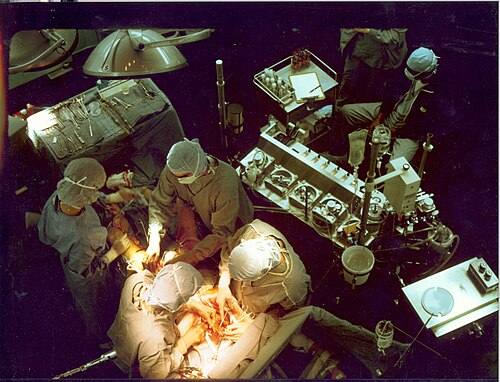
Grüntzig's first patient had been scheduled for bypass surgery, and angioplasty offered some patients an alternative. The bypass entry shows Favaloro's vein grafts relieving severe angina.
Read this moment
Read next · same disease or problem
Coronary Artery Bypass Grafting (CABG) (1968)
Grüntzig's first patient had been scheduled for bypass surgery, and angioplasty offered some patients an alternative. The bypass entry shows Favaloro's vein grafts relieving severe angina.
Read this moment
 Today on The Clinical Times
Love to Dream recalls portable baby sound machine over fire and burn risk
Love to Dream has recalled its portable Sleep Machine because its lithium-ion battery can overheat while charging with an incompatible charger, creating a risk of fire and burns.
Read today’s top stories
Today on The Clinical Times
Love to Dream recalls portable baby sound machine over fire and burn risk
Love to Dream has recalled its portable Sleep Machine because its lithium-ion battery can overheat while charging with an incompatible charger, creating a risk of fire and burns.
Read today’s top stories
All 526 moments in the history of medicine. This one is in chapter 6, Trials, scanners and rights
Connected moments
How this moment links to others in the history of medicine, and what you will find in each.
- Same disease or problem2002Transcatheter aortic valve implantationBoth treated heart disease through a catheter instead of open surgery, angioplasty for a narrowed artery and TAVI for a failing valve. The TAVI entry shows the first valve delivered by catheter, in a man too ill for surgery.Read this moment
-
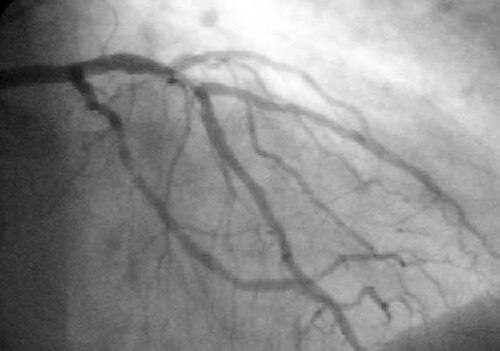 Led to2003Primary PCI versus thrombolysis for acute STEMI (Keeley meta-analysis of 23 trials)Balloon angioplasty later became an emergency treatment for heart attacks. The Keeley entry shows primary angioplasty beating clot dissolving drugs on death, reinfarction and stroke.Read this moment