Oncology
1971
The National Cancer Act
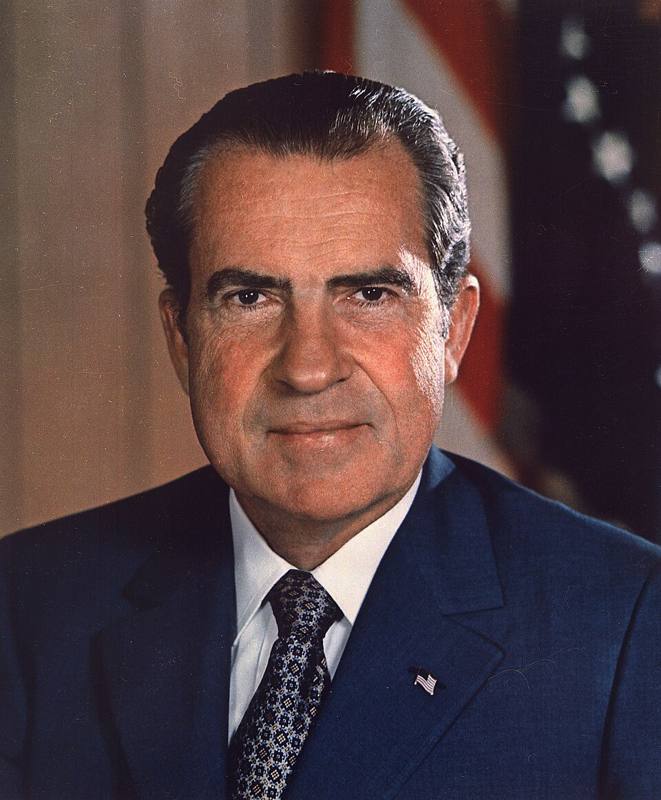
Signed by Richard Nixon on 23 December 1971, the act created a National Cancer Program run by the National Cancer Institute, gave the institute a budget sent straight to the President, and paid for new cancer centers across the United States.
Key people
- Richard Nixon
- President who signed the act on 23 December 1971
- Mary Lasker
- Philanthropist who lobbied Congress for the act
Source
By 1970 cancer was the second leading cause of death in the United States. The philanthropist Mary Lasker, convinced that a large enough effort could get rid of the disease, pushed Congress to act. In April 1970 the Senate voted unanimously to have its Committee on Labor and Public Welfare study cancer research, and the committee formed a Panel of Consultants on the Conquest of Cancer, 13 lay members and 13 scientists. Its November 1970 report said the country had spent only about 89 cents per person on cancer research in 1969 and that a national program needed clear authority, a plan and money.
Senator Yarborough introduced a Conquest of Cancer Act based on the panel's report in December 1970. In his State of the Union address on 22 January 1971 President Richard Nixon asked for an extra $100 million for a campaign against cancer, and on 11 May his administration's bill, S. 1828, was introduced. Nixon signed it on 23 December 1971 as Public Law 92-218, an amendment to the Public Health Service Act.
The act set up a National Cancer Program under the director of the National Cancer Institute. The director and the members of a new 18-member National Cancer Advisory Board became presidential appointees. A three-member President's Cancer Panel was to hold public hearings and report each year to the President. The institute's annual budget, the so-called bypass budget, went straight to the President without the usual review by NIH and the department above it. The director could create cancer centers and training programs, award contracts and set up an international cancer research data bank. The act paid for 15 new cancer research centers and authorized $400 million for fiscal 1972, $500 million for 1973 and $600 million for 1974. Nixon also turned the Army's former biological warfare facilities at Fort Detrick, Maryland, over to cancer research.
Fifty years on, cancer was still the second leading cause of death, with an estimated 606,520 American deaths in 2020. The oncologist Vincent DeVita credited the act with spreading care once found only in large cities across the country. The American Cancer Society estimates that the decline in cancer mortality since 1991 averted more than 4 million deaths through 2021, and attributes it to less smoking, earlier detection of some cancers and better treatment.
Keep exploring
 Read next · same disease or problem
MOPP combination chemotherapy for Hodgkin's disease (1970)
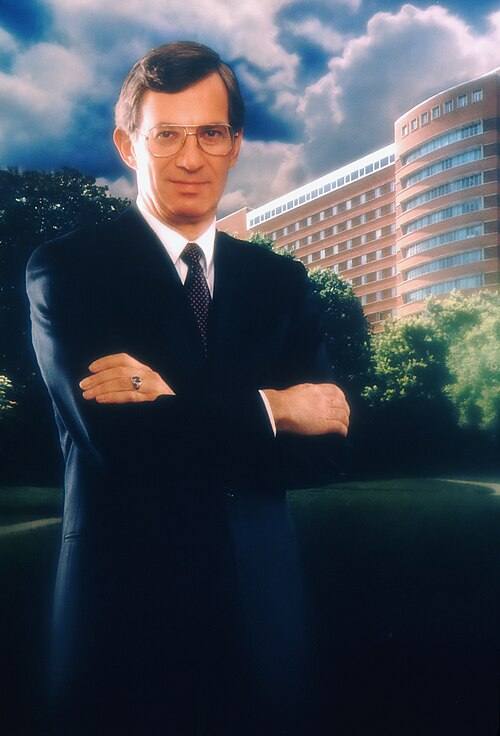
Vincent DeVita, who credited the act with spreading cancer care beyond large cities, had led the MOPP work at the National Cancer Institute. That entry shows the first drug combination to cure a widespread cancer.
Read this moment
Read next · same disease or problem
MOPP combination chemotherapy for Hodgkin's disease (1970)
Vincent DeVita, who credited the act with spreading cancer care beyond large cities, had led the MOPP work at the National Cancer Institute. That entry shows the first drug combination to cure a widespread cancer.
Read this moment
 Today on The Clinical Times
Love to Dream recalls portable baby sound machine over fire and burn risk
Love to Dream has recalled its portable Sleep Machine because its lithium-ion battery can overheat while charging with an incompatible charger, creating a risk of fire and burns.
Read today’s top stories
Today on The Clinical Times
Love to Dream recalls portable baby sound machine over fire and burn risk
Love to Dream has recalled its portable Sleep Machine because its lithium-ion battery can overheat while charging with an incompatible charger, creating a risk of fire and burns.
Read today’s top stories
All 526 moments in the history of medicine. This one is in chapter 6, Trials, scanners and rights
Connected moments
How this moment links to others in the history of medicine, and what you will find in each.
-
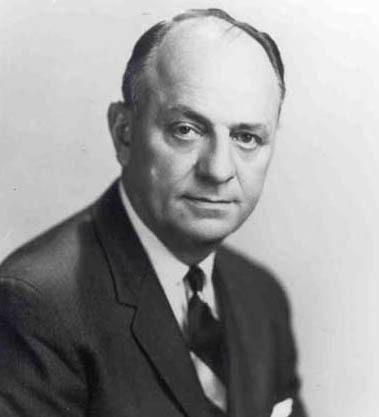 Same disease or problem1964Surgeon General's Report on Smoking and HealthThe fall in cancer deaths after 1991 is credited partly to less smoking, a change the 1964 report helped start with warnings and ad bans. That entry shows the committee concluding that cigarettes cause lung cancer.Read this moment
-
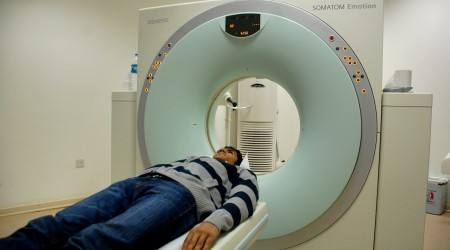 Same disease or problem2011National Lung Screening Trial (NLST)Earlier detection is one reason credited for falling cancer deaths, and the NLST was funded by the National Cancer Institute. It shows low-dose CT screening cutting lung cancer deaths by 20 percent.Read this moment