Infectious Disease
1989
Discovery of the hepatitis C virus
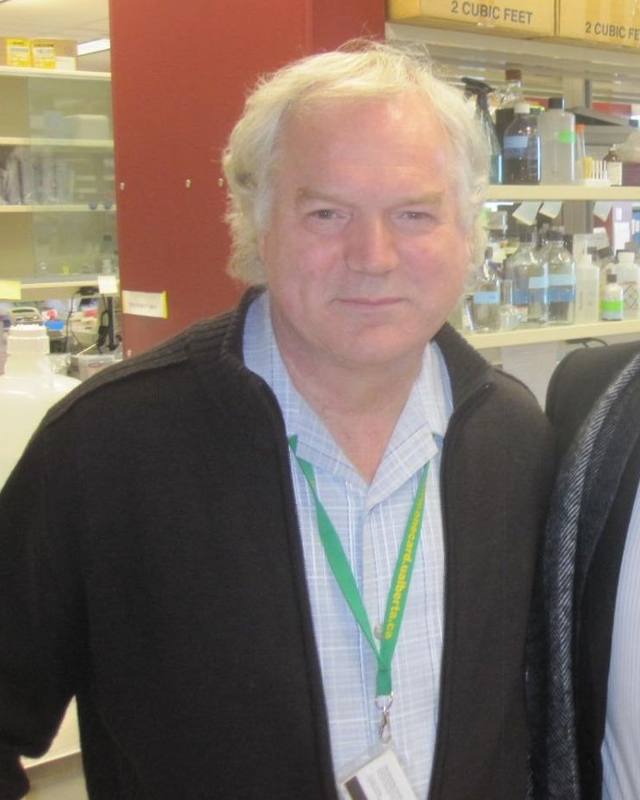
Michael Houghton's team at Chiron cloned part of the genome of the agent of non-A, non-B hepatitis, which caused many of the hepatitis cases still seen after blood transfusion. The work led to blood tests that nearly eliminated transfusion hepatitis in many countries.
Key people
- Michael Houghton
- Chiron scientist whose team cloned the virus's genome in 1989
- Harvey J. Alter
- NIH researcher who showed non-A, non-B hepatitis was transmissible
- Charles M. Rice
- Virologist who showed the cloned virus alone could cause hepatitis
Source
Screening donated blood for the newly found hepatitis B virus cut the number of cases of hepatitis after transfusion, but Harvey Alter and his colleagues at the US National Institutes of Health showed that many cases remained. The unexplained disease became known as non-A, non-B hepatitis. Alter's group found that blood from these patients could transmit it to chimpanzees, the only susceptible host besides humans, and that the agent behaved like a virus. Yet it resisted every standard method of virus hunting for more than a decade.
Michael Houghton, working for the pharmaceutical company Chiron in California, tried molecular cloning. His team built a collection of DNA fragments from nucleic acids in the blood of an infected chimpanzee. Most of the fragments came from the chimpanzee's own genome, but some, they reasoned, would come from the virus. Assuming that patients' blood would carry antibodies against viral proteins, they used patient sera to screen the collection, and after a long search one clone reacted. It came from a positive-stranded RNA of at least 10,000 nucleotides that was not host DNA, and the virus proved to be a new member of the flavivirus family. Choo, Houghton and their colleagues reported it in Science on April 21, 1989, beside a paper describing a test for antibodies to the virus.
Sensitive blood tests followed, and they have essentially eliminated hepatitis after transfusion in many parts of the world. It was not yet proven that the virus alone caused the disease. In 1997 Charles Rice and colleagues at Washington University in St. Louis injected an engineered viral RNA into the livers of chimpanzees; virus appeared in the blood, with liver changes like those of chronic human infection.
The cloned genome also gave drug developers a target. Sofosbuvir, one of the most prescribed direct-acting antivirals, was approved in 2013, and hepatitis C became curable. Alter, Houghton and Rice shared the 2020 Nobel Prize in Physiology or Medicine.
Keep exploring
 Read next · built on
Discovery of the hepatitis B virus (Australia antigen) (1965)
Screening for hepatitis B cut transfusion hepatitis but left many cases, which Alter's group traced to a new virus. Blumberg's entry shows the antigen that made hepatitis B screening possible.
Read this moment
Read next · built on
Discovery of the hepatitis B virus (Australia antigen) (1965)
Screening for hepatitis B cut transfusion hepatitis but left many cases, which Alter's group traced to a new virus. Blumberg's entry shows the antigen that made hepatitis B screening possible.
Read this moment
 Today on The Clinical Times
Love to Dream recalls portable baby sound machine over fire and burn risk
Love to Dream has recalled its portable Sleep Machine because its lithium-ion battery can overheat while charging with an incompatible charger, creating a risk of fire and burns.
Read today’s top stories
Today on The Clinical Times
Love to Dream recalls portable baby sound machine over fire and burn risk
Love to Dream has recalled its portable Sleep Machine because its lithium-ion battery can overheat while charging with an incompatible charger, creating a risk of fire and burns.
Read today’s top stories
All 526 moments in the history of medicine. This one is in chapter 6, Trials, scanners and rights
Connected moments
How this moment links to others in the history of medicine, and what you will find in each.
-
 Led to2014Ledipasvir-Sofosbuvir for Hepatitis C (ION-1)The cloned genome gave drug makers a target, and hepatitis C became curable. The ION-1 entry shows a single daily tablet curing 97 to 99 percent of patients in 12 weeks.Read this moment
-
 Same disease or problem1985First licensed HIV antibody testBoth gave blood banks a test to keep a dangerous virus out of transfusions. The HIV test entry shows US blood banks beginning to screen donated blood in 1985.Read this moment