Public Health
2003
President's Emergency Plan for AIDS Relief (PEPFAR)
Announced in January 2003 and enacted that May, PEPFAR committed $15 billion over five years against AIDS, tuberculosis and malaria. By 2024 it supported HIV treatment for 20.6 million people; the US government credits it with more than 25 million lives saved.
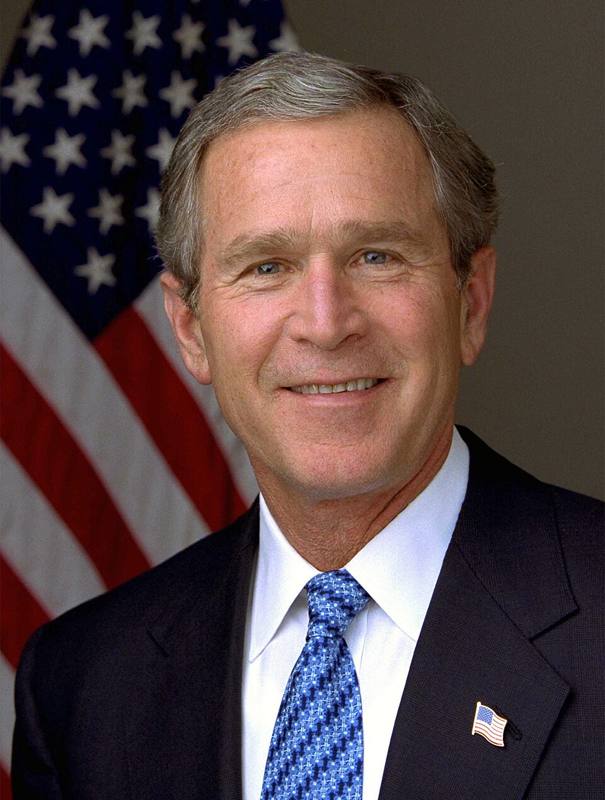
Key people
- George W. Bush
- US president who announced PEPFAR in his 2003 State of the Union
- Eran Bendavid
- Lead author of a 2009 evaluation of PEPFAR's effect on HIV deaths
- Jayanta Bhattacharya
- Co-author of the 2009 PEPFAR outcomes evaluation
Source
The findings Congress wrote into the 2003 law set out the scale of the problem. UNAIDS estimated that 42 million people were living with HIV at the end of 2002, more than 75 percent of them in Africa or the Caribbean. AIDS was the leading cause of death in sub-Saharan Africa and had killed more than 19.4 million people there. According to a 2023 State Department statement, only about 50,000 people in sub-Saharan Africa were then receiving antiretroviral treatment.
President George W. Bush announced the Emergency Plan in his State of the Union address on 28 January 2003 and asked Congress for $15 billion over five years, nearly $10 billion of it new money, for the most afflicted nations of Africa and the Caribbean. The House passed H.R. 1298 on 1 May, the Senate passed an amended version on 15 May, and the President signed the act on 27 May. It authorized $3 billion a year for fiscal years 2004 through 2008 and created a Senate-confirmed Coordinator of United States Government Activities to Combat HIV/AIDS Globally in the office of the Secretary of State.
Congress attached targets and conditions. As a sense of Congress it asked for 500,000 people on US-funded antiretroviral treatment by the end of fiscal 2004 and 2 million by the end of fiscal 2006. For 2006 through 2008 the act required that at least 55 percent of HIV/AIDS funds go to medical care of infected people, mostly for antiretroviral drugs, and that at least a third of prevention money go to abstinence-until-marriage programs.
In 2009 Eran Bendavid and Jayanta Bhattacharya compared 12 African focus countries with 29 others and found that from 2004 to 2007 the annual change in HIV-related deaths was 10.5 percent lower in the focus countries, although adult HIV prevalence trends did not differ. By 30 September 2024 PEPFAR was supporting antiretroviral therapy for 20.6 million people in 55 countries, including 566,000 children, and 7.8 million babies had been born free of HIV to mothers living with the virus. The US government has spent more than $100 billion through the program and credits it with more than 25 million lives saved.
Keep exploring
 Read next · built on
Highly Active Antiretroviral Therapy (HAART) and the Vancouver protease-inhibitor combination era (1996)
PEPFAR's main work was paying for antiretroviral treatment, the combinations that turned HIV into a treatable disease. The HAART entry shows the 1996 Vancouver results.
Read this moment
Read next · built on
Highly Active Antiretroviral Therapy (HAART) and the Vancouver protease-inhibitor combination era (1996)
PEPFAR's main work was paying for antiretroviral treatment, the combinations that turned HIV into a treatable disease. The HAART entry shows the 1996 Vancouver results.
Read this moment
 Today on The Clinical Times
Love to Dream recalls portable baby sound machine over fire and burn risk
Love to Dream has recalled its portable Sleep Machine because its lithium-ion battery can overheat while charging with an incompatible charger, creating a risk of fire and burns.
Read today’s top stories
Today on The Clinical Times
Love to Dream recalls portable baby sound machine over fire and burn risk
Love to Dream has recalled its portable Sleep Machine because its lithium-ion battery can overheat while charging with an incompatible charger, creating a risk of fire and burns.
Read today’s top stories
All 526 moments in the history of medicine. This one is in chapter 7, Genes and pandemics