Infectious Disease
2012
Oral pre-exposure prophylaxis (PrEP) against HIV
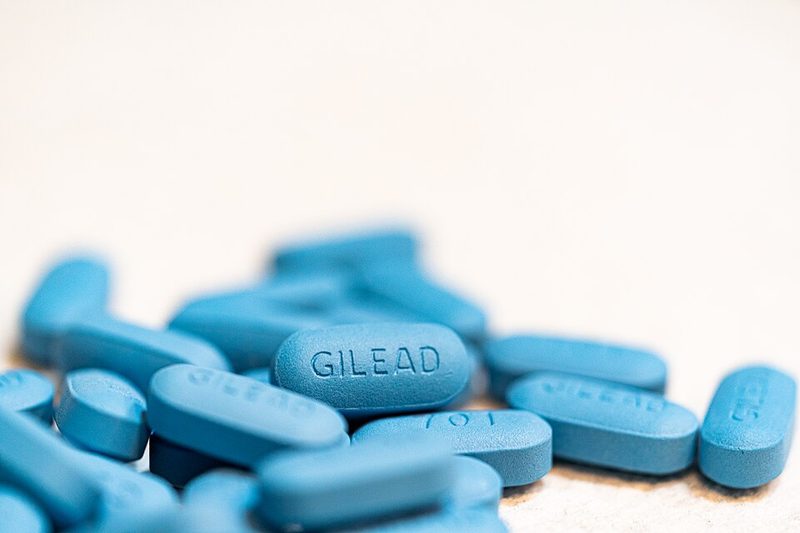
On 16 July 2012 FDA approved a daily pill of emtricitabine and tenofovir (Truvada) to reduce the risk of sexually acquired HIV in adults at high risk. In the iPrEx trial it cut infections by 44 percent overall and 92 percent when drug was detectable.
Key people
- Robert M. Grant
- First author of the iPrEx trial of daily oral PrEP
Source
The iPrEx trial tested whether an HIV drug taken by healthy people could keep them from being infected. It enrolled 2,499 HIV-negative men and transgender women who have sex with men at 11 sites in Peru, Ecuador, Brazil, South Africa, Thailand and the United States. Participants were randomly assigned to a daily pill combining emtricitabine and tenofovir disoproxil fumarate or to a placebo, and all received HIV testing, counseling and condoms.
Over 3,324 person-years of follow-up, 100 participants became infected: 36 in the drug group and 64 in the placebo group, a 44 percent reduction. Robert Grant and colleagues reported the result in the New England Journal of Medicine in November 2010. The protection tracked pill-taking. In the drug group, participants with detectable drug in their blood had a 92 percent lower risk of infection than those without.
Other trials pointed the same way when people took the pills. In Partners PrEP, among HIV-discordant heterosexual couples in Kenya and Uganda, the combination cut infections by 75 percent, and in TDF2, among heterosexual men and women in Botswana, by 62 percent. FEM-PrEP, among women in East and Southern Africa, was stopped early without showing benefit, and its participants took very few of their pills.
Gilead Sciences asked FDA for the new indication in December 2011. On 16 July 2012 FDA approved Truvada, used together with safer sex practices, to reduce the risk of sexually acquired HIV-1 infection in adults at high risk, heterosexual people and men who have sex with men alike. CDC then reviewed the trials for clinicians in its Morbidity and Mortality Weekly Report.
Keep exploring
 Read next · same disease or problem
HPTN 052: Antiretroviral Therapy as HIV Prevention (2011)
Both showed HIV drugs can prevent infection, HPTN 052 by treating the infected partner and PrEP by protecting the uninfected one. HPTN 052 shows transmission cut by 96 percent.
Read this moment
Read next · same disease or problem
HPTN 052: Antiretroviral Therapy as HIV Prevention (2011)
Both showed HIV drugs can prevent infection, HPTN 052 by treating the infected partner and PrEP by protecting the uninfected one. HPTN 052 shows transmission cut by 96 percent.
Read this moment
 Today on The Clinical Times
Love to Dream recalls portable baby sound machine over fire and burn risk
Love to Dream has recalled its portable Sleep Machine because its lithium-ion battery can overheat while charging with an incompatible charger, creating a risk of fire and burns.
Read today’s top stories
Today on The Clinical Times
Love to Dream recalls portable baby sound machine over fire and burn risk
Love to Dream has recalled its portable Sleep Machine because its lithium-ion battery can overheat while charging with an incompatible charger, creating a risk of fire and burns.
Read today’s top stories
All 526 moments in the history of medicine. This one is in chapter 7, Genes and pandemics
Connected moments
How this moment links to others in the history of medicine, and what you will find in each.
-
 Same disease or problem2025Lenacapavir (Yeztugo), twice-yearly HIV preventionPrEP's protection depended on taking a pill every day, and lenacapavir replaced it with a shot twice a year. The lenacapavir entry shows infections cut by 89 percent compared with daily pills.Read this moment
- Same disease or problem1994ACTG 076 perinatal HIV prevention trialBoth proved antiretroviral drugs can protect people who are not yet infected, newborns in 1994 and adults in 2012. ACTG 076 shows zidovudine cutting mother to child transmission by two thirds.Read this moment