Epidemiology
1520
Smallpox and the fall of Tenochtitlan
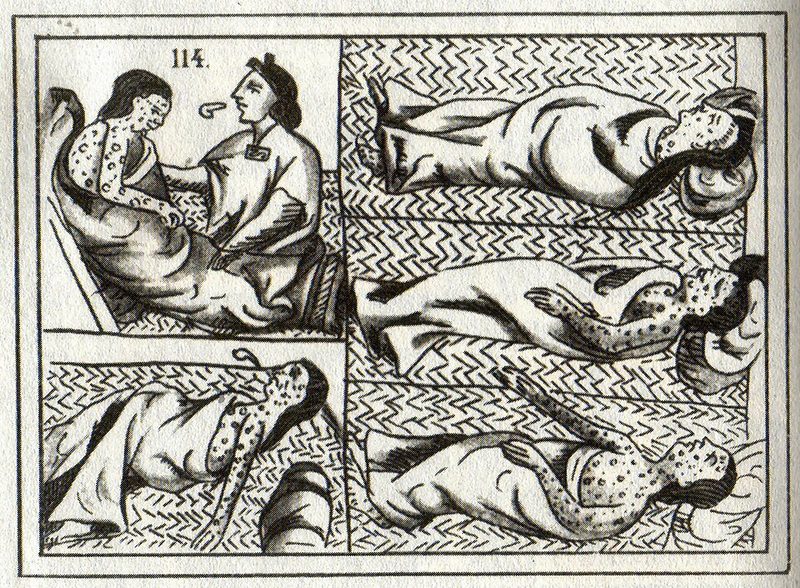
Smallpox reached Mexico with the Spanish in 1520 and spread through a people with no immunity. It killed the Aztec ruler Cuitláhuac and, by one estimate, half of Tenochtitlan before the city fell in August 1521. Estimates of the death toll vary widely.
Key people
- Cuitláhuac
- Aztec ruler who died of smallpox in October 1520
- Hernán Cortés
- Spanish commander who took Tenochtitlan in August 1521
Source
Hernán Cortés landed in 1519 with 11 ships, about 100 sailors and some 500 soldiers, and by the next year he held the Aztec ruler Montezuma II prisoner in Tenochtitlan. In June 1520 Montezuma's brother Cuitláhuac succeeded him, and on the night of 30 June, the noche triste, the Aztecs drove the Spaniards from the city with heavy losses.
Smallpox arrived that year. The Franciscan friar Toribio, better known by his Mexican name Motolinía, wrote that it came in 1520 with an enslaved African in the company of Narváez and carried off half the inhabitants of Mexico; Alexander von Humboldt repeated his account in the early 19th century. The Aztecs had no immunity to the disease. Cuitláhuac died of smallpox in October 1520, after a reign of about four months, and his nephew Cuauhtémoc succeeded him.
The epidemic crippled resistance. Britannica's editors estimate that it killed about half of Tenochtitlan's people. In May 1521 Cortés attacked the city with more than 800 Spaniards and tens of thousands of Indigenous warriors, many of them Tlaxcalans, old rivals of the Aztecs, and on 13 August he took it.
How many died across Mexico cannot be known with precision. A 2002 paper in Emerging Infectious Diseases, drawing on the population estimates of Cook and Simpson, put the smallpox deaths of 1519 to 1520 at 5 million to 8 million. Later epidemics called cocoliztli, beginning in 1545 and 1576, killed millions more; the authors argued that these were probably native hemorrhagic fevers, spread by rodents and worsened by extreme drought, and not diseases brought from Europe or Africa.
Keep exploring
 Read next · same disease or problem
The Balmis vaccine expedition (1803)
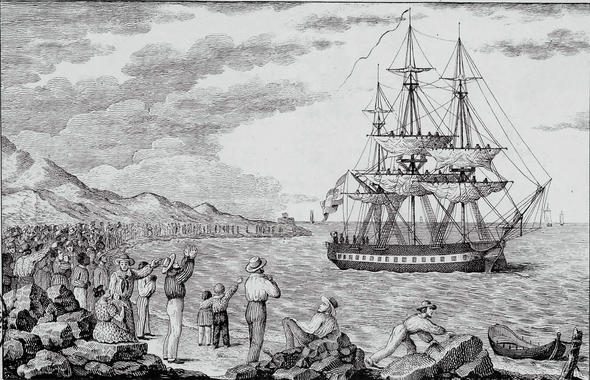
Smallpox devastated Mexico in 1520, and in 1804 the Balmis expedition carried the new vaccine through Mexico and beyond. Its story shows live cowpox carried to the Americas and Asia in a chain of children vaccinated arm to arm.
Read this moment
Read next · same disease or problem
The Balmis vaccine expedition (1803)
Smallpox devastated Mexico in 1520, and in 1804 the Balmis expedition carried the new vaccine through Mexico and beyond. Its story shows live cowpox carried to the Americas and Asia in a chain of children vaccinated arm to arm.
Read this moment
 Today on The Clinical Times
Love to Dream recalls portable baby sound machine over fire and burn risk
Love to Dream has recalled its portable Sleep Machine because its lithium-ion battery can overheat while charging with an incompatible charger, creating a risk of fire and burns.
Read today’s top stories
Today on The Clinical Times
Love to Dream recalls portable baby sound machine over fire and burn risk
Love to Dream has recalled its portable Sleep Machine because its lithium-ion battery can overheat while charging with an incompatible charger, creating a risk of fire and burns.
Read today’s top stories
All 526 moments in the history of medicine. This one is in chapter 3, Anatomy and observation
Connected moments
How this moment links to others in the history of medicine, and what you will find in each.
-
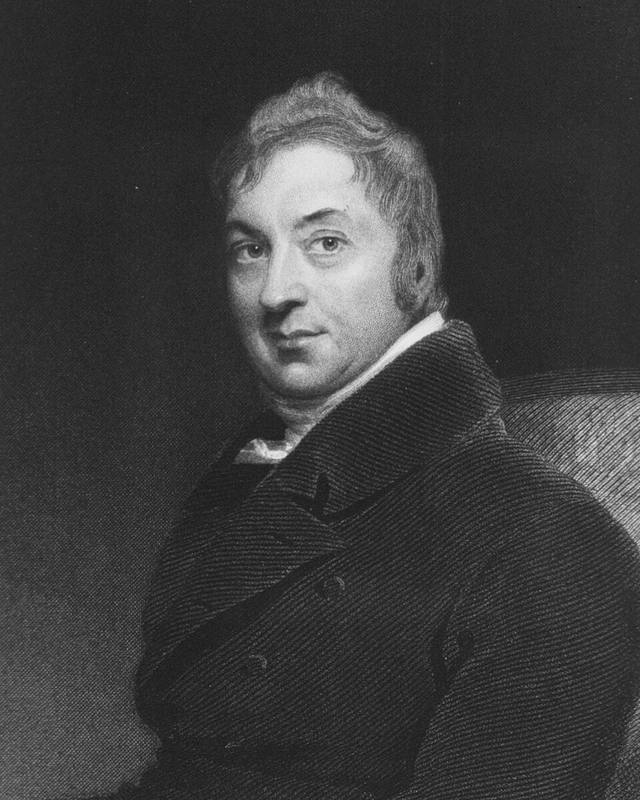 Same disease or problem1796Jenner's smallpox vaccination (cowpox inoculation)Smallpox killed perhaps half of Tenochtitlan among a people with no immunity. Jenner's story shows how inoculating cowpox gave that immunity safely, the start of vaccination.Read this moment
-
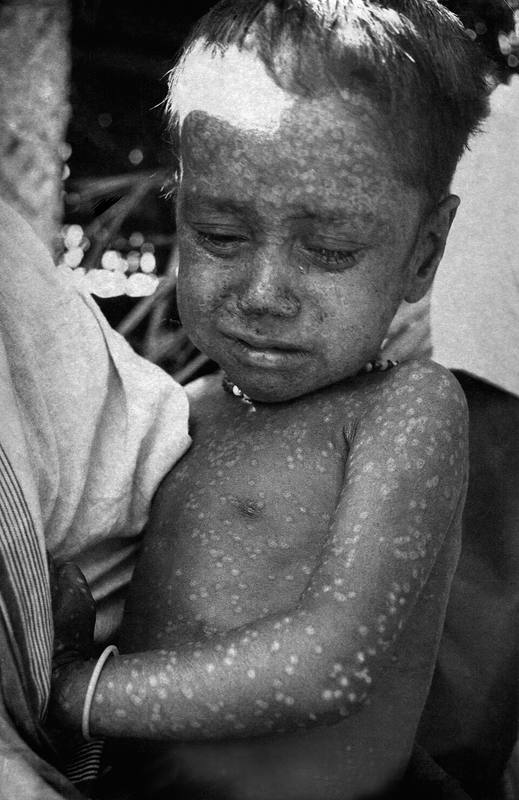 Same disease or problem1980Global Eradication of SmallpoxThe disease that helped topple the Aztec capital in 1521 was declared eradicated in 1980. The eradication story shows how surveillance, containment and ring vaccination ended it, the only human infectious disease wiped out.Read this moment