Neurology & Psychiatry
1817
Parkinson's Essay on the Shaking Palsy
In 1817 the London surgeon James Parkinson described six men with a tremor at rest, a forward-bent trunk and a walk that broke into a run, and argued that they shared one disease that nosologists had not yet classified.

Key people
- James Parkinson
- London surgeon who wrote An Essay on the Shaking Palsy
- Jean-Martin Charcot
- Paris neurologist who proposed naming the disease after Parkinson
Source
Parkinson opened his essay with a one-sentence definition. The shaking palsy, or paralysis agitans, was involuntary trembling with lessened muscular power in parts at rest, even when supported, together with a tendency to bend the trunk forward and to pass from a walking to a running pace. The senses and intellect were unharmed. The disease, he wrote in the preface, had not yet found a place in the classification of nosologists.
He was a member of the Royal College of Surgeons, born in 1755 in Hoxton, in the East End of London, the son of a surgeon-apothecary. He had served six years as his father's apprentice and in 1785 attended John Hunter's lectures. He also collected fossils and wrote a standard textbook of paleontology.
The evidence was six men. One, a gardener of just over 50, had first noticed trembling in his left hand. Two were seen by chance in the street: a man of 62 who had worked as an attendant at a magistrate's office and had been ill for eight or ten years, and a man of about 65, of remarkably athletic build, who could no longer walk. A fourth came to Parkinson about an abscess, a fifth was seen only at a distance, and the sixth, aged 72, gave a full history.
Parkinson admitted he had no autopsy findings and that analogy stood in for anatomy. He placed the disease in the spinal cord within the upper cervical vertebrae, spreading as it progressed to the medulla oblongata. For treatment he suggested taking blood from the upper neck, then blisters and a kept-open discharge at the same spot. He published, he said, because the ideas might help if tried early, and he hoped others would take up the study.
Later in the century the Paris neurologist Jean-Martin Charcot proposed the name maladie de Parkinson. Charcot also corrected parts of the description, noting that the patients were slow and rigid, not weak.
Keep exploring
 Read next · same disease or problem
L-DOPA for Parkinson disease (Cotzias) (1967)
Parkinson described the shaking palsy in 1817 and could offer only bleeding and blisters, and in 1967 L dopa gave patients real relief. Its story shows how high oral doses of a brain chemical transformed treatment of the disease he named.
Read this moment
Read next · same disease or problem
L-DOPA for Parkinson disease (Cotzias) (1967)
Parkinson described the shaking palsy in 1817 and could offer only bleeding and blisters, and in 1967 L dopa gave patients real relief. Its story shows how high oral doses of a brain chemical transformed treatment of the disease he named.
Read this moment
 Today on The Clinical Times
Love to Dream recalls portable baby sound machine over fire and burn risk
Love to Dream has recalled its portable Sleep Machine because its lithium-ion battery can overheat while charging with an incompatible charger, creating a risk of fire and burns.
Read today’s top stories
Today on The Clinical Times
Love to Dream recalls portable baby sound machine over fire and burn risk
Love to Dream has recalled its portable Sleep Machine because its lithium-ion battery can overheat while charging with an incompatible charger, creating a risk of fire and burns.
Read today’s top stories
All 526 moments in the history of medicine. This one is in chapter 4, Germs, numbers and clean water
Connected moments
How this moment links to others in the history of medicine, and what you will find in each.
-
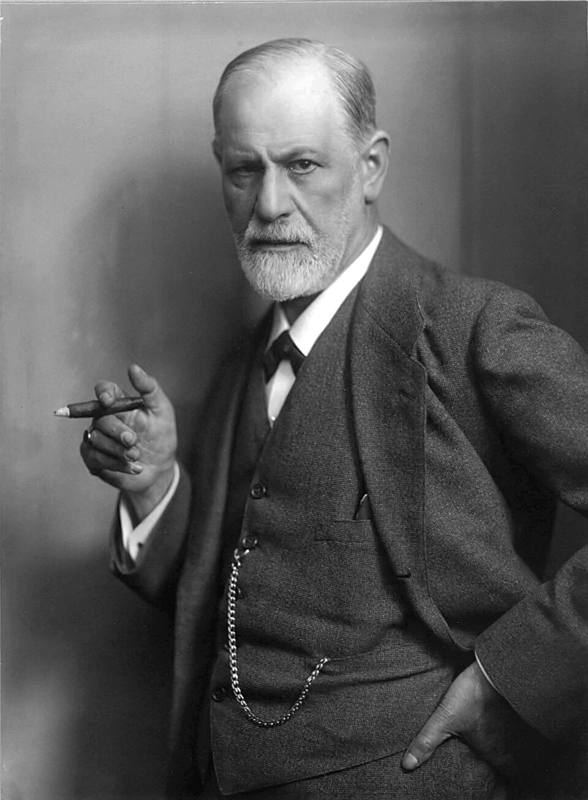 Same person1900Freud's Interpretation of DreamsJean-Martin Charcot proposed the name Parkinson's disease, and he also taught the young Freud in Paris. Freud's story shows him in Paris watching Charcot link hysterical symptoms to hypnotic suggestion, before he made dreams central to psychoanalysis.Read this moment
-
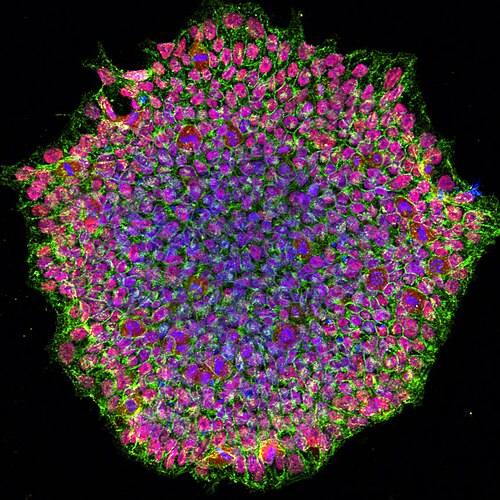 Same disease or problem2006Induced Pluripotent Stem Cells (iPSCs)The disease Parkinson described is now a target for cells grown from patients' own stem cells. The iPSC story shows adult cells reprogrammed into stem cells, and dopamine cell precursors given to seven patients with Parkinson's disease.Read this moment