Cardiology
1816
Laennec's stethoscope
Laennec found that a rolled tube of paper, and then a wooden cylinder, carried heart and chest sounds to the ear more clearly than an ear pressed to the body. His 1819 book used the instrument to diagnose diseases of the lungs, pleura and heart.
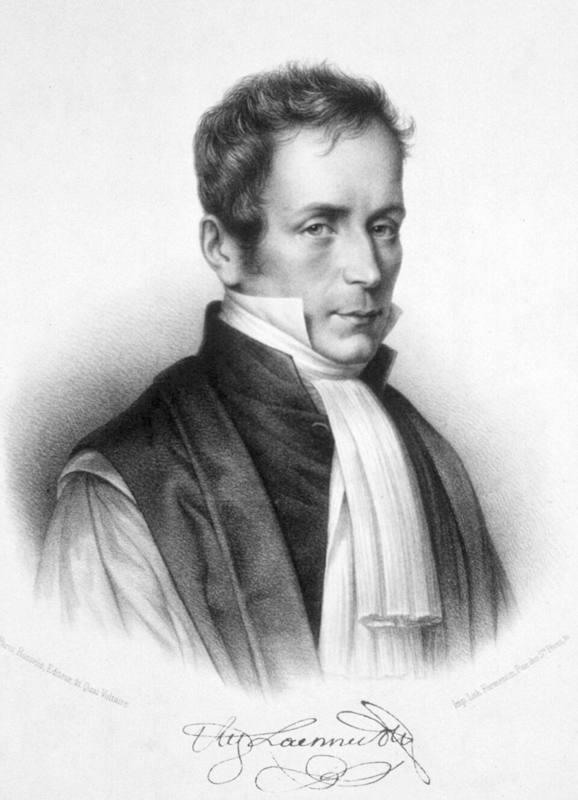
Key people
- René Laennec
- Necker Hospital physician who invented the stethoscope in 1816
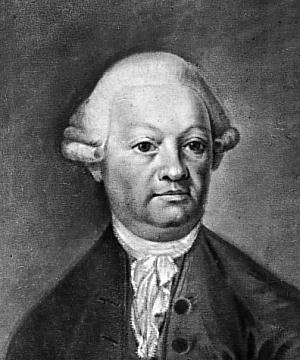
- Jean-Nicolas Corvisart
- Laennec's teacher, who introduced him to chest percussion
- Leopold Auenbrugger
- Viennese physician who invented chest percussion
Source
Physicians in early 19th-century Paris examined the chest by tapping it or by laying an ear directly on the patient. René Laennec had learned percussion from his teacher Jean-Nicolas Corvisart, who took it from a book by the Viennese physician Leopold Auenbrugger. Laennec had a gift for pathological anatomy, but his conservative politics long kept him from a senior post, and only after the monarchy returned in 1815 was he given a position at the Necker Hospital.
In his own account, Laennec was consulted in 1816 about a young woman with signs of heart disease. She was stout, so feeling and tapping the chest told him little, and her age and sex ruled out putting his ear to her chest. He recalled that a pin scratched at one end of a wooden beam is heard clearly at the other. He rolled a quire of paper into a tight cylinder, placed one end over her heart, and heard the heartbeat more distinctly than he ever had with his bare ear.
He began a series of observations at the Necker at once and had not interrupted them when he wrote his book. Glass and metal carried the sounds less well than lighter materials and felt cold in winter, so he settled on a wooden cylinder with a narrow bore, made in two halves joined by a screw so it could be carried. A funnel-shaped end served for breathing and the crackles he called râles; a wooden plug turned it into a plain tube for the voice and the heart. He named it the stethoscope, from the Greek words for chest and for looking.
De l'auscultation médiate appeared in Paris in two volumes in 1819. Laennec wrote that the new signs made the diagnosis of almost all diseases of the lungs, pleura and heart more certain, and he set them out in turn: the voice heard through the cylinder, the breath sounds, and the râles.
His stethoscope had one earpiece. After rubber came into use it gave way to instruments with pieces that fit into both ears, the form most doctors carry now.
Keep exploring
 Read next · built on
Auenbrugger's percussion of the chest (1761)
Laennec learned to tap the chest from Corvisart, who took the method from Auenbrugger's book. Auenbrugger's story shows how an innkeeper's son learned to hear hidden disease in the chest, and how Vienna ignored him.
Read this moment
Read next · built on
Auenbrugger's percussion of the chest (1761)
Laennec learned to tap the chest from Corvisart, who took the method from Auenbrugger's book. Auenbrugger's story shows how an innkeeper's son learned to hear hidden disease in the chest, and how Vienna ignored him.
Read this moment
 Today on The Clinical Times
Love to Dream recalls portable baby sound machine over fire and burn risk
Love to Dream has recalled its portable Sleep Machine because its lithium-ion battery can overheat while charging with an incompatible charger, creating a risk of fire and burns.
Read today’s top stories
Today on The Clinical Times
Love to Dream recalls portable baby sound machine over fire and burn risk
Love to Dream has recalled its portable Sleep Machine because its lithium-ion battery can overheat while charging with an incompatible charger, creating a risk of fire and burns.
Read today’s top stories
All 526 moments in the history of medicine. This one is in chapter 4, Germs, numbers and clean water
Connected moments
How this moment links to others in the history of medicine, and what you will find in each.
-
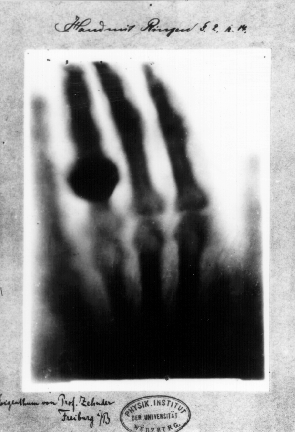 Same disease or problem1895Roentgen's discovery of X-raysBoth let physicians find disease inside the living chest, Laennec by listening and Roentgen by seeing through tissue. Roentgen's story shows the radiation that passed through soft tissue but not bone and started diagnostic radiology.Read this moment
-
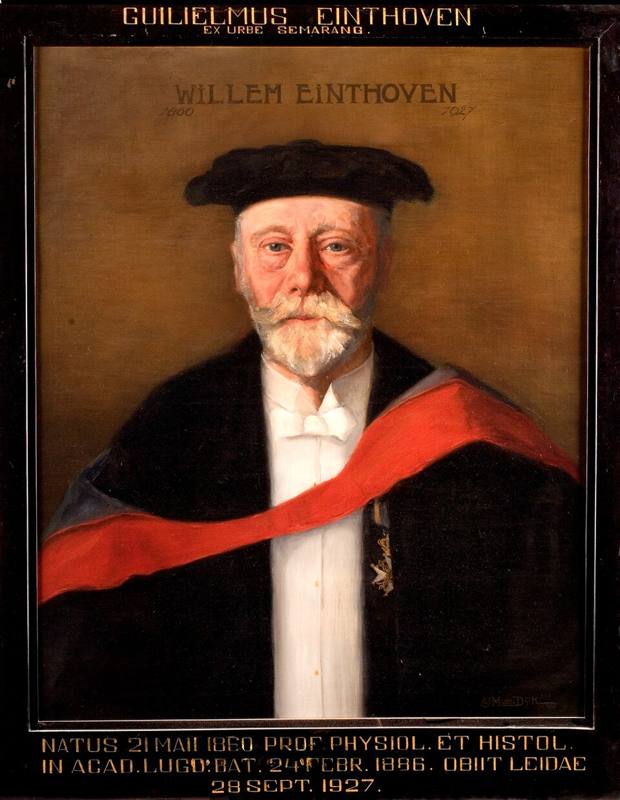 Same disease or problemc. 1903Einthoven's ElectrocardiographBoth gave doctors an instrument for diagnosing heart disease, Laennec a tube to hear it and Einthoven a machine to record its electrical activity. His story shows the wave names and three lead triangle still used today.Read this moment