Foundational Discovery
1761
Auenbrugger's percussion of the chest
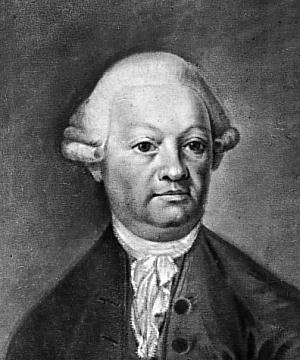
Leopold Auenbrugger's 95-page Latin book of 1761 showed physicians how to tap the chest and find disease hidden inside it by the sound. It drew little notice until Corvisart translated it into French in 1808.
Key people
- Leopold Auenbrugger
- Vienna physician who described chest percussion in 1761
- Gerhard van Swieten
- His teacher; percussed the abdomen but ignored the book
- Maximilian Stoll
- Vienna professor who had percussion taught to students
- Jean-Nicolas Corvisart
- Napoleon's physician; translated the book into French in 1808
Source
A healthy chest, when tapped, gives back a muffled note. Leopold Auenbrugger likened it to a drum covered with a thick woollen cloth. Where that note was lost, and the chest sounded like a fleshy thigh when struck, he placed disease in the region beneath. He set out the method in Inventum novum, a Latin book of 95 pages printed in Vienna by Trattner in 1761.
Auenbrugger was born in 1722 and studied medicine in Vienna under Gerhard van Swieten, who already tapped the abdomen to tell fluid from gas. As a physician at the Spanish Military Hospital in Vienna, he spent seven years on the chest: examining patients, attending autopsies, and filling the chests of corpses with fluid to learn how an effusion sounded. Tradition holds that the idea began in his boyhood in Graz, where his father, an innkeeper, tapped wine casks to judge how full they were. The book also has a passage on nostalgia, the homesickness of drafted soldiers, which he believed could dull the resonance of the chest.
Vienna paid little attention. Van Swieten ignored the book, and so did his successor, Anton de Haen. The next professor, Maximilian Stoll, took it seriously and had percussion taught to students. One of them, Josef Eyerel, wrote a book on the method that came to the notice of Jean-Nicolas Corvisart, Napoleon's physician. Corvisart obtained a copy of the original and translated it into French in 1808. His pupil Laennec and, in Vienna, Joseph Skoda spread the method further, and John Forbes published an English translation in London in 1824.
Auenbrugger had left the hospital after ten years and built a successful private practice. He wrote the libretto for The Chimney Sweep, a three-act opera by Antonio Salieri performed at the Burgtheater in 1781, and was knighted by Emperor Joseph II in 1783. He died in 1809, a year after the French translation appeared.
Keep exploring
 Read next · led to
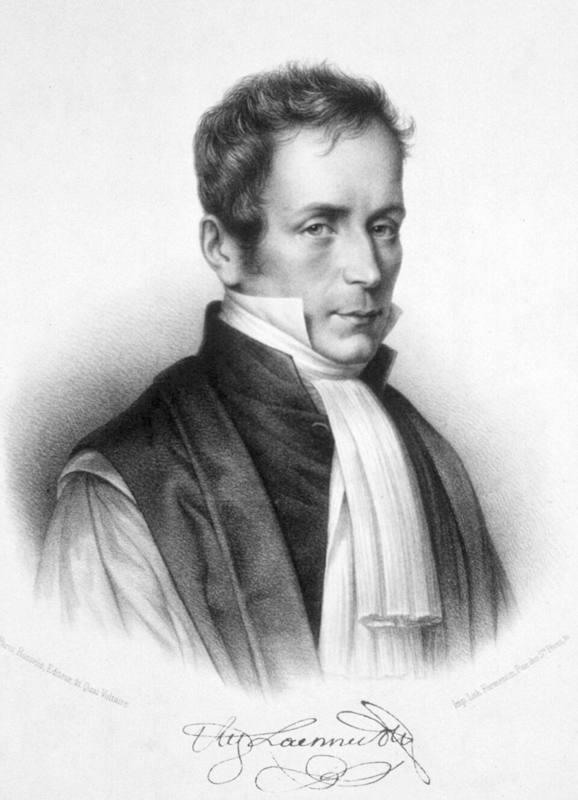
Laennec's stethoscope (1816)
Laennec learned percussion from Corvisart, who took it from Auenbrugger's book, and went on to invent the stethoscope. His story shows the next step in hearing disease inside the chest, a rolled paper tube that became an instrument.
Read this moment
Read next · led to
Laennec's stethoscope (1816)
Laennec learned percussion from Corvisart, who took it from Auenbrugger's book, and went on to invent the stethoscope. His story shows the next step in hearing disease inside the chest, a rolled paper tube that became an instrument.
Read this moment
 Today on The Clinical Times
Love to Dream recalls portable baby sound machine over fire and burn risk
Love to Dream has recalled its portable Sleep Machine because its lithium-ion battery can overheat while charging with an incompatible charger, creating a risk of fire and burns.
Read today’s top stories
Today on The Clinical Times
Love to Dream recalls portable baby sound machine over fire and burn risk
Love to Dream has recalled its portable Sleep Machine because its lithium-ion battery can overheat while charging with an incompatible charger, creating a risk of fire and burns.
Read today’s top stories
All 526 moments in the history of medicine. This one is in chapter 3, Anatomy and observation
Connected moments
How this moment links to others in the history of medicine, and what you will find in each.
-
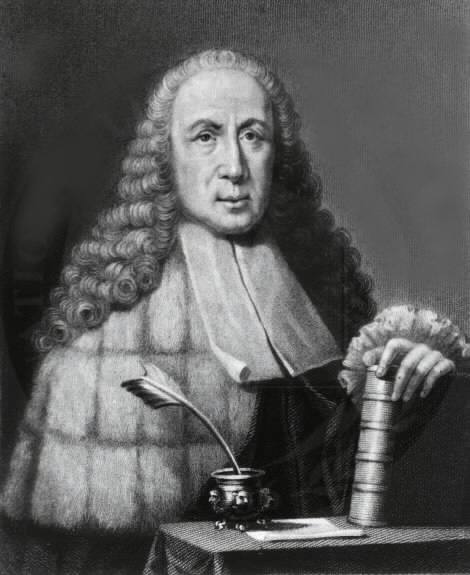 Same disease or problem1761Morgagni's De Sedibus et Causis MorborumBoth appeared in 1761 and both tied signs in the living to what autopsy showed, Auenbrugger by sound and Morgagni by dissection. Morgagni's 700 cases show the seats of disease found in particular organs.Read this moment
-
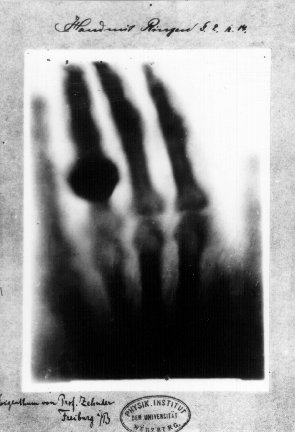 Same disease or problem1895Roentgen's discovery of X-raysAuenbrugger found hidden disease in the chest by its sound, and X rays later let physicians see inside a living patient. Roentgen's story shows a radiation passing through soft tissue but not bone, the start of diagnostic radiology.Read this moment