Reproductive Health
1880
Tarnier's incubator for premature infants
The Paris obstetrician Stéphane Tarnier adapted a poultry incubator to keep premature babies warm, installing the first at the Maternité in 1880. Pierre Budin refined the method, and showmen such as Martin Couney later put incubator babies on public display.
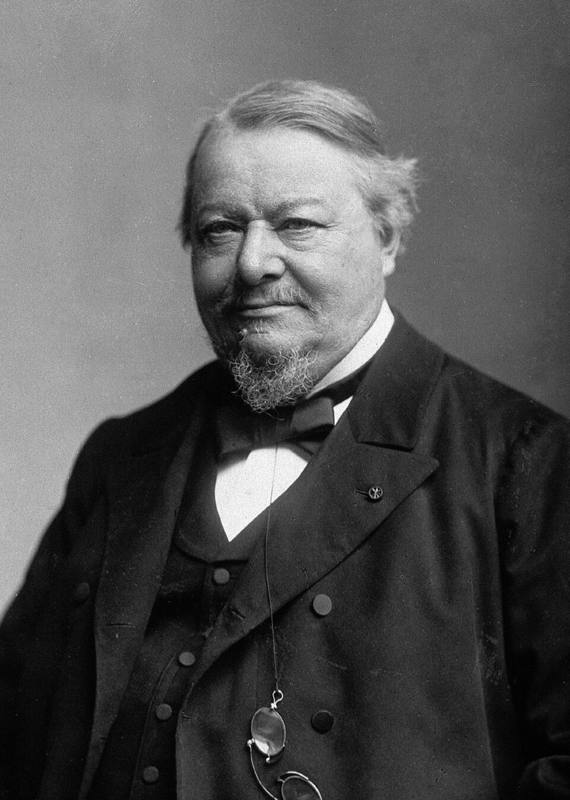
Key people
- Stéphane Tarnier
- Paris obstetrician who introduced the incubator at the Maternité
- Pierre Budin
- Obstetrician who ran the Maternité department for weaklings, 1895 to 1898
- Odile Martin
- Inventor of an incubator for hatching chicken eggs
- Martin Couney
- Exhibitor of incubator babies in Berlin, Paris and Coney Island
Source
Cold killed premature babies, and doctors had tried for decades to keep them warm. In December 1857 Professor Denucé of Bordeaux built a zinc cradle with double walls that could be filled with hot water. The Paris obstetrician Stéphane Tarnier looked instead to the poultry yard. According to a 2025 history in Acta Paediatrica, the idea came to him on a walk in the Jardin d'Acclimatation in 1878: an incubator like the one Odile Martin had invented for hatching chicken eggs.
In 1880, as a trial, Tarnier installed an incubator on that model at the Maternité in Paris. It was large enough for several infants at once, and it was in regular use from 21 November 1881. The same history reports that mortality among infants under 2 kg at the Maternité fell from 66 per cent in 1879 to 38 per cent in 1882. Because the big apparatus was bulky and dear, Tarnier then designed a small one for private practice: a wooden box 65 cm long, with hot-water bottles in a lower chamber, the baby on a mattress above and a pane of glass on top. Pierre Budin had already fitted the large incubator in his wards at the Charité with a Regnard regulator in 1883; an electric bell rang if the temperature rose too high.
Weak infants could turn blue and die quickly, so the wooden sides were later replaced with glass to keep them in view. At the end of 1893 the Maternité opened a department for weaklings, which Budin ran from January 1895 until March 1898. He wanted each incubator at the mother's bedside. When Professor Pajot had turned a room into one giant incubator in 1885, Budin wrote, mothers kept apart from their babies soon lost interest in them.
Incubators also went on show. Budin mentioned the gas-heated Lion incubators, in which infants could be displayed even on a Paris boulevard, which three times failed at the Maternité in winter when the gas pressure fell. Martin Couney exhibited premature babies in incubators at the Berlin exposition of 1896 and in Paris in 1900. At Coney Island he ran one show at Luna Park from 1903 to 1943 and another at Dreamland from 1904 until it burned in 1911. Visitors paid 25 cents and parents paid nothing. The Coney Island History Project credits him with more than 8,000 babies treated by 1939, of whom 6,500 lived. His biographer, Dawn Raffel, found that, despite his claims, he had no medical degree.
Keep exploring
 Read next · same disease or problem
Antenatal corticosteroids for fetal lung maturation (Liggins and Howie trial) (1972)
Tarnier kept premature babies warm, and Liggins found a way to ready their lungs before birth. His story shows betamethasone given to mothers cutting breathing distress and early deaths in preterm babies.
Read this moment
Read next · same disease or problem
Antenatal corticosteroids for fetal lung maturation (Liggins and Howie trial) (1972)
Tarnier kept premature babies warm, and Liggins found a way to ready their lungs before birth. His story shows betamethasone given to mothers cutting breathing distress and early deaths in preterm babies.
Read this moment
 Today on The Clinical Times
Love to Dream recalls portable baby sound machine over fire and burn risk
Love to Dream has recalled its portable Sleep Machine because its lithium-ion battery can overheat while charging with an incompatible charger, creating a risk of fire and burns.
Read today’s top stories
Today on The Clinical Times
Love to Dream recalls portable baby sound machine over fire and burn risk
Love to Dream has recalled its portable Sleep Machine because its lithium-ion battery can overheat while charging with an incompatible charger, creating a risk of fire and burns.
Read today’s top stories
All 526 moments in the history of medicine. This one is in chapter 4, Germs, numbers and clean water
Connected moments
How this moment links to others in the history of medicine, and what you will find in each.
-
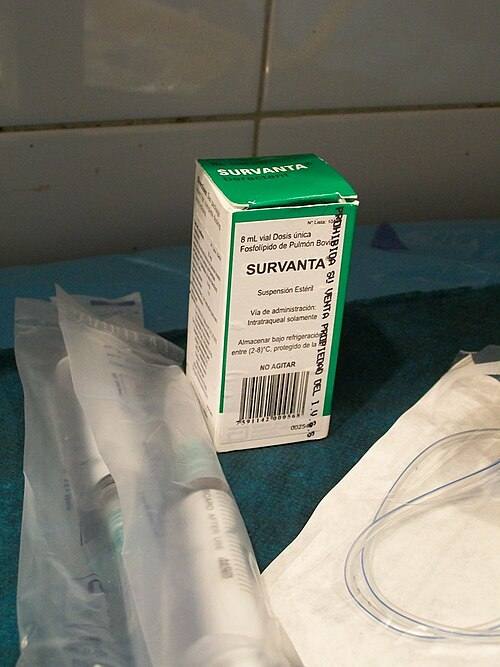 Same disease or problem1980Exogenous surfactant therapy for neonatal respiratory distress syndrome (Fujiwara)Both helped premature babies survive, Tarnier with warmth and Fujiwara by putting surfactant into their lungs. The surfactant story shows eight of ten preterm infants surviving in the first trial.Read this moment
-
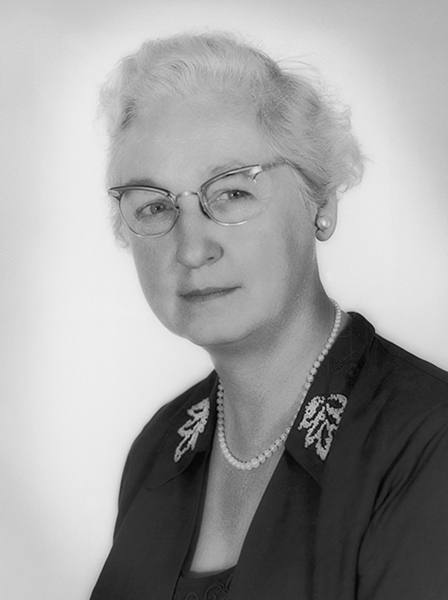 Same disease or problem1953Apgar Score for newborn assessmentTarnier's incubators and later Budin's glass sided ones let staff watch fragile newborns, and Apgar gave them a quick score of how a baby was doing. Her story shows five signs scored one minute after birth, a check now given to most newborns.Read this moment