Infectious Disease
1880
Laveran's discovery of the malaria parasite
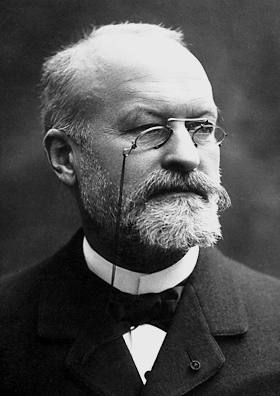
In 1880, at the military hospital in Constantine, Algeria, the French army physician Alphonse Laveran saw moving filaments emerge from pigmented bodies in a malaria patient's blood and concluded that malaria was caused by a protozoan parasite.
Key people
- Alphonse Laveran
- French army physician who found the malaria parasite in 1880
- Ronald Ross
- Showed that mosquitoes transmit the malaria parasite
Source
Posted to Bône in Algeria in 1878, the French army physician Alphonse Laveran found that many of his patients had malarial fevers of a kind he had seen only in rare, mild forms in France. At necropsies on patients who had died of malignant fever he studied melanaemia, the black pigment in malarial blood, which others had described without settling its cause.
In fresh blood he noticed pigmented spherical bodies that moved like amoebae, clear spots inside red cells, and crescent-shaped pigmented forms, and he began to suspect parasites. Then, in 1880 at the military hospital in Constantine, he saw thread-like filaments resembling flagella moving rapidly at the edges of the pigmented bodies in a patient's blood, pushing aside neighboring red cells. After that, he later wrote, he had no more doubt that they were parasites.
He reported to the Academy of Medicine and the Academy of Sciences between 1880 and 1882 and published a monograph in Paris in 1881. It met with much skepticism. In 1879 Klebs and Tommasi-Crudeli had described a Bacillus malariae in the soil and water of malarial districts, and many Italian workers had confirmed it. Laveran's organism looked like no known microbe, and blood examination in 1880 was crude. In 1882 he went to Rome and, at the San Spirito hospital, found the same parasites in patients infected in the Roman Campagna.
Confirmations slowly accumulated, and by 1889 the parasite had been found in most malarial regions; that year the Academy of Sciences awarded him the Bréant Prize. Having failed to find the parasite in air, water or soil, Laveran proposed in 1884 that it lived in mosquitoes, a role Ronald Ross later demonstrated. Laveran received the Nobel Prize in 1907 for his work on protozoa as causes of disease.
Keep exploring
 Read next · led to
Ross and the mosquito transmission of malaria (1897)
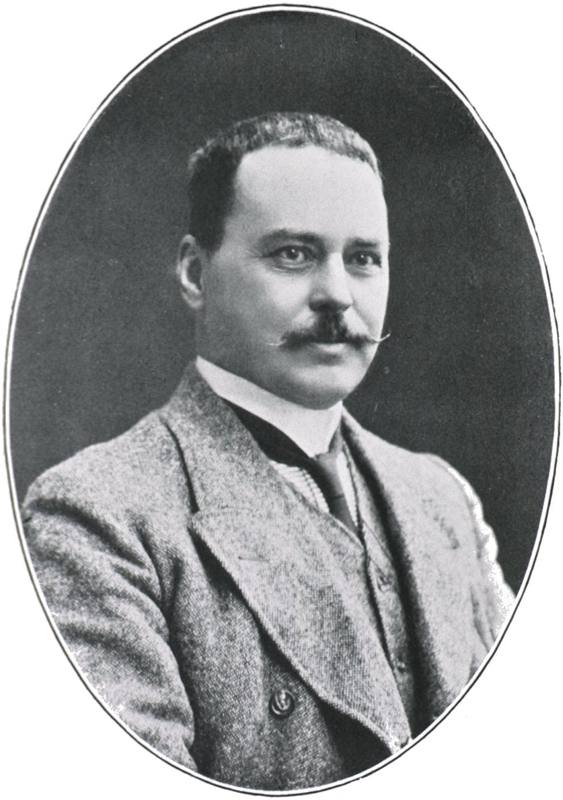
Laveran proposed in 1884 that the parasite lived in mosquitoes, a role Ronald Ross later demonstrated. Ross's story shows how the parasite was traced through mosquitoes to explain how malaria passes between people.
Read this moment
Read next · led to
Ross and the mosquito transmission of malaria (1897)
Laveran proposed in 1884 that the parasite lived in mosquitoes, a role Ronald Ross later demonstrated. Ross's story shows how the parasite was traced through mosquitoes to explain how malaria passes between people.
Read this moment
 Today on The Clinical Times
Love to Dream recalls portable baby sound machine over fire and burn risk
Love to Dream has recalled its portable Sleep Machine because its lithium-ion battery can overheat while charging with an incompatible charger, creating a risk of fire and burns.
Read today’s top stories
Today on The Clinical Times
Love to Dream recalls portable baby sound machine over fire and burn risk
Love to Dream has recalled its portable Sleep Machine because its lithium-ion battery can overheat while charging with an incompatible charger, creating a risk of fire and burns.
Read today’s top stories
All 526 moments in the history of medicine. This one is in chapter 4, Germs, numbers and clean water
Connected moments
How this moment links to others in the history of medicine, and what you will find in each.
-
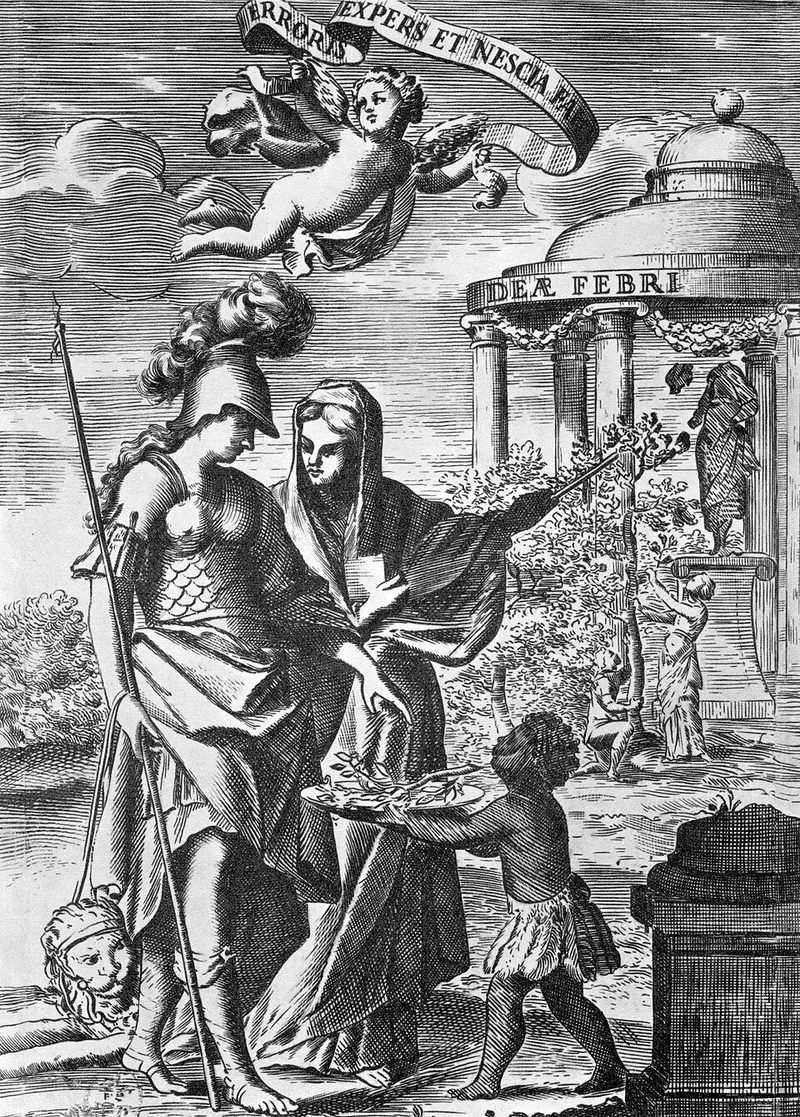 Same disease or problemc. 1630Cinchona Bark as a Remedy for MalariaCinchona bark had treated malaria for two and a half centuries before Laveran saw its cause. The cinchona story shows the bark's route from Spanish Peru to Europe and the quinine later drawn from it.Read this moment
-
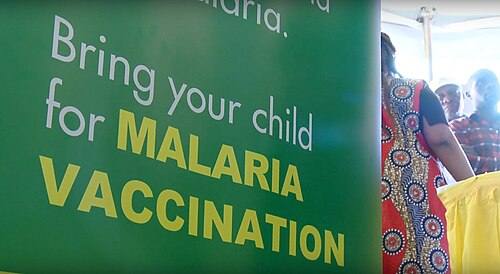 Same disease or problem2011RTS,S/AS01 (Mosquirix) Malaria Vaccine Phase 3 TrialLaveran found the parasite that causes malaria, and in 2011 the first malaria vaccine showed it could protect against it. The RTS,S story shows partial protection that still led WHO to recommend it for African children.Read this moment