Surgery & Anesthesia
1881
Billroth's gastrectomy
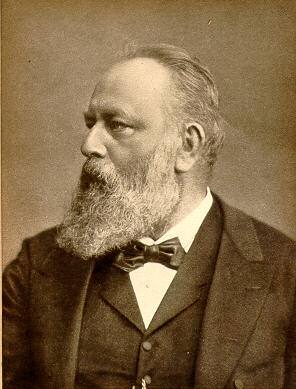
On 29 January 1881 in Vienna, Theodor Billroth removed a cancer of the pylorus from Therese Heller and joined the remaining stomach to the duodenum, the first such resection a patient survived. Two earlier attempts by other surgeons had ended in death within days.
Key people
- Theodor Billroth
- Vienna surgeon who performed the first survived gastrectomy
- Therese Heller
- Patient, 43, operated on for pyloric cancer on 29 January 1881
- Anton Wölfler
- Billroth's assistant who described the operation and tested variants
Source
Theodor Billroth, born on the island of Rügen in 1829, was called to head the second surgical clinic of the University of Vienna in 1867. He tested new operations on animals before trying them on patients: he removed the esophagus in dogs in 1871, performed a laryngectomy for cancer in 1873 and resected the cervical esophagus in 1877. He worked with only chloroform and ether for anesthesia, and with no intravenous fluids, transfusion or antibiotics.
Two surgeons had already tried to remove cancers of the pylorus. J. Péan's patient in Paris died on the fifth day after the operation in April 1879, and L. Rydygier's patient in Culm died 12 hours after surgery in November 1880.
Billroth's patient, Therese Heller, was 43 and the mother of eight. Since October 1880 she had lost a great deal of weight and had a swelling in the upper abdomen and frequent vomiting. On 29 January 1881, under a mixture of chloroform, alcohol and ether, with Mikulicz assisting, Billroth opened the abdomen, found a carcinoma of the pylorus involving more than a third of the lower stomach, tied the vessels along both curves of the stomach, cut out the tumor and sewed the duodenum to the remaining stomach. The operation took an hour and a half. A week later her wound had healed and she was eating semisolid food. She died of metastases four months after the operation.
Concerned that the cut end of the stomach was too wide for the duodenum, Billroth had his assistant Anton Wölfler try other techniques in dogs. On 14 January 1885 he first performed the variant later called Billroth II, joining the remaining stomach to a loop of jejunum, and he went on to use it in 32 patients. Wölfler's illustrated account of Billroth's pylorus resections was published in Vienna in 1881.
Keep exploring
 Read next · same person
Kocher's thyroid surgery (1883)
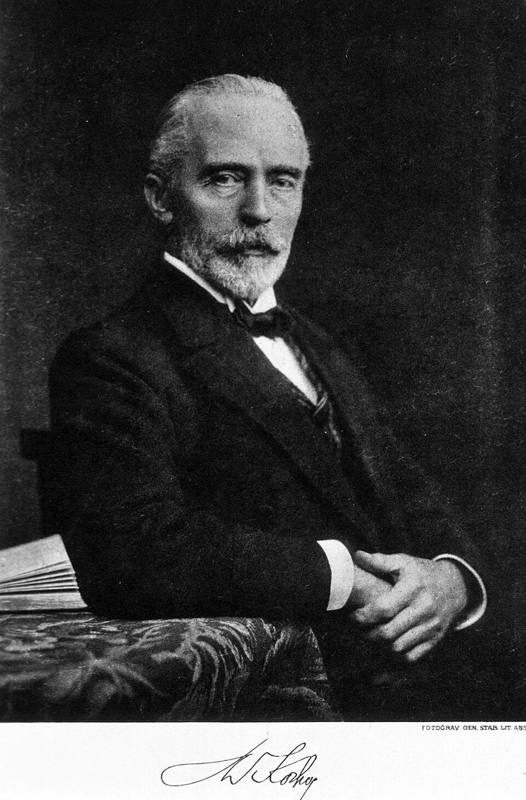
Theodor Kocher trained under Billroth before making thyroid surgery safe in Bern. Kocher's story shows how he found that removing the whole thyroid caused a wasting syndrome.
Read this moment
Read next · same person
Kocher's thyroid surgery (1883)
Theodor Kocher trained under Billroth before making thyroid surgery safe in Bern. Kocher's story shows how he found that removing the whole thyroid caused a wasting syndrome.
Read this moment
 Today on The Clinical Times
Love to Dream recalls portable baby sound machine over fire and burn risk
Love to Dream has recalled its portable Sleep Machine because its lithium-ion battery can overheat while charging with an incompatible charger, creating a risk of fire and burns.
Read today’s top stories
Today on The Clinical Times
Love to Dream recalls portable baby sound machine over fire and burn risk
Love to Dream has recalled its portable Sleep Machine because its lithium-ion battery can overheat while charging with an incompatible charger, creating a risk of fire and burns.
Read today’s top stories
All 526 moments in the history of medicine. This one is in chapter 4, Germs, numbers and clean water
Connected moments
How this moment links to others in the history of medicine, and what you will find in each.
-
 Same disease or problem1984Marshall & Warren: Helicobacter pylori causes peptic ulcer diseaseBillroth cut out a stomach cancer, and a century later Helicobacter pylori infection was linked to stomach cancer. Marshall and Warren's story shows the bacterium Marshall swallowed to prove it caused ulcers.Read this moment
-
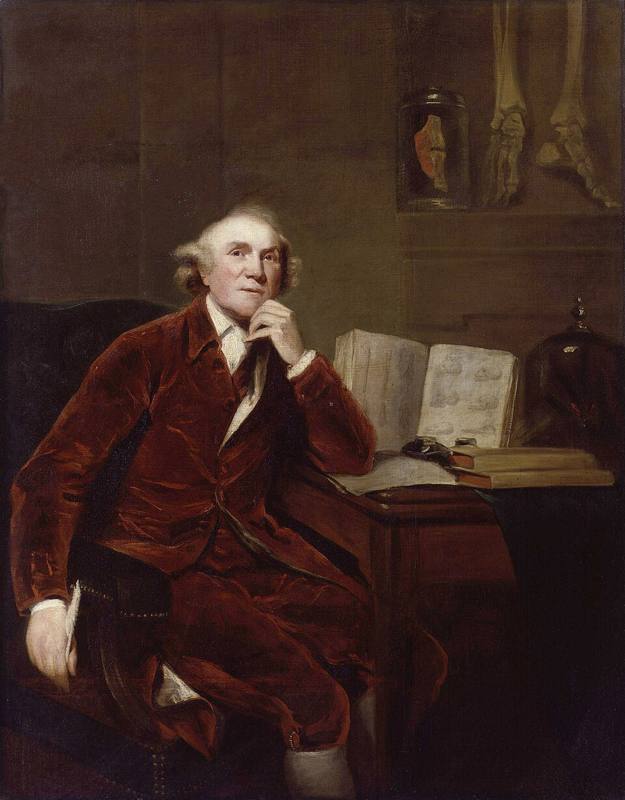 Same disease or problemc. 1768John Hunter and experimental surgeryBoth tested new operations on animals before trying them on patients, Hunter for aneurysm and Billroth for the stomach and esophagus. Hunter's story shows a surgeon who based treatment on observation and experiment.Read this moment