Foundational Discovery
1921
Loewi and chemical nerve transmission
In 1921 Otto Loewi showed with two frog hearts that stimulating the vagus nerve released a substance into the surrounding fluid that slowed a second heart. It turned the idea that nerves act by releasing chemicals from hypothesis into demonstrated fact; the substance was acetylcholine.
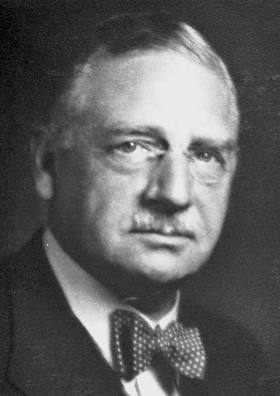
Key people
- Otto Loewi
- Graz pharmacologist who showed chemical transmission from the vagus nerve
- Henry Dale
- British pharmacologist who studied acetylcholine; shared the 1936 Nobel Prize
Source
The usual view in 1921 was that nerve impulses acted directly on muscles and glands. There were hints of another mechanism. In 1904 T. R. Elliott, working in Cambridge, suggested that sympathetic nerves act by releasing adrenaline at their endings, and ten years later Henry Dale showed that acetylcholine mimicked the effects of parasympathetic nerves. But acetylcholine had not been found in the body, and neither idea had been proved.
Otto Loewi, professor of pharmacology at Graz, had voiced a chemical hypothesis 17 years earlier. By his own later account, the test came to him in a dream the night before Easter Sunday. He woke, scribbled notes, and in the morning could not read them. When the idea returned at 3 a.m. the next night he went straight to the laboratory. He set up two beating frog hearts, each in its own small chamber of fluid, one with its vagus nerve attached. Stimulating the vagus slowed the first heart, as expected. Fluid taken from that heart and given to the second slowed it too. Fluid from a heart whose accelerator nerve had been stimulated made the second heart beat faster.
Loewi named the slowing agent Vagusstoff and reported the result in Pflügers Archiv in 1921. Blood and tissue broke it down quickly, which made it hard to identify, until he and Navratil found that physostigmine prevented the breakdown. He went on to show that Vagusstoff was acetylcholine, and that a substance closely related to adrenaline did the corresponding work at sympathetic nerve endings. Dale and Dudley also prepared small amounts of acetylcholine from the body, and Dale's group showed it released in autonomic ganglia (with Feldberg and Gaddum) and at the junction of motor nerves and muscle.
Loewi and Dale shared the 1936 Nobel Prize in Physiology or Medicine. After German troops entered Austria in 1938, the Gestapo arrested Loewi and two of his sons. He was allowed to leave only after being made to instruct his Stockholm bank to transfer the prize money to a Nazi-controlled bank. He reached England that September, stayed with Dale, worked in Oxford and then at New York University, and became an American citizen in 1946. He died on 25 December 1961.
Keep exploring
 Read next · same disease or problem
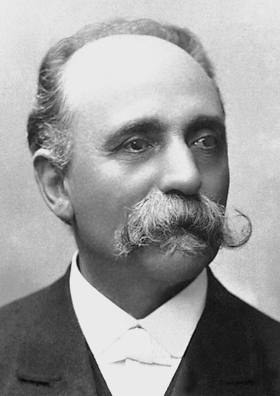
Golgi, Cajal and the neuron (1906)
Cajal showed nerve cells are separate and pass signals across the spaces between them, and Loewi showed the signal can be a chemical. Their story shows the silver stain and the neuron doctrine.
Read this moment
Read next · same disease or problem
Golgi, Cajal and the neuron (1906)
Cajal showed nerve cells are separate and pass signals across the spaces between them, and Loewi showed the signal can be a chemical. Their story shows the silver stain and the neuron doctrine.
Read this moment
 Today on The Clinical Times
Love to Dream recalls portable baby sound machine over fire and burn risk
Love to Dream has recalled its portable Sleep Machine because its lithium-ion battery can overheat while charging with an incompatible charger, creating a risk of fire and burns.
Read today’s top stories
Today on The Clinical Times
Love to Dream recalls portable baby sound machine over fire and burn risk
Love to Dream has recalled its portable Sleep Machine because its lithium-ion battery can overheat while charging with an incompatible charger, creating a risk of fire and burns.
Read today’s top stories
All 526 moments in the history of medicine. This one is in chapter 5, Cures and codes
Connected moments
How this moment links to others in the history of medicine, and what you will find in each.
-
 Same disease or problem1967L-DOPA for Parkinson disease (Cotzias)Loewi proved nerves act by releasing chemicals, and L dopa treated Parkinson disease by replacing one of them, dopamine. The L dopa story shows patients' rigidity and tremor easing on high oral doses.Read this moment
-
 Same disease or problem1987Fluoxetine (Prozac) approval: first widely used SSRILoewi found the first chemical messenger between nerves, and fluoxetine was designed to act on another, serotonin. Its story shows the first widely used drug of its kind for depression.Read this moment