Foundational Discovery
1906
Golgi, Cajal and the neuron
In 1906 Camillo Golgi and Santiago Ramón y Cajal shared the Nobel Prize for work on the structure of the nervous system. Using Golgi's silver stain, Cajal showed that the nervous system is built of separate cells, the neuron doctrine, which Golgi rejected.
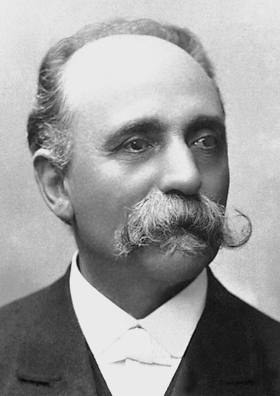
Key people
- Camillo Golgi
- Pavia pathologist who devised the black reaction silver stain in 1873
- Santiago Ramón y Cajal
- Spanish histologist whose work founded the neuron doctrine
- Wilhelm von Waldeyer-Hartz
- Anatomist whose 1891 review introduced the word neuron
Source
Before the 1870s the stains used on brain tissue colored almost everything at once and hid its finer structure. Camillo Golgi, born near Brescia in 1843 and trained at Pavia, became chief medical officer of a hospital for the chronically sick at Abbiategrasso in 1872 and worked on the nervous system in a small kitchen he had turned into a laboratory. In August 1873 he published a method in which tissue hardened in potassium or ammonium dichromate was soaked in silver nitrate. Only a few nerve cells turned black, but each was stained whole, cell body, dendrites and axon. He called it the black reaction.
Golgi read his preparations as showing that nerve fibers joined in a diffuse network, and for years his method was little used. Santiago Ramón y Cajal, born in 1852 in Petilla de Aragón and a former army doctor in Cuba, was professor of anatomy at Valencia when he first saw Golgi preparations in 1887, at the Madrid home of Luis Simarro. He refined the stain, applied it to the brains of young animals, and in 1888 published a study of the bird cerebellum.
Cajal concluded that the brain and spinal cord are made of countless separate units, each with its own processes, which end freely and pass signals to other cells by contact across the spaces between them. He recorded what he saw in thousands of drawings. In 1891 Wilhelm von Waldeyer-Hartz drew on this work in a review that introduced the word neuron, and the view became known as the neuron doctrine.
The Nobel Prize in Physiology or Medicine for 1906 went jointly to Golgi and Cajal "in recognition of their work on the structure of the nervous system." They were the first scientists to share a medicine prize. Golgi still held that the nervous system was a continuous network and defended that view in his Nobel lecture.
Cajal held chairs at Valencia, Barcelona and, from 1892, Madrid. Golgi spent his career at Pavia, where he took the chair of general pathology in 1881 and was for many years rector of the university.
Keep exploring
 Read next · same disease or problem
Schleiden and Schwann's cell theory (1839)
The cell theory made cells the unit of life, and Cajal showed the nervous system too is built of separate cells. The cell theory story shows Schleiden and Schwann uniting plants and animals on one plan.
Read this moment
Read next · same disease or problem
Schleiden and Schwann's cell theory (1839)
The cell theory made cells the unit of life, and Cajal showed the nervous system too is built of separate cells. The cell theory story shows Schleiden and Schwann uniting plants and animals on one plan.
Read this moment
 Today on The Clinical Times
Love to Dream recalls portable baby sound machine over fire and burn risk
Love to Dream has recalled its portable Sleep Machine because its lithium-ion battery can overheat while charging with an incompatible charger, creating a risk of fire and burns.
Read today’s top stories
Today on The Clinical Times
Love to Dream recalls portable baby sound machine over fire and burn risk
Love to Dream has recalled its portable Sleep Machine because its lithium-ion battery can overheat while charging with an incompatible charger, creating a risk of fire and burns.
Read today’s top stories
All 526 moments in the history of medicine. This one is in chapter 5, Cures and codes
Connected moments
How this moment links to others in the history of medicine, and what you will find in each.
-
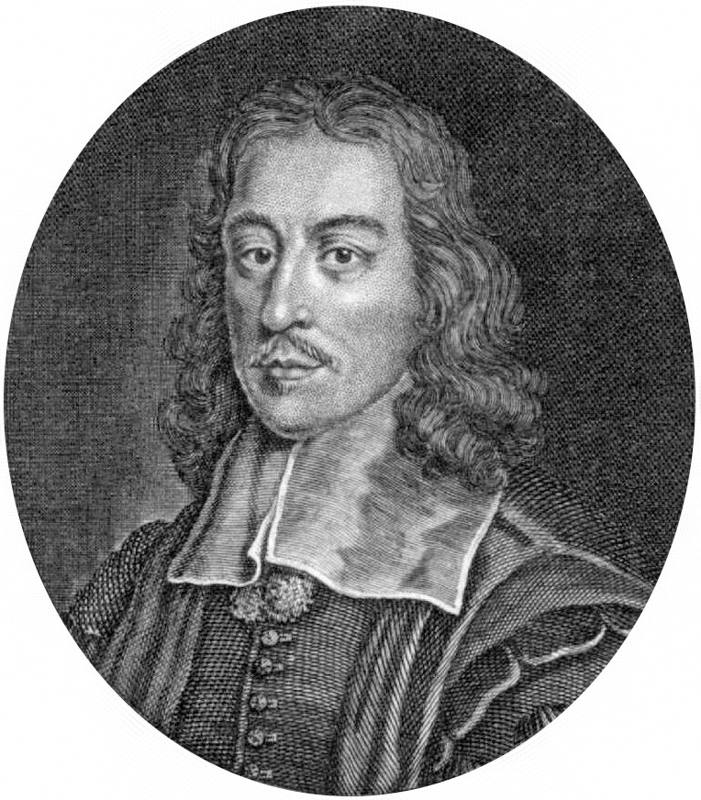 Same disease or problem1664Willis's Cerebri AnatomeWillis gave the fullest account of the brain and nerves of his day, and Golgi and Cajal revealed their fine structure. Willis's story shows the first book to use the word neurology.Read this moment
-
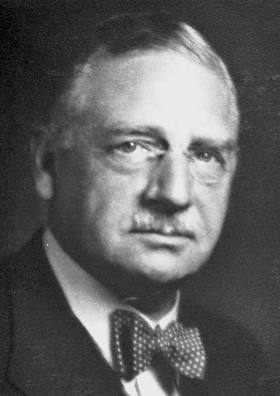 Same disease or problem1921Loewi and chemical nerve transmissionCajal held that nerve cells pass signals across the spaces between them, and Loewi showed those signals can be chemical. His story shows a frog heart slowed by fluid taken from another.Read this moment