Neurology & Psychiatry
1664
Willis's Cerebri Anatome
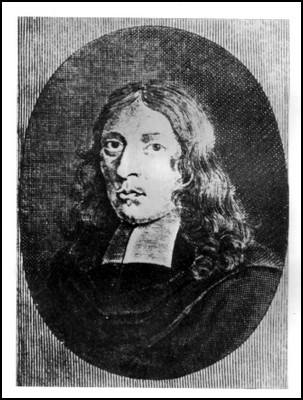
Thomas Willis's illustrated account of the brain and nerves, with many plates drawn by Christopher Wren, described the ring of arteries at the base of the brain now called the circle of Willis and was the first book to use the word neurology.

Key people
- Thomas Willis
- Oxford physician who wrote Cerebri anatome
- Christopher Wren
- Wadham College natural philosopher who drew many of the plates
- Richard Lower
- Physician who assisted Willis with the work
Source
Many of the plates in Thomas Willis's book on the brain were drawn by Christopher Wren, then a natural philosopher at Wadham College, Oxford. In his preface Willis thanked Wren for drawing figures of the skull and brain with his own hands. Cerebri anatome appeared in London in 1664, and the Royal College of Surgeons describes it as the most complete and accurate account of the nervous system published up to that time.
Willis was born in Wiltshire in 1621 and educated at Oxford. He took up medicine during the Civil War, began to practice after 1646 and had a thriving Oxford practice by the mid-1650s. His reputation grew after a woman hanged for murdering her illegitimate child was brought for dissection to a colleague's rooms: Willis and the colleague found she was still alive, revived her with a primitive form of cardiac massage, and she went on to seek a pardon.
Several men assisted him, among them Wren, the physician Richard Lower and the philosopher John Locke. To trace the blood supply, Willis injected colored dye into the vessels. The book gave the first descriptions of the arterial ring at the base of the brain that now bears his name and of the eleventh cranial nerve. It also introduced the word neurology; the Oxford English Dictionary records Willis as the first to use it in print.
The Royal Society calls Willis the first neurologist of the early modern period in British medicine. Cerebri anatome was reprinted in quarto, octavo and duodecimo editions, and its copper plates were reused and copied for later editions of his books. His account of the brain's anatomy and his discovery of saccharine diabetes were regarded as his finest work. He died in 1675.
Keep exploring
 Read next · same person
Transfusion of animal blood into humans (1667)
Richard Lower assisted Willis with his brain anatomy and three years later transfused sheep's blood into a man in London. The transfusion story shows those daring first attempts, and the death in Paris that led to bans.
Read this moment
Read next · same person
Transfusion of animal blood into humans (1667)
Richard Lower assisted Willis with his brain anatomy and three years later transfused sheep's blood into a man in London. The transfusion story shows those daring first attempts, and the death in Paris that led to bans.
Read this moment
 Today on The Clinical Times
Love to Dream recalls portable baby sound machine over fire and burn risk
Love to Dream has recalled its portable Sleep Machine because its lithium-ion battery can overheat while charging with an incompatible charger, creating a risk of fire and burns.
Read today’s top stories
Today on The Clinical Times
Love to Dream recalls portable baby sound machine over fire and burn risk
Love to Dream has recalled its portable Sleep Machine because its lithium-ion battery can overheat while charging with an incompatible charger, creating a risk of fire and burns.
Read today’s top stories
All 526 moments in the history of medicine. This one is in chapter 3, Anatomy and observation
Connected moments
How this moment links to others in the history of medicine, and what you will find in each.
- Led to1776Dobson's experiments on diabetic urineWillis wrote that diabetic urine was wonderfully sweet, and a century later Dobson proved the sugar was real. His story shows diabetic urine evaporated to a sugary cake and the sugar traced to the blood.Read this moment
-
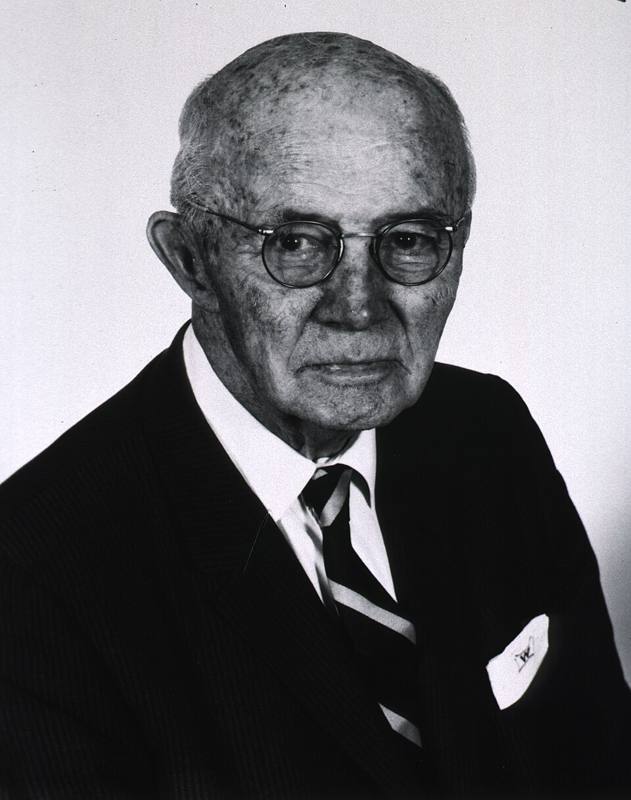 Same disease or problem1960Closed-chest cardiac massageWillis revived a hanged woman with a primitive form of cardiac massage, and in 1960 compressing the closed chest was shown to treat cardiac arrest. Its story shows how that method, joined to mouth to mouth breathing, became CPR.Read this moment
-
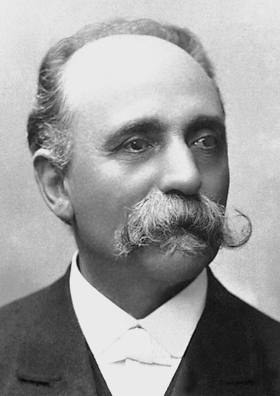 Same disease or problem1906Golgi, Cajal and the neuronWillis gave the most complete account of the nervous system of his time, and Golgi and Cajal later revealed its fine structure. Their story shows how a silver stain proved the nervous system is built of separate cells.Read this moment