Epidemiology
1662
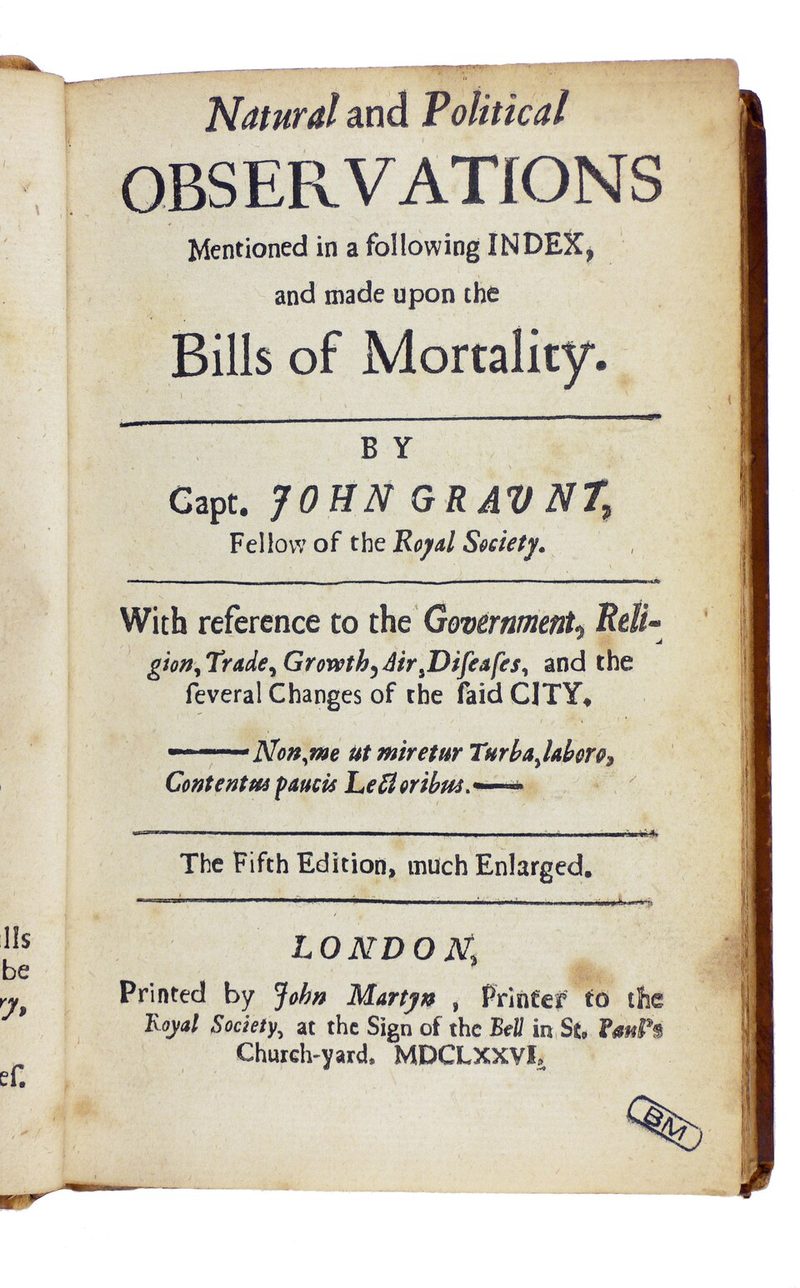
Graunt's Observations on the Bills of Mortality
John Graunt turned twenty years of London's weekly death counts into tables, estimating child mortality, the ratio of males to females, trends in particular diseases and the size of the city, and built an early life table.
Key people
- John Graunt
- London haberdasher and councilman who analyzed the Bills of Mortality
- William Petty
- Graunt's friend, credited with him for early census methods
Source
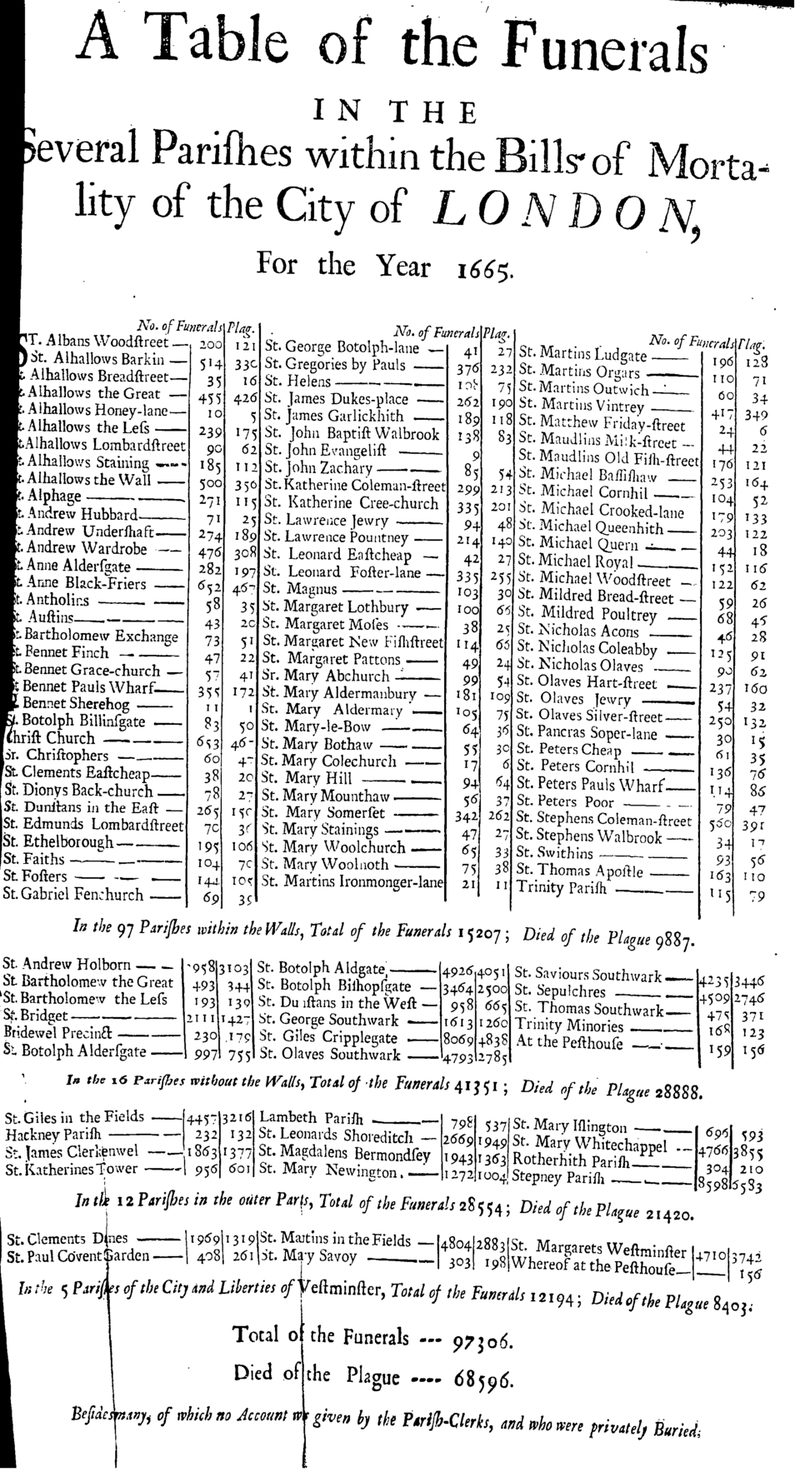
When a Londoner died, the parish searchers, elderly women sworn to the office, went to view the body and decide what the person had died of. They reported to the parish clerk, who handed in a count of burials and christenings every Tuesday night. The Worshipful Company of Parish Clerks printed these weekly Bills of Mortality on and off until 1595 and without a break from 1603.
John Graunt, a London haberdasher and councilman, treated the bills as data. His Natural and Political Observations, signed from Birchen Lane in January 1662, gathered them into tables. Of 229,250 deaths over twenty years, he reckoned that about a third were young children, and that of every 100 live conceptions about 36 died before the age of six. He put London's population at about 384,000, with 14 males for every 13 females, while admitting the estimate was rough.
The bills also showed diseases rising and falling. Rickets, which Graunt called new in both name and thing, went from 14 deaths in 1634 to more than 500 in 1660. Fewer than one death in 1,500 was put down to lunacy, and he suspected that many deaths from the French pox were recorded as consumption. He also drew up a table of how many of 100 conceptions would still be alive at each decade of life: 64 at six, 40 at 16, 25 at 26 and 16 at 36.
Graunt addressed the book to the president and fellows of the Royal Society, then meeting at Gresham College. The Science Museum credits him and his friend William Petty with early statistical and census methods such as life tables. The raw material had limits he could not repair. Because Church of England parishes kept the bills, they left out members of other churches and people who went to no church at all.
Keep exploring
 Read next · same disease or problem
The Great Plague of London (1665)
Graunt built his tables from London's weekly Bills of Mortality, the same counts that tracked the Great Plague three years later. The plague story shows how those figures were gathered by parish searchers, and how often they erred.
Read this moment
Read next · same disease or problem
The Great Plague of London (1665)
Graunt built his tables from London's weekly Bills of Mortality, the same counts that tracked the Great Plague three years later. The plague story shows how those figures were gathered by parish searchers, and how often they erred.
Read this moment
 Today on The Clinical Times
Love to Dream recalls portable baby sound machine over fire and burn risk
Love to Dream has recalled its portable Sleep Machine because its lithium-ion battery can overheat while charging with an incompatible charger, creating a risk of fire and burns.
Read today’s top stories
Today on The Clinical Times
Love to Dream recalls portable baby sound machine over fire and burn risk
Love to Dream has recalled its portable Sleep Machine because its lithium-ion battery can overheat while charging with an incompatible charger, creating a risk of fire and burns.
Read today’s top stories
All 526 moments in the history of medicine. This one is in chapter 3, Anatomy and observation
Connected moments
How this moment links to others in the history of medicine, and what you will find in each.
- Same disease or problem1452Milan's civic death registersBoth turned death records into knowledge, Graunt by tabulating London's weekly counts and Milan by having physicians diagnose every death. The Milan story shows about 115,000 deaths, most with a medical cause, two centuries before Graunt.Read this moment
-
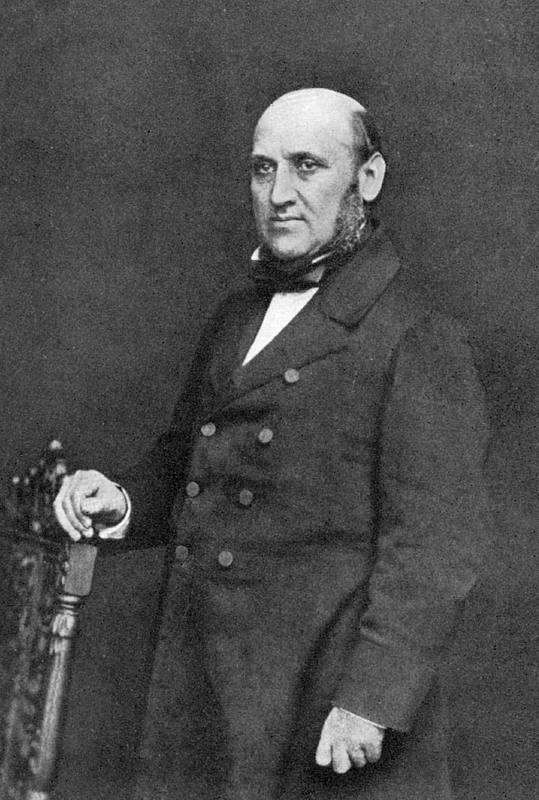 Same disease or problem1839William Farr and national vital statisticsGraunt counted London's deaths by cause, and Farr did the same for a whole nation from its registrations. Farr's story shows how his classification of causes of death became the start of an international list.Read this moment
-
 Same disease or problem1993Global Burden of Disease study and the DALYGraunt measured the toll of diseases in one city, and the Global Burden of Disease study measured more than 100 diseases and injuries worldwide. It shows a new yardstick, the disability adjusted life year, counting illness as well as death.Read this moment