Foundational Discovery
1661
Malpighi's Discovery of the Capillaries
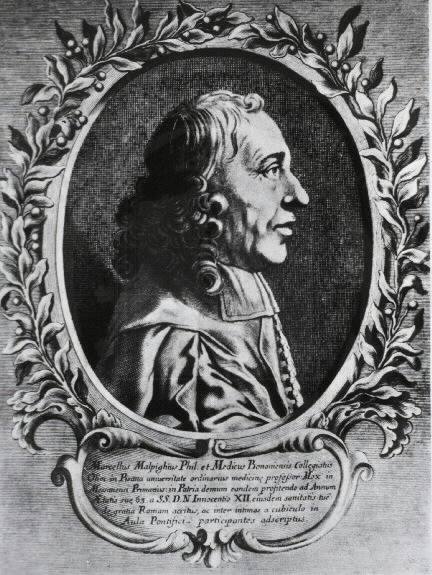
Looking through a microscope, Marcello Malpighi saw the network of capillaries in the lung that joins the arteries to the veins, the link Harvey's theory of circulation needed but Harvey himself never saw.
Key people
- Marcello Malpighi
- Bologna-born physician who first showed the capillaries of the lung
Source
Harvey's circulation had a gap in it. He argued that blood left the heart through the arteries and came back through the veins, so the two sets of vessels had to be joined somewhere in the tissues. He could not show where. Microscopes had been in use since at least Galileo's time, around 1610, but Harvey apparently never worked with one.
Marcello Malpighi, a physician born at Crevalcore near Bologna on 10 March 1628, supplied the missing piece. In 1661, four years after Harvey's death, he showed the network of capillaries in the lung that connects the arteries to the veins. An exhibit catalog prepared by the National Library of Medicine for Harvey's tercentenary states that only with this observation was the proof of the circulation really complete.
The finding did not need great power. The Whipple Museum of the History of Science at Cambridge notes that a microscope magnifying about 100 times will show capillaries. Others soon went further. Jan Swammerdam gave a better account of the capillaries, and in 1688 Antoni van Leeuwenhoek sent the Royal Society a description of blood corpuscles moving through them. By the early 18th century, microscopes were often sold with a frog-plate or fish-plate so that any owner could watch blood in these tiny vessels.
Malpighi went on to study far more than the lung. The Royal Society elected him a fellow on 4 March 1669, at the age of 40, and that year the Society's printers in London published his treatise on the silkworm, dedicated to the Society. His anatomy of plants followed from the same London printer in 1675, and a volume printed in 1682 gathered his studies of the liver, the cortex of the brain, the kidneys and the spleen together with his two letters on the lungs addressed to Borelli. He died in Rome on 30 November 1694.
Keep exploring
 Read next · built on
Harvey's De Motu Cordis (1628)
Harvey's circulation needed vessels joining arteries to veins, and Malpighi found them in the lung. Harvey's story shows the calculation and experiments that proved the blood moves in a circle, with only this link missing.
Read this moment
Read next · built on
Harvey's De Motu Cordis (1628)
Harvey's circulation needed vessels joining arteries to veins, and Malpighi found them in the lung. Harvey's story shows the calculation and experiments that proved the blood moves in a circle, with only this link missing.
Read this moment
 Today on The Clinical Times
Love to Dream recalls portable baby sound machine over fire and burn risk
Love to Dream has recalled its portable Sleep Machine because its lithium-ion battery can overheat while charging with an incompatible charger, creating a risk of fire and burns.
Read today’s top stories
Today on The Clinical Times
Love to Dream recalls portable baby sound machine over fire and burn risk
Love to Dream has recalled its portable Sleep Machine because its lithium-ion battery can overheat while charging with an incompatible charger, creating a risk of fire and burns.
Read today’s top stories
All 526 moments in the history of medicine. This one is in chapter 3, Anatomy and observation
Connected moments
How this moment links to others in the history of medicine, and what you will find in each.
-
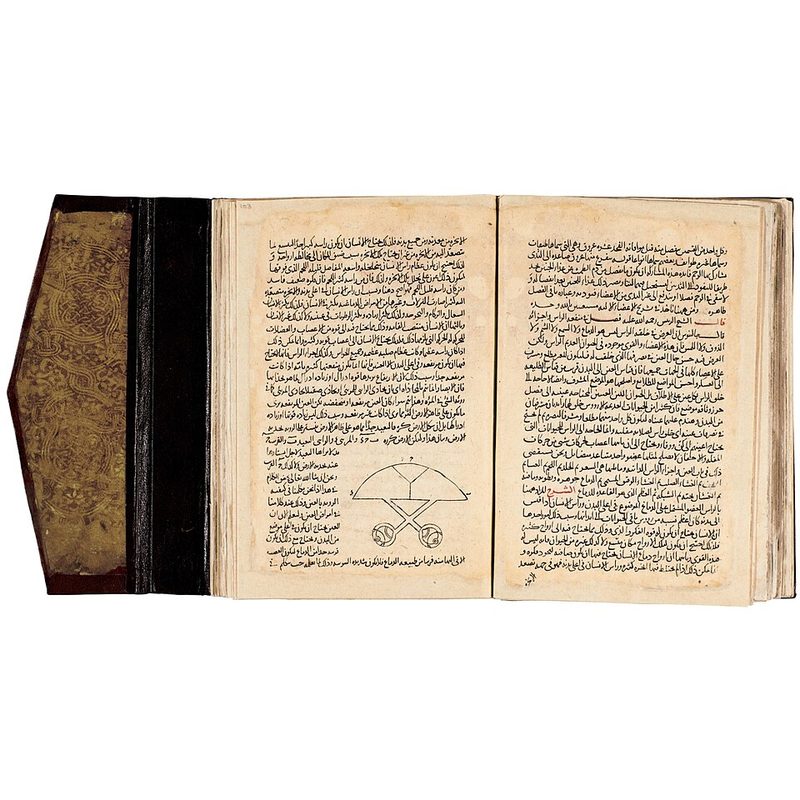 Same disease or problemc. 1242Ibn al-Nafis and the pulmonary circulationIbn al-Nafis reasoned that small openings must join the lung's artery and vein, 400 years before Malpighi saw them. His story shows the pulmonary circulation first described in 13th century Cairo.Read this moment
-
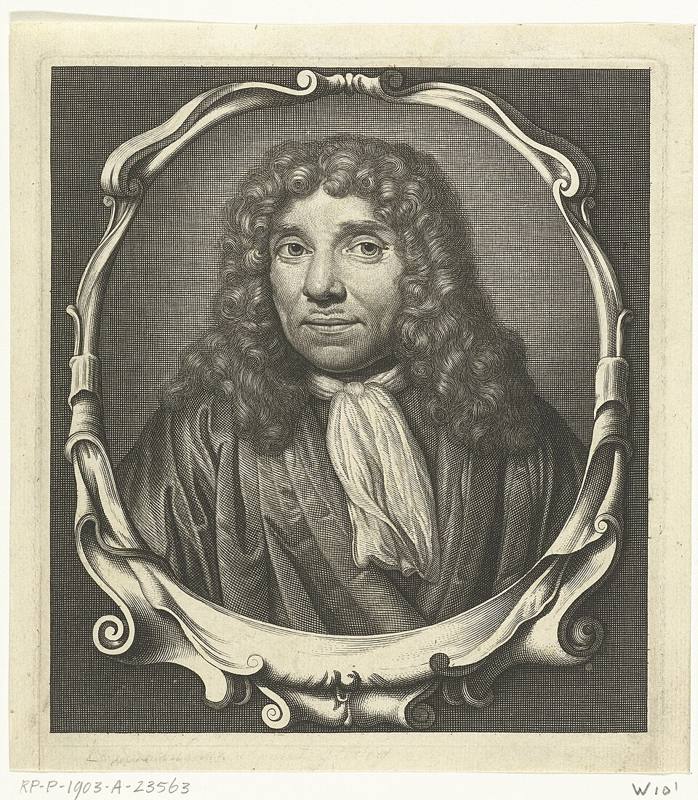 Led to1676Leeuwenhoek's AnimalculesLeeuwenhoek soon went further than Malpighi, describing blood corpuscles moving through the capillaries. His story shows a self-taught draper whose own microscopes revealed single-celled life that no one knew existed.Read this moment