Cardiology
1628
Harvey's De Motu Cordis
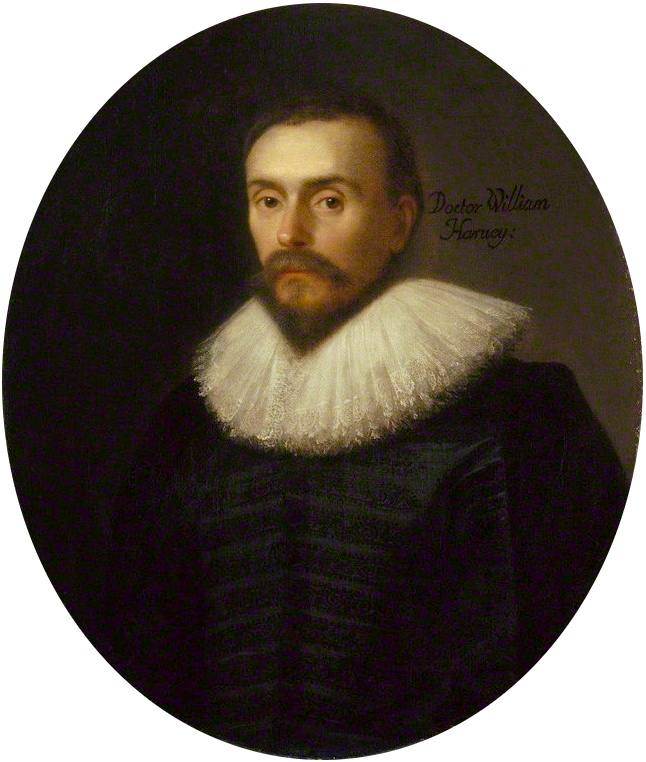
Harvey showed by calculation and experiment that the heart drives the same blood around the body without end, out through the arteries and back through the veins, replacing Galen's teaching that the liver kept making new blood from food.
Key people
- William Harvey
- Physician to St Bartholomew's and Lumleian lecturer at the College of Physicians
- Hieronymus Fabricius
- Harvey's teacher at Padua, who described the valves of the veins
- Jean Riolan
- Dean of the Paris medical faculty and Harvey's leading critic
- William Fitzer
- Frankfurt printer of the 1628 first edition
Source
Harvey's case began with a sum. He calculated how much blood passes through a ventricle of the heart in an hour and found it came to more than three times the weight of a man. Food could not supply that much blood, and the body could not use it up. The same blood, he concluded, must pass through the heart again and again.
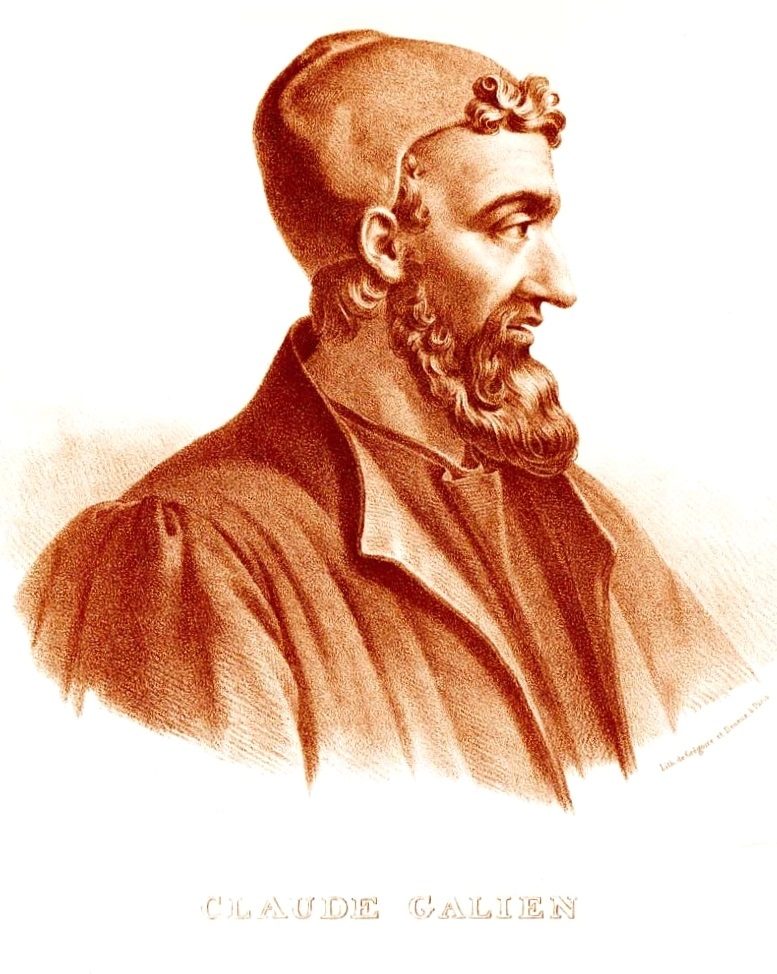
Physicians had followed Galen on this since about AD 150. In Galen's scheme the liver turned digested food into venous blood, which ebbed and flowed in the veins and nourished the body, while the heart made a separate arterial blood charged with vital spirits. Nothing in it moved in a circle.
William Harvey was born in Folkestone in 1578, studied at Gonville and Caius College, Cambridge, and took his MD at Padua in 1602 under Fabricius, who described the valves of the veins in a book of 1603. He was elected physician to St Bartholomew's Hospital in 1609 and Lumleian lecturer at the College of Physicians in 1615. His lecture notes from 1616 already state that blood passes through the lungs into the aorta, crosses from the arteries to the veins, and moves perpetually in a circle driven by the heartbeat.
The book did not appear until 1628, badly printed on thin paper by William Fitzer, an obscure printer in Frankfurt. Harvey argued from observation that the heart is a muscle whose contraction is its active phase, and from experiment: a tourniquet on an artery swelled the vessels on the heart side, while one on a vein swelled them on the far side. Plates based on Fabricius's book on the venous valves showed a simple ligature experiment proving that veins and arteries must connect.
Only a few writers of the time challenged the doctrine. Jean Riolan, dean of the Paris medical faculty, was the only critic Harvey answered in writing, and a 1647 Leiden edition set Harvey's text paragraph by paragraph against the refutations of Parisanus. One link was still missing. Harvey supposed that small vessels joined arteries to veins but never saw them, and apparently never used a microscope; Marcello Malpighi found the capillaries of the lung in 1661, four years after Harvey died.
Keep exploring
 Read next · built on
Galen's experimental anatomy and physiology (c. 170 CE)
Harvey replaced Galen's teaching that the liver keeps making new blood from food. Galen's story shows the scheme physicians had followed for nearly fifteen centuries before Harvey's calculation.
Read this moment
Read next · built on
Galen's experimental anatomy and physiology (c. 170 CE)
Harvey replaced Galen's teaching that the liver keeps making new blood from food. Galen's story shows the scheme physicians had followed for nearly fifteen centuries before Harvey's calculation.
Read this moment
 Today on The Clinical Times
Love to Dream recalls portable baby sound machine over fire and burn risk
Love to Dream has recalled its portable Sleep Machine because its lithium-ion battery can overheat while charging with an incompatible charger, creating a risk of fire and burns.
Read today’s top stories
Today on The Clinical Times
Love to Dream recalls portable baby sound machine over fire and burn risk
Love to Dream has recalled its portable Sleep Machine because its lithium-ion battery can overheat while charging with an incompatible charger, creating a risk of fire and burns.
Read today’s top stories
All 526 moments in the history of medicine. This one is in chapter 3, Anatomy and observation
Connected moments
How this moment links to others in the history of medicine, and what you will find in each.
-
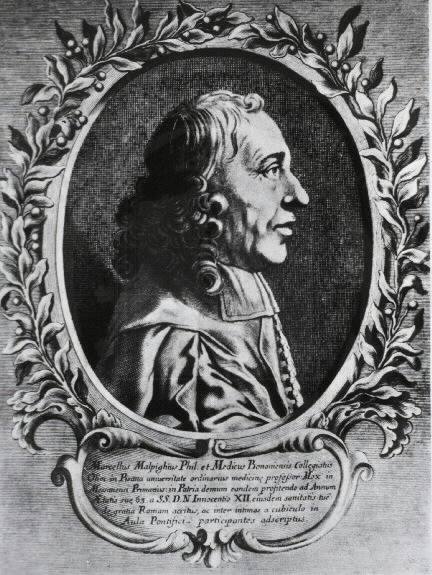 Led to1661Malpighi's Discovery of the CapillariesHarvey supposed that small vessels joined arteries to veins but never saw them, and Malpighi found them in 1661. His story shows the lung capillaries under the microscope, the missing link in the circulation.Read this moment
-
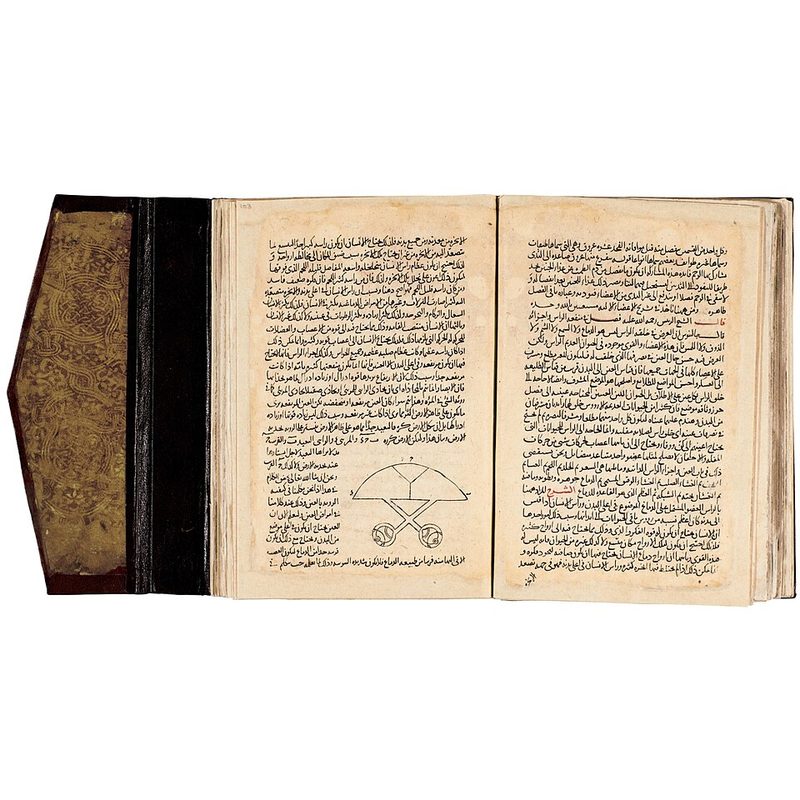 Same disease or problemc. 1242Ibn al-Nafis and the pulmonary circulationBoth overturned Galen on the blood, Ibn al-Nafis showing it passes through the lungs and Harvey showing it circles the body. Ibn al-Nafis's story shows the pulmonary circulation described in 13th century Cairo.Read this moment
-
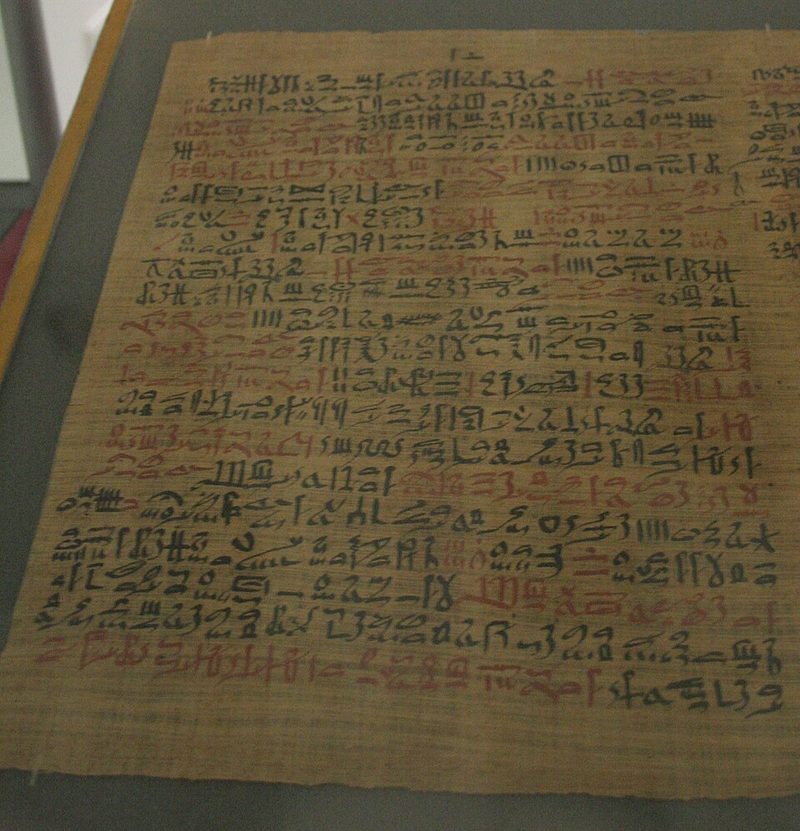 Same disease or problemc. 1550 BCEThe Ebers PapyrusHarvey proved the heart drives the blood in a circle, and the Ebers papyrus had described the heart as the center of vessels reaching every part. The Ebers story shows how Egyptian healers pictured the body about 1550 BCE.Read this moment