Reproductive Health
c. 1600
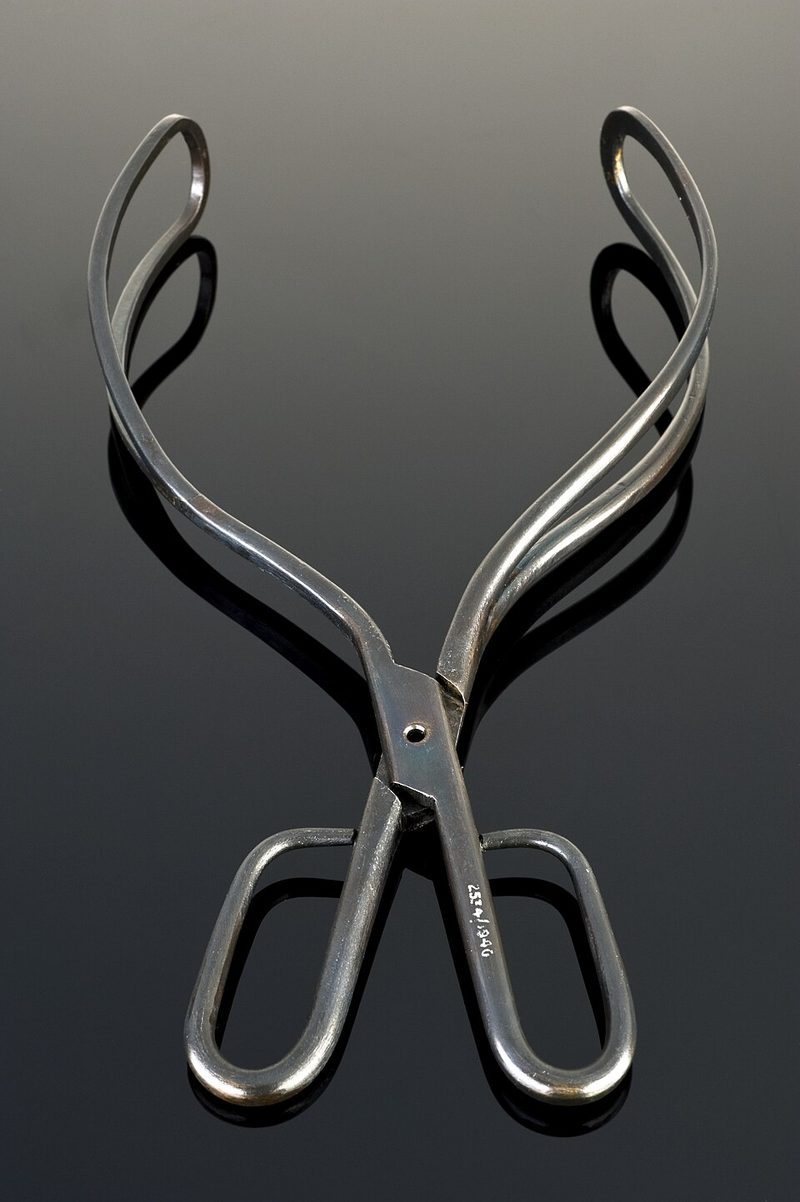
The Chamberlen Obstetric Forceps
A family of man-midwives in England, the Chamberlens, devised forceps that could deliver a baby alive in a difficult labor and kept them secret for over a century before the design spread; the original instruments turned up in 1813.
Key people
- Peter Chamberlen the elder
- Man-midwife, probable inventor of the forceps, midwife to Queen Henrietta Maria
- Hugh Chamberlen
- Family member who demonstrated the forceps in France and sold the secret
- William Smellie
- Obstetrician who brought forceps into open use in the mid-18th century
Source
In 1813 a later occupant of the Chamberlen family's old house found the family's obstetric forceps hidden under a trapdoor in the attic. Made in the early 17th century, they had been used in secret by the Chamberlens for more than a century before such instruments came into general use. The Royal Society of Medicine gave them to the Royal College of Obstetricians and Gynaecologists in 1957.
Huguenots fleeing religious persecution in France, the Chamberlens settled in England. The sources disagree on the date: the Dittrick Museum at Case Western Reserve University gives 1569, the International Museum of Surgical Science 1596. William Chamberlen's two sons, both named Peter, practiced man-midwifery. One of them, probably Peter the elder, devised a hinged instrument with two blunt, spoon-shaped blades that could grip the baby's head and guide it out, so that a child could be delivered alive in a difficult labor. Peter the elder became midwife to Queen Henrietta Maria.
Secrecy was part of the business. They drove to births in closed carriages, and according to a story repeated in both museum accounts they carried the instrument in a huge gilded box that took two people to lift. Everyone else had to leave the room, and the mother was blindfolded. Both brothers clashed with the College of Physicians, which had Peter the elder jailed for prescribing medicines outside its rules.
It leaked in a later generation. Hugh Chamberlen went to France to show what the forceps could do, failed to deliver a woman in obstructed labor and came home with nothing, and the Dittrick account says he later sold the secret, though the design had already got out. Versions appeared across Europe, and William Smellie brought forceps into open use in the mid-18th century.
Keep exploring
 Read next · same disease or problem
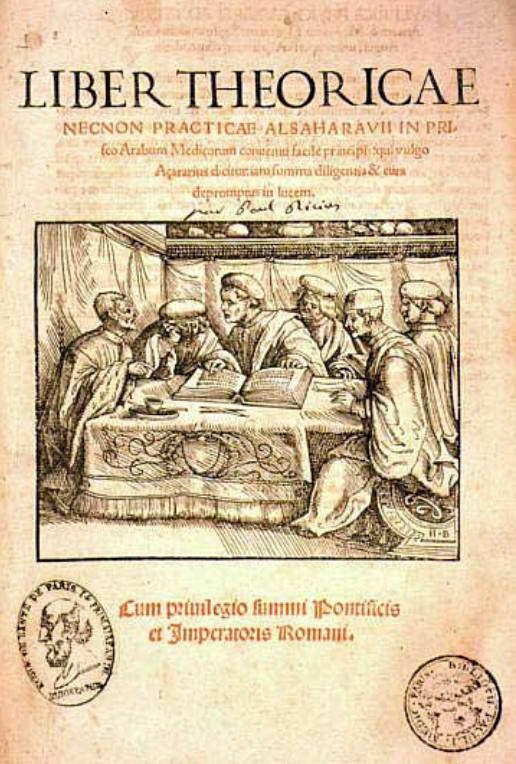
Al-Zahrawi's illustrated surgery (c. 1000)
Al-Zahrawi described forceps that were not meant for live births, and the Chamberlens made forceps that could deliver a baby alive. Al-Zahrawi's book shows surgery six centuries earlier, with more than 200 surgical tools credited to him.
Read this moment
Read next · same disease or problem
Al-Zahrawi's illustrated surgery (c. 1000)
Al-Zahrawi described forceps that were not meant for live births, and the Chamberlens made forceps that could deliver a baby alive. Al-Zahrawi's book shows surgery six centuries earlier, with more than 200 surgical tools credited to him.
Read this moment
 Today on The Clinical Times
Love to Dream recalls portable baby sound machine over fire and burn risk
Love to Dream has recalled its portable Sleep Machine because its lithium-ion battery can overheat while charging with an incompatible charger, creating a risk of fire and burns.
Read today’s top stories
Today on The Clinical Times
Love to Dream recalls portable baby sound machine over fire and burn risk
Love to Dream has recalled its portable Sleep Machine because its lithium-ion battery can overheat while charging with an incompatible charger, creating a risk of fire and burns.
Read today’s top stories
All 526 moments in the history of medicine. This one is in chapter 3, Anatomy and observation
Connected moments
How this moment links to others in the history of medicine, and what you will find in each.
-
 Same disease or problem1847Simpson's chloroform anesthesiaBoth tried to make difficult births safer or easier, the Chamberlens with forceps and Simpson with chloroform. Simpson's story shows an Edinburgh professor of midwifery bringing anesthesia into childbirth.Read this moment
- Same disease or problem1795Gordon's treatise on puerperal feverBoth concern births attended by men of medicine, the Chamberlen man-midwives and the doctors Gordon studied. Gordon's story shows him tracing childbed fever from woman to woman through the midwives and doctors who delivered them, himself included.Read this moment