Critical & Organ Care
1928
The Drinker iron lung
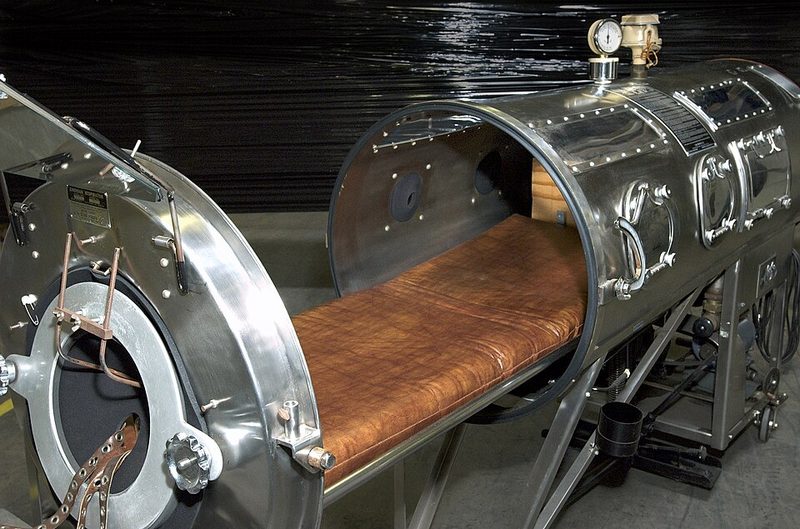
In 1928 the Harvard engineer Philip Drinker and Louis Agassiz Shaw built a tank respirator that made patients breathe by changing the air pressure around the body. First used in Boston that October, it kept polio patients with paralyzed breathing muscles alive.
Key people
- Philip Drinker
- Harvard chemical engineer who designed the respirator
- Louis Agassiz Shaw
- Harvard physiologist and co-developer
- Charles F. McKhann
- Pediatrician who reported the first clinical use with Drinker
- John Haven Emerson
- Built a cheaper rival respirator in 1931
Source
When polio paralyzed the muscles of breathing, patients suffocated, often within a few hours of the first signs of distress. Manual artificial respiration could not be kept up for long, and devices such as the pulmotor pushed air too forcefully and could injure the organs.
The respirator came out of industrial safety work. In 1926 the Consolidated Gas Company of New York set up a committee on resuscitation after gas poisoning and electric shock. Cecil Drinker, a physiology professor at the Harvard School of Public Health, pointed it to his brother Philip, a chemical engineer, and to Philip's colleague Louis Agassiz Shaw, and in the fall of 1927 the committee sent them $5,000. Shaw and Cecil Drinker had been sealing cats in airtight boxes, heads out through a collar, to measure their breathing. Drinker and Shaw then paralyzed cats with curare and kept them breathing by raising and lowering the pressure in the box with a hand-operated piston.
With more money from the gas company, a tinsmith and the Harvard Medical School machine shop built a version large enough for a person, and Drinker and Shaw tested it on themselves. The patient lay on his back in a sealed metal tank with the head outside and a rubber collar around the neck. Pumps lowered the pressure in the tank, the chest expanded and air flowed in through the nose and mouth; when the pressure rose again the patient breathed out. The first machine was little more than a galvanized iron box run by two household vacuum cleaners.
In October 1928 it was used at Children's Hospital in Boston on an eight-year-old girl with respiratory paralysis from polio. It kept her alive for five days, but she died of heart failure brought on by pneumonia; Drinker and the pediatrician Charles McKhann reported her as a fatal case in 1929. The next patient, a Harvard student, spent several weeks in the respirator and recovered enough to return to normal life.
A severe polio epidemic in 1931 raised demand, and major American hospitals soon owned at least one Drinker respirator. That year John Haven Emerson built a quieter, cheaper tank. Drinker threatened to sue over his patents, which were later declared invalid for lack of originality. In 1982 the anesthesiologist H. H. Bendixen wrote that polio mortality stayed high until positive-pressure breathing was added to the tank.
Keep exploring
 Read next · same disease or problem
Copenhagen Polio Epidemic and Intensive Care (1952)
The iron lung kept polio patients breathing, but in 1952 Copenhagen had one for up to 12 new patients a day and turned to ventilation by hand. That story shows deaths falling sharply and the first intensive care unit opening.
Read this moment
Read next · same disease or problem
Copenhagen Polio Epidemic and Intensive Care (1952)
The iron lung kept polio patients breathing, but in 1952 Copenhagen had one for up to 12 new patients a day and turned to ventilation by hand. That story shows deaths falling sharply and the first intensive care unit opening.
Read this moment
 Today on The Clinical Times
Love to Dream recalls portable baby sound machine over fire and burn risk
Love to Dream has recalled its portable Sleep Machine because its lithium-ion battery can overheat while charging with an incompatible charger, creating a risk of fire and burns.
Read today’s top stories
Today on The Clinical Times
Love to Dream recalls portable baby sound machine over fire and burn risk
Love to Dream has recalled its portable Sleep Machine because its lithium-ion battery can overheat while charging with an incompatible charger, creating a risk of fire and burns.
Read today’s top stories
All 526 moments in the history of medicine. This one is in chapter 5, Cures and codes
Connected moments
How this moment links to others in the history of medicine, and what you will find in each.
-
 Same disease or problem1955Salk Inactivated Polio Vaccine Field Trial (Francis Report)The iron lung kept polio victims alive, and the Salk vaccine prevented the disease. That story shows a field trial of about 1.8 million children and a vaccine 80 to 90 percent effective.Read this moment
-
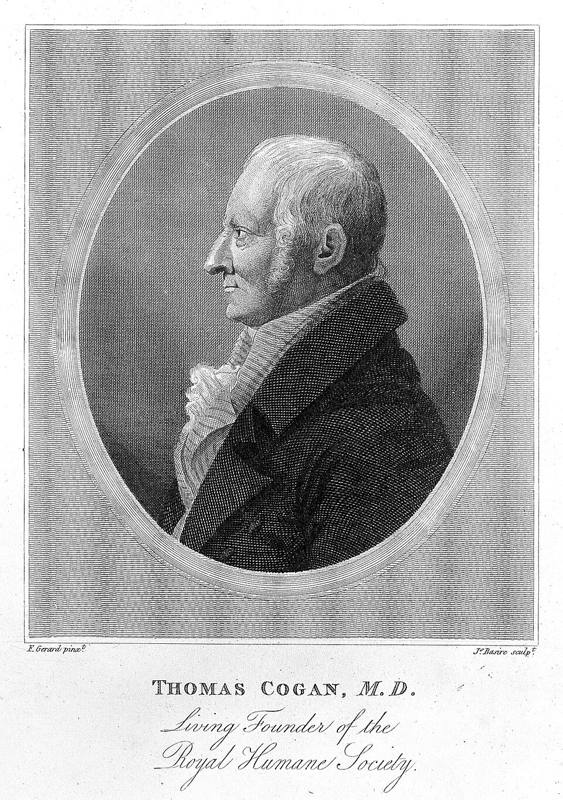 Same disease or problem1774The Royal Humane Society and resuscitationBoth kept people breathing when they could not do it for themselves, the Humane Society with mouth to mouth and the iron lung with changing air pressure. The Humane Society story shows rewards paid for reviving the drowned in 18th century London.Read this moment