Critical & Organ Care
1774
The Royal Humane Society and resuscitation
Founded in London in 1774 by Thomas Cogan and William Hawes, the Humane Society published directions for reviving the apparently drowned, including mouth-to-mouth breathing, and paid rewards to rescuers; by the end of 1776 it counted 107 lives saved.
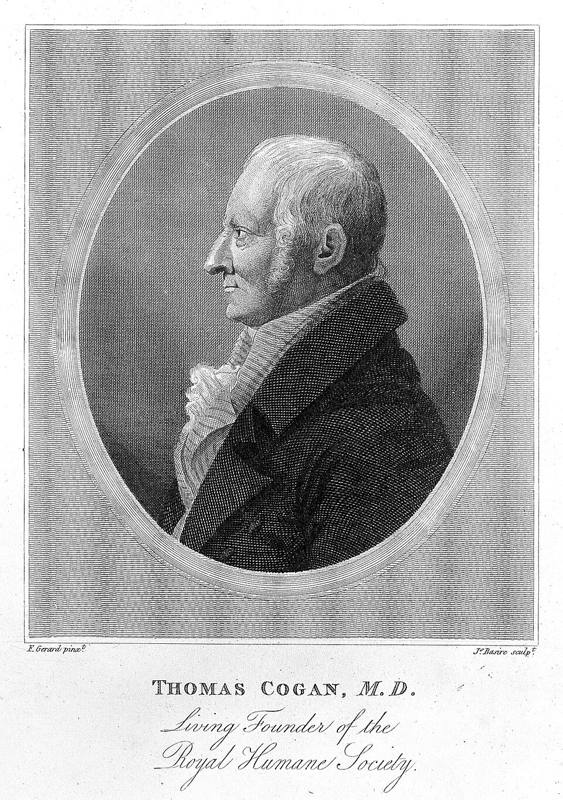
Key people
- Thomas Cogan
- Physician who translated the Amsterdam memoirs and co-founded the Society
- William Hawes
- Medical man in the Strand who co-founded the Society
- Frederick Bull
- Lord Mayor of London and the Society's first president
Source
The Society's printed directions began with how to carry the body: gently, by two or more people, never head down over a shoulder, rolled on the ground or over a barrel, or lifted by the heels. It was then to be dried and warmed with heated blankets, bottles of hot water, warm bricks, or a healthy person lying alongside. Next came stimulation. One helper was to blow forcefully into the lungs, mouth to mouth with the nostrils closed, and press the chest to let the air out again. Another blew tobacco smoke into the bowel through a fumigator, and a third rubbed the body with brandy or salt. The attempt was to go on for two hours or more, because the common belief that the drowned revived within minutes or not at all had, the Society wrote, cost many lives.
The model came from Amsterdam, where a society founded in 1767 had offered rewards for saving the drowned; Milan, Hamburg and Paris followed. In 1773 the physician Thomas Cogan translated the Amsterdam society's memoirs, and William Hawes, a medical man practising in the Strand, took up the cause. In 1774 the two men founded the Humane Society in London, with the Lord Mayor, Frederick Bull, as president.
Money did much of the work. The Society's plan paid two guineas, shared among up to four people, for any attempt to revive someone taken from the water for dead within 30 miles of London and Westminster, and four guineas if the person recovered. A publican who took in the body received a guinea and was spared the cost of burial if the attempt failed. Medical men stationed near the places where drownings were most frequent agreed to attend free and were to keep a fumigator ready. In the Society's report for 1776, fishermen and labourers collected rewards, and one publican was paid for lodging a revived woman for three days. By then it counted 107 lives saved since its founding.
By 1795 it was the Royal Humane Society, and similar institutions had been set up in Liverpool, Norwich, Worcester, Chester and Dublin. Mouth-to-mouth breathing later gave way to bellows. After animal experiments reported by Leroy in 1827 and 1828 blamed bellows for damaging the lungs, the Society dropped bellows and positive-pressure breathing from its official scheme.
Keep exploring
 Read next · same disease or problem
Closed-chest cardiac massage (1960)
The Humane Society taught mouth to mouth breathing for the apparently drowned, and in 1960 it was combined with chest compression. That story shows how the combination became cardiopulmonary resuscitation.
Read this moment
Read next · same disease or problem
Closed-chest cardiac massage (1960)
The Humane Society taught mouth to mouth breathing for the apparently drowned, and in 1960 it was combined with chest compression. That story shows how the combination became cardiopulmonary resuscitation.
Read this moment
 Today on The Clinical Times
Love to Dream recalls portable baby sound machine over fire and burn risk
Love to Dream has recalled its portable Sleep Machine because its lithium-ion battery can overheat while charging with an incompatible charger, creating a risk of fire and burns.
Read today’s top stories
Today on The Clinical Times
Love to Dream recalls portable baby sound machine over fire and burn risk
Love to Dream has recalled its portable Sleep Machine because its lithium-ion battery can overheat while charging with an incompatible charger, creating a risk of fire and burns.
Read today’s top stories
All 526 moments in the history of medicine. This one is in chapter 3, Anatomy and observation
Connected moments
How this moment links to others in the history of medicine, and what you will find in each.
-
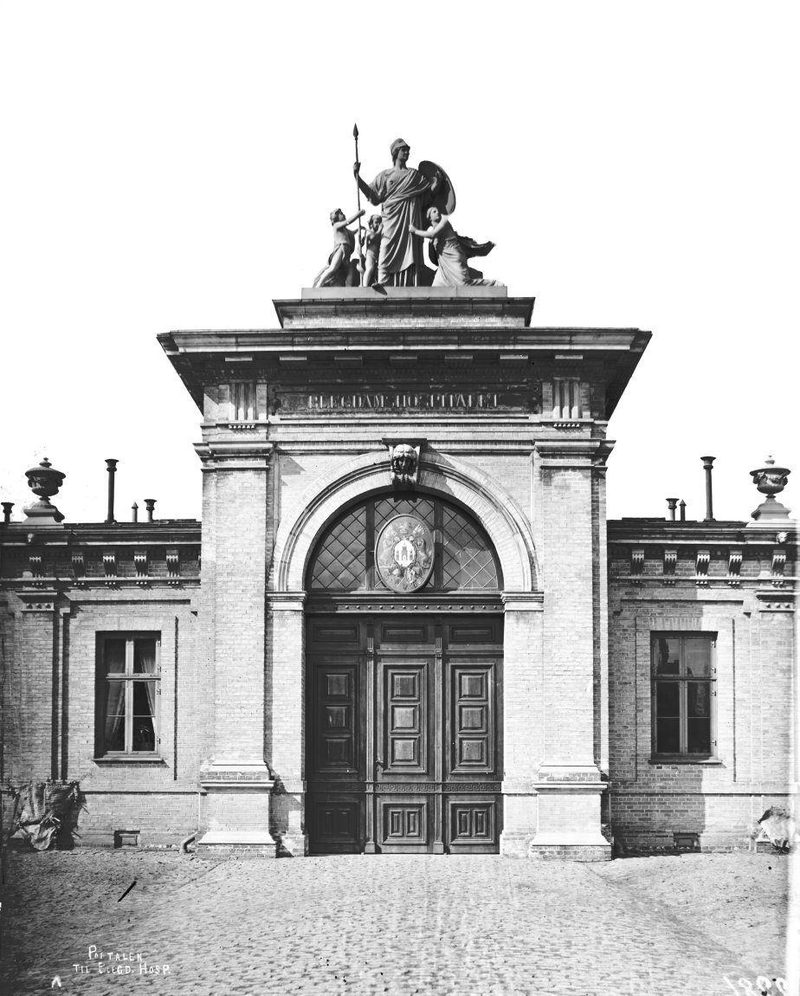 Same disease or problem1952Copenhagen Polio Epidemic and Intensive CareThe Society dropped forced breathing with bellows after 1828, and Copenhagen's doctors revived it by hand in 1952. Their story shows hand bagged ventilation saving paralyzed polio patients and giving rise to intensive care.Read this moment
-
 Same disease or problem1664Willis's Cerebri AnatomeBoth concern reviving people taken for dead, the drowned in London and a hanged woman whom Willis revived with a primitive cardiac massage. Willis's story also shows the first book to use the word neurology.Read this moment