Endocrinology
1949
Cortisone for Rheumatoid Arthritis
At the Mayo Clinic in 1948 Philip Hench and colleagues gave the adrenal hormone cortisone to a patient with rheumatoid arthritis, with dramatic improvement. Their 1949 report opened corticosteroid treatment of inflammatory disease, and a Nobel Prize followed in 1950.
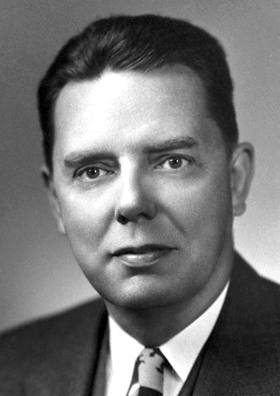
Key people
- Philip S. Hench
- Mayo Clinic physician who gave compound E for arthritis; Nobel 1950
- Edward C. Kendall
- Mayo Clinic biochemist who isolated adrenal cortex hormones; Nobel 1950
- Tadeus Reichstein
- University of Basel researcher who isolated adrenal hormones; Nobel 1950
Source
The adrenal glands sit on top of the kidneys, and for a long time their function was unknown, beyond the observation that animals deprived of them developed deficiency diseases and died. In the mid-1930s Edward Kendall, a biochemist at the Mayo Clinic, and Tadeus Reichstein at the University of Basel isolated a series of related hormones from the adrenal cortex. One of them, called compound E, is cortisone.
Making cortisone in quantity took years of struggle between researchers and drug companies, and a synthesis that allowed commercial production came only in 1948. Later that year Philip Hench of the Mayo Clinic, with his colleagues Slocumb and Polley, gave compound E to a volunteer patient with rheumatoid arthritis. The improvement was dramatic, and a larger clinical trial gave similar results.
Hench, Kendall and their co-workers published the results in April 1949 in the Proceedings of the Staff Meetings of the Mayo Clinic. In 1950 Kendall, Reichstein and Hench shared the Nobel Prize in Physiology or Medicine for their discoveries about the hormones of the adrenal cortex, their structure and their biological effects. By then cortisone preparations were being used for rheumatoid arthritis and other inflammatory conditions.
The drug's side effects soon became apparent. On 10 September 1955 the medical journalist Berton Roueché published Ten Feet Tall in The New Yorker, the case of a teacher who became manic and psychotic after taking a large dose of cortisone for periarteritis nodosa; the psychosis resolved after he was readmitted and his medication adjusted. The 1956 film Bigger Than Life, directed by Nicholas Ray, used cortisone as its plot device.
Keep exploring
 Read next · same person
Identification of vitamin C as the antiscorbutic factor (1932)
Tadeus Reichstein, who shared the cortisone Nobel Prize, had synthesized vitamin C in 1933. The vitamin C story shows the antiscorbutic factor identified in 1932.
Read this moment
Read next · same person
Identification of vitamin C as the antiscorbutic factor (1932)
Tadeus Reichstein, who shared the cortisone Nobel Prize, had synthesized vitamin C in 1933. The vitamin C story shows the antiscorbutic factor identified in 1932.
Read this moment
 Today on The Clinical Times
Love to Dream recalls portable baby sound machine over fire and burn risk
Love to Dream has recalled its portable Sleep Machine because its lithium-ion battery can overheat while charging with an incompatible charger, creating a risk of fire and burns.
Read today’s top stories
Today on The Clinical Times
Love to Dream recalls portable baby sound machine over fire and burn risk
Love to Dream has recalled its portable Sleep Machine because its lithium-ion battery can overheat while charging with an incompatible charger, creating a risk of fire and burns.
Read today’s top stories
All 526 moments in the history of medicine. This one is in chapter 5, Cures and codes
Connected moments
How this moment links to others in the history of medicine, and what you will find in each.
-
 Same disease or problem2020RECOVERY Trial: Dexamethasone for COVID-19Cortisone opened steroid treatment of inflammatory disease, and in 2020 the steroid dexamethasone became the first drug shown to cut COVID deaths. The RECOVERY story shows about a third fewer deaths in ventilated patients.Read this moment
-
 Same disease or problem1972Antenatal corticosteroids for fetal lung maturation (Liggins and Howie trial)Cortisone began the medical use of adrenal steroids, and Liggins used a steroid given to mothers to ready premature babies' lungs. His story shows breathing distress in preterm babies cut by two thirds.Read this moment
-
 Same disease or problemc. 30 CECelsus's De MedicinaCortisone was the first great drug against inflammation, whose four signs Celsus set down in the first century. Celsus's story shows the Roman encyclopedia that named redness, swelling, heat and pain.Read this moment