Foundational Discovery
1953
Acquired immunological tolerance
Billingham, Brent and Medawar showed that mice exposed to another strain's cells before birth later accepted skin grafts from that strain. The result confirmed Burnet's prediction that the immune system learns to tell self from foreign early in life.
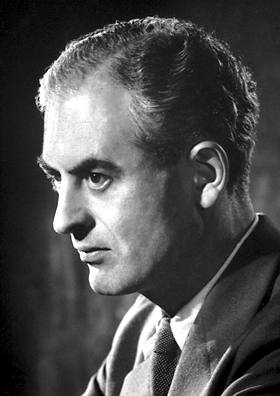
Key people
- Peter B. Medawar
- Zoologist who led the graft experiments; shared the 1960 Nobel Prize
- Frank Macfarlane Burnet
- Melbourne institute director who predicted acquired tolerance; shared the 1960 Nobel Prize
- Rupert E. Billingham
- Medawar's collaborator on the cattle twin and mouse experiments
- Leslie Brent
- Co-author of the 1953 and 1956 tolerance papers
Source
Early in the Second World War the Medical Research Council asked Peter Medawar, an Oxford zoologist, why skin taken from one person would not form a permanent graft on another. He studied rejected grafts in burns patients and in rabbits. A graft from another individual healed in at first, then was rejected after about two weeks, and a second graft from the same donor was rejected faster. Medawar showed that rejection was an immune reaction.
In 1945 Ray Owen reported that adult cattle twins from separate eggs carried red cells of both twins. Their placentas join early in fetal life, and he suggested that blood cells and their precursors had passed from one twin to the other. Immunologists took little notice until 1949, when Frank Macfarlane Burnet, director of the Walter and Eliza Hall Institute in Melbourne, and Frank Fenner cited it in their monograph The Production of Antibodies. They proposed that the body carries self-markers and predicted that tolerance would prove a general phenomenon. Burnet reasoned that the ability to recognize self was acquired in fetal life, so a foreign substance introduced at the right time should later be treated as self.
Medawar reached the question from another direction. After he moved to Birmingham in 1947, he and Rupert Billingham used skin grafts to try to tell identical cattle twins from non-identical ones. Grafts between non-identical twins were accepted too, while grafts from unrelated animals were rejected. The cattle work was almost finished before the team learned of Owen's paper.
At University College London, where Medawar moved in 1951, he, Billingham and Leslie Brent injected cells from one inbred mouse strain into late-stage embryos of another. When the mice were grafted as young adults with skin from the donor strain, many kept the grafts indefinitely, yet they rejected skin from a third strain. The 1953 Nature report rested on a small number of mice, with similar findings in chicks, and a full account followed in 1956. The Czech immunologist Milan Hašek had reported red cell chimerism and weakened immune responses in birds joined to a partner's circulation as embryos.
The method could not be used on human fetuses, and in mice the ability to induce tolerance declined with age. Kidney transplantation moved forward instead with drugs that suppressed rejection. Burnet and Medawar shared the 1960 Nobel Prize in Physiology or Medicine for the discovery of acquired immunological tolerance.
Keep exploring
 Read next · same disease or problem
First Successful Kidney Transplant (1954)
Medawar showed that graft rejection is an immune reaction, and the first lasting kidney transplant avoided it by using identical twins. That story shows the operation that opened clinical transplantation.
Read this moment
Read next · same disease or problem
First Successful Kidney Transplant (1954)
Medawar showed that graft rejection is an immune reaction, and the first lasting kidney transplant avoided it by using identical twins. That story shows the operation that opened clinical transplantation.
Read this moment
 Today on The Clinical Times
Love to Dream recalls portable baby sound machine over fire and burn risk
Love to Dream has recalled its portable Sleep Machine because its lithium-ion battery can overheat while charging with an incompatible charger, creating a risk of fire and burns.
Read today’s top stories
Today on The Clinical Times
Love to Dream recalls portable baby sound machine over fire and burn risk
Love to Dream has recalled its portable Sleep Machine because its lithium-ion battery can overheat while charging with an incompatible charger, creating a risk of fire and burns.
Read today’s top stories
All 526 moments in the history of medicine. This one is in chapter 5, Cures and codes
Connected moments
How this moment links to others in the history of medicine, and what you will find in each.
-
 Same disease or problem1958HLA antigens and tissue typingMedawar showed the body rejects foreign tissue, and HLA typing found the antigens that let donors and recipients be matched. The HLA story shows antibodies in mothers revealing a new antigen system.Read this moment
-
 Same disease or problem1978Ciclosporin in solid-organ transplantation (Calne)Medawar showed that tolerance of foreign tissue could be learned, and ciclosporin controlled rejection with a drug. The ciclosporin story shows transplant results transformed.Read this moment