Epidemiology
1952
The Great Smog of London
Coal smoke trapped under a temperature inversion covered London from 5 to 9 December 1952. About 4,000 deaths were counted at the time; a 2001 reanalysis estimated about 12,000 excess deaths through February 1953. The Clean Air Acts of 1956 and 1968 followed.
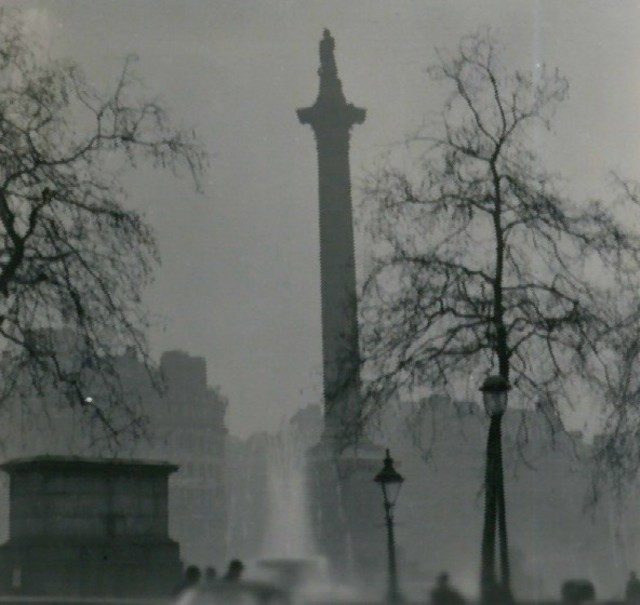
An anticyclone settled over London on Friday, 5 December 1952. Air sinking within it warmed as it descended, trapping cooler air near the ground, and under clear skies and light winds a fog formed in that moist layer. Londoners were burning large quantities of coal at home for heating, and factory chimneys added their own smoke. By the Met Office's reckoning, each day of the fog released 1,000 tonnes of smoke particles, 140 tonnes of hydrochloric acid and 14 tonnes of fluorine compounds, while 370 tonnes of sulphur dioxide were converted into 800 tonnes of sulphuric acid.
On the Isle of Dogs people could not see their feet. Newspapers reported cattle asphyxiated at Smithfield. The fog cleared on 9 December. Deaths in Greater London had been running at about 1,570 a week. In the week ending 13 December, registrations were about two and a half times the 1947 to 1951 average for that week, and they stayed near double the earlier level for two weeks more. During the fog week, hospital admissions for respiratory disease rose by 163 percent.
Official reports counted about 3,000 more deaths than normal in the first three weeks of December; the Met Office says about 4,000 people were known to have died. The Ministry of Health's report, published in 1954, found illness and deaths in Greater London still raised until March 1953. It attributed that later excess to an influenza epidemic, while allowing that some deaths may have come from lingering effects of the fog; the same year E. T. Wilkins suggested that the prolonged rise could be related to air pollution. The Clean Air Acts of 1956 and 1968 banned emissions of black smoke and required a move to smokeless fuels.
In 2001 M. L. Bell and D. L. Davis reexamined the records, including hospital admissions, insurance claims for new illness and pneumonia notifications. The Chief Medical Officer's reports had recorded no major influenza outbreak in England in 1952 and only a relatively mild one in the winter of 1953, and Bell and Davis rejected the claim that influenza accounted for the continuing excess. They put the pollution at 5 to 19 times the regulatory standards of 2001 and estimated that the smog caused about 12,000 excess deaths from December 1952 through February 1953.
Keep exploring
 Read next · same disease or problem
The Clean Air Act of 1970
London's smog led to Britain's Clean Air Acts, and the United States passed its own Clean Air Act in 1970. That story shows federal limits on air pollution.
Read this moment
Read next · same disease or problem
The Clean Air Act of 1970
London's smog led to Britain's Clean Air Acts, and the United States passed its own Clean Air Act in 1970. That story shows federal limits on air pollution.
Read this moment
 Today on The Clinical Times
Love to Dream recalls portable baby sound machine over fire and burn risk
Love to Dream has recalled its portable Sleep Machine because its lithium-ion battery can overheat while charging with an incompatible charger, creating a risk of fire and burns.
Read today’s top stories
Today on The Clinical Times
Love to Dream recalls portable baby sound machine over fire and burn risk
Love to Dream has recalled its portable Sleep Machine because its lithium-ion battery can overheat while charging with an incompatible charger, creating a risk of fire and burns.
Read today’s top stories
All 526 moments in the history of medicine. This one is in chapter 5, Cures and codes
Connected moments
How this moment links to others in the history of medicine, and what you will find in each.
-
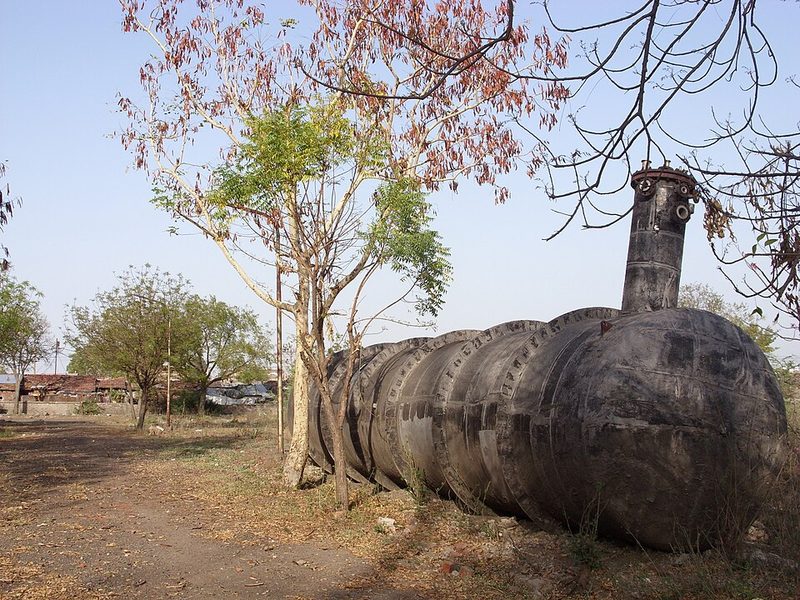 Same disease or problem1984The Bhopal gas disasterBoth were disasters in which poisoned air killed thousands of people in a city within days. The Bhopal story shows methyl isocyanate escaping over a sleeping city.Read this moment
-
 Same disease or problem1950Doll and Hill smoking and lung cancer case-control studyAir pollution from coal smoke was one explanation for rising lung disease, and Doll and Hill tested it against tobacco. Their story shows cigarettes proving the stronger culprit for lung cancer.Read this moment