Research Methods & Ethics
c. 1956
The Willowbrook hepatitis studies
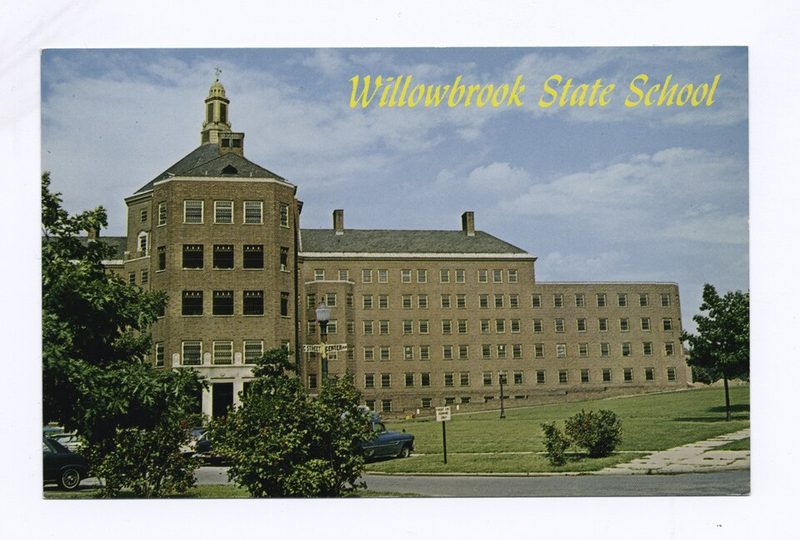
At a New York state school for children with intellectual disabilities, researchers deliberately infected children with hepatitis to study and prevent it. They showed two distinct viruses, now hepatitis A and B, were spreading there, and the studies became a standard bioethics case.
Key people
- Saul Krugman
- NYU pediatrician who led the Willowbrook hepatitis studies
- Joan P. Giles
- Co-investigator who obtained consent from most parents
- Henry Beecher
- Harvard professor who cited the studies in his 1966 critique
Source
Willowbrook State School on Staten Island was a New York institution for children with intellectual disabilities. It was overcrowded, conditions were unsanitary, and hepatitis was endemic. Saul Krugman, chairman of pediatrics at New York University, led studies of the natural history and prevention of hepatitis there with Joan Giles. Krugman dated their start to 1955; other accounts give 1956, and they ran into the early 1970s. The Armed Forces Epidemiological Board, which funded the work, and NYU's executive faculty approved it.
Newly admitted children, aged 3 and older, were given material from infected patients, including processed feces and serum, and were kept in a separate research unit. Some also received gamma globulin and some did not. In 1967 Krugman, Giles and Jack Hammond reported two distinct types of infection, which they called MS-1 and MS-2. MS-1 matched classical infectious hepatitis, now hepatitis A. MS-2 matched serum hepatitis, now hepatitis B, and against the accepted view it proved moderately contagious. In 1969 the group linked MS-2 to the Australia antigen, and in 1971 they reported studies of immunization against it.
Krugman defended the work on three grounds: the children would catch hepatitis at Willowbrook anyway, the disease was milder in children, and parents gave informed consent. Critics disputed each point. In 1964 the school closed to new admissions because of overcrowding, but parents received letters offering places in the hepatitis program, and parents often gave permission because it meant admission. Henry Beecher included one of the studies among the examples in his 1966 article on unethical research in the New England Journal of Medicine. In 1971 Stephen Goldby wrote to the Lancet that it was wrong to experiment on a child when no benefit could come to that child, and the journal's editors accepted the criticism of their earlier coverage.
Krugman set out the history and his case again in a 1986 review. Later, Joel Howell and Rodney Hayward of the University of Michigan used his published data to estimate that a child's chance of infection at Willowbrook outside the study was between 30 and 53 percent. Some ethicists still defend the studies; the Oxford Textbook of Clinical Research Ethics argues that misguided criticism of them has hampered research in children.
Keep exploring
 Read next · same disease or problem
Discovery of the hepatitis B virus (Australia antigen) (1965)
In 1969 the Willowbrook group linked its serum hepatitis to the Australia antigen that Blumberg had found. Blumberg's entry shows how that antigen made donor blood screening possible and led to the first hepatitis B vaccine.
Read this moment
Read next · same disease or problem
Discovery of the hepatitis B virus (Australia antigen) (1965)
In 1969 the Willowbrook group linked its serum hepatitis to the Australia antigen that Blumberg had found. Blumberg's entry shows how that antigen made donor blood screening possible and led to the first hepatitis B vaccine.
Read this moment
 Today on The Clinical Times
Love to Dream recalls portable baby sound machine over fire and burn risk
Love to Dream has recalled its portable Sleep Machine because its lithium-ion battery can overheat while charging with an incompatible charger, creating a risk of fire and burns.
Read today’s top stories
Today on The Clinical Times
Love to Dream recalls portable baby sound machine over fire and burn risk
Love to Dream has recalled its portable Sleep Machine because its lithium-ion battery can overheat while charging with an incompatible charger, creating a risk of fire and burns.
Read today’s top stories
All 526 moments in the history of medicine. This one is in chapter 5, Cures and codes
Connected moments
How this moment links to others in the history of medicine, and what you will find in each.
- Same disease or problem1966Beecher's 'Ethics and Clinical Research'Henry Beecher's 1966 article named a Willowbrook study among its examples of unethical research. His paper described 22 published studies by respected investigators that put patients at risk, often without informed consent.Read this moment
-
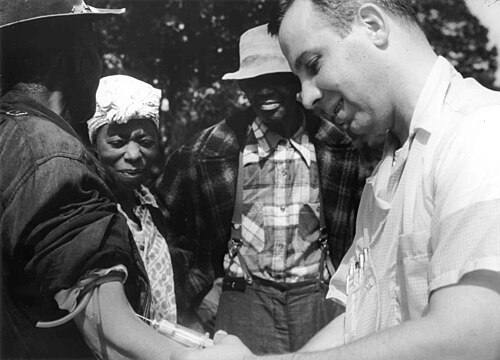 Same disease or problem1972Tuskegee Syphilis Study ExposedBoth became standard cases of research on people who could not freely refuse. The Tuskegee entry shows how withholding treatment from Black men with syphilis was exposed in 1972 and produced new informed consent rules.Read this moment
- Same disease or problem1979The Belmont ReportWillowbrook raised hard questions about consent and about who may be chosen for research. The Belmont Report answers with three principles, paired with informed consent and the fair selection of subjects.Read this moment