Critical & Organ Care
1966
Accidental Death and Disability report
A 1966 National Academy of Sciences report called accidental injury the neglected epidemic of modern society and exposed the poor state of American emergency care. Its recommendations fed into the Highway Safety Act of 1966 and the building of emergency medical services.
In 1965, the report began, 52 million accidental injuries killed 107,000 Americans, temporarily disabled more than 10 million and permanently impaired 400,000, at a cost of about $18 billion. Injury was the leading cause of death in the first half of life, the fourth leading cause of death overall and the main cause of disability. Motor vehicles caused 49,000 of the deaths; more people than that died from accidents at work, at home, in other transport, in public buildings and in recreation.
The report came from the Committees on Trauma and on Shock of the National Academy of Sciences and National Research Council. Millions of Americans, it found, lacked basic first-aid instruction, and few were adequately trained in cardiopulmonary resuscitation or other lifesaving measures, though every ambulance attendant, police officer and firefighter should be. It listed unsuitable ambulances with poor equipment and untrained attendants, and a lack of voice communication, among causes of lost lives that no one had measured. Hospital emergency departments were overcrowded and some were archaic. Local authorities had neglected their duty, and the National Institutes of Health gave trauma research little support.
The authors called for national conferences on emergency medical services, community councils on emergency services, a national council on accident prevention and a national institute of trauma. A 2006 review in the American Journal of Public Health summed up the failings the report documented: no treatment protocols, few trained personnel, inefficient transport, a lack of modern communications and equipment, and no research on care before the hospital.
The report appeared while President Johnson's Commission on Highway Safety was also pressing for better care of the injured, and the recommendations of both went into the Highway Safety Act of 1966. The Act gave the federal government a role in state emergency medical services plans, ambulance specifications, equipment, communications, training and staffing, with penalties for states that failed to comply. That same year Cook County Hospital in Chicago brought all its trauma patients under a dedicated team and became one of the country's first trauma centers.
Keep exploring
 Read next · led to
Freedom House paramedics and the 911 number (1967)
The report exposed how little emergency care Americans could get, and Freedom House answered a year later. Its entry shows Hill District residents trained as paramedics, a model for national standards.
Read this moment
Read next · led to
Freedom House paramedics and the 911 number (1967)
The report exposed how little emergency care Americans could get, and Freedom House answered a year later. Its entry shows Hill District residents trained as paramedics, a model for national standards.
Read this moment
 Today on The Clinical Times
Love to Dream recalls portable baby sound machine over fire and burn risk
Love to Dream has recalled its portable Sleep Machine because its lithium-ion battery can overheat while charging with an incompatible charger, creating a risk of fire and burns.
Read today’s top stories
Today on The Clinical Times
Love to Dream recalls portable baby sound machine over fire and burn risk
Love to Dream has recalled its portable Sleep Machine because its lithium-ion battery can overheat while charging with an incompatible charger, creating a risk of fire and burns.
Read today’s top stories
All 526 moments in the history of medicine. This one is in chapter 6, Trials, scanners and rights
Connected moments
How this moment links to others in the history of medicine, and what you will find in each.
-
 Same disease or problemc. 1792Larrey's flying ambulances and triageBoth tackled how to reach the injured quickly and treat the worst first. Larrey's entry shows fast horse-drawn ambulances on the battlefield and the sorting of wounded by severity, later called triage.Read this moment
-
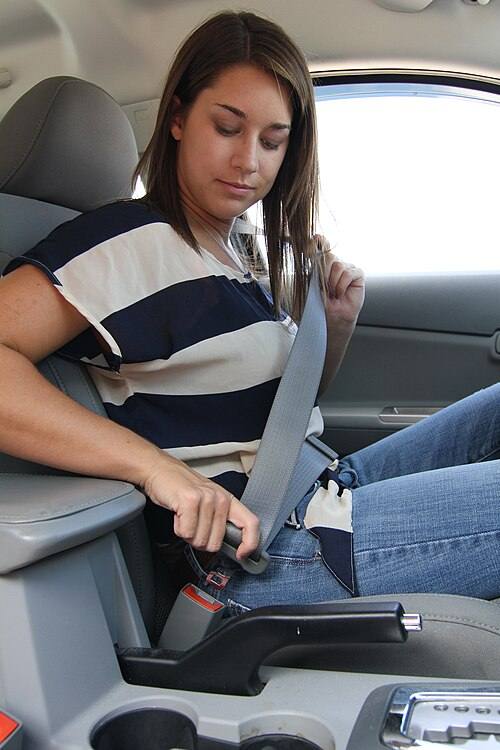 Same disease or problem1984Seat belt legislation and effectiveness evidenceMotor vehicles caused 49,000 of the injury deaths the report counted in 1965. The seat belt entry shows the first US belt law doubling belt use and reducing serious injuries.Read this moment