Patients & Rights
1968
The Uniform Anatomical Gift Act
The 1968 model law let any adult of sound mind give organs or the whole body at death by a signed document and ranked which relatives could give when the person had not. Every state enacted it within three years.
Transplant surgery moved faster than the law. States began passing their own organ donation statutes in the 1960s, as transplantation became a real treatment, and each had different rules about rights over the bodies of the dead. In August 1967 the National Conference of Commissioners on Uniform State Laws drafted one model act for all of them. The commissioners adopted the Uniform Anatomical Gift Act in the summer of 1968, and the American Bar Association approved it. A. M. Sadler, B. L. Sadler and E. B. Stason made the case for it in JAMA that year as a model for reform.
Under the act any adult of sound mind could give all or part of the body, to take effect at death, in a document signed before two witnesses. If the person had neither agreed nor objected, the next of kin could give, in a ranked order that put a spouse ahead of adult children, parents and siblings. Hospitals, medical schools, universities and storage facilities could receive gifts for research and teaching, and named individuals could receive organs for transplantation. A physician had to declare the time of death. The act made the Uniform Donor Card a legal document of gift. It also listed stillborn infants and fetuses among possible decedents, which later drew it into disputes over fetal tissue research.
Adoption was quick. By 1971 every state and the District of Columbia had enacted the act, with few changes.
Two gaps showed with use. The act did not state in its text that a person's own decision to donate overrode the family's wishes; that appeared only in the commentary, which made it easier for procurement teams to give way to relatives who objected. It also said nothing about selling organs. The National Organ Transplant Act of 1984 banned the exchange of organs for valuable consideration, and the commissioners' 1987 revision adopted the ban. A 2006 revision widened the list of people who may consent for someone else and required people who refuse to donate to say so explicitly. By 2012, 45 states, the District of Columbia and the U.S. Virgin Islands had adopted the 2006 version.
Keep exploring
 Read next · built on
First Successful Kidney Transplant (1954)
The law followed transplantation becoming a real treatment, which the 1954 kidney transplant began. That entry shows how identical twins sidestepped rejection and proved an organ could be moved between people.
Read this moment
Read next · built on
First Successful Kidney Transplant (1954)
The law followed transplantation becoming a real treatment, which the 1954 kidney transplant began. That entry shows how identical twins sidestepped rejection and proved an organ could be moved between people.
Read this moment
 Today on The Clinical Times
Love to Dream recalls portable baby sound machine over fire and burn risk
Love to Dream has recalled its portable Sleep Machine because its lithium-ion battery can overheat while charging with an incompatible charger, creating a risk of fire and burns.
Read today’s top stories
Today on The Clinical Times
Love to Dream recalls portable baby sound machine over fire and burn risk
Love to Dream has recalled its portable Sleep Machine because its lithium-ion battery can overheat while charging with an incompatible charger, creating a risk of fire and burns.
Read today’s top stories
All 526 moments in the history of medicine. This one is in chapter 6, Trials, scanners and rights
Connected moments
How this moment links to others in the history of medicine, and what you will find in each.
-
 Same disease or problem1984The National Organ Transplant ActThe 1968 act said nothing about selling organs, a gap the 1984 law closed. NOTA shows the ban on buying organs and the creation of a single national waiting list and matching system.Read this moment
-
 Same disease or problem1968Harvard Criteria for Brain DeathThe gift act required a physician to declare death, and the same year Harvard defined death by the brain. That entry shows how ventilators forced a new definition, with organ procurement part of the reason.Read this moment
-
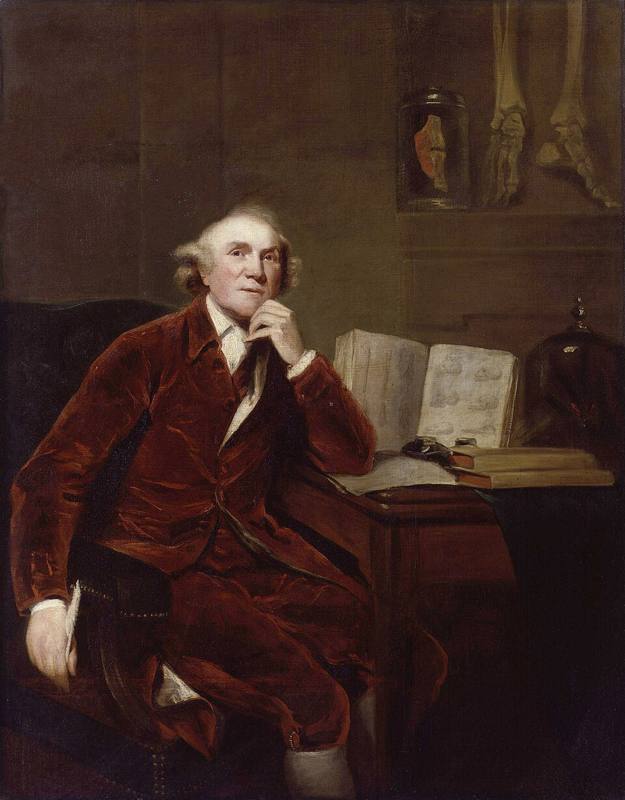 Same disease or problemc. 1768John Hunter and experimental surgeryThe act let people give their whole body to medical schools, which once relied on body snatchers. Hunter's entry shows him present at over 2,000 dissections in his brother's London anatomy school.Read this moment