Cardiology
1973
Brown, Goldstein and the LDL receptor
Working with skin cells from patients with familial hypercholesterolemia, Michael Brown and Joseph Goldstein found in 1973 that the disease lies in the control of cholesterol synthesis, and traced it to a missing cell-surface receptor for LDL. They shared the 1985 Nobel Prize.
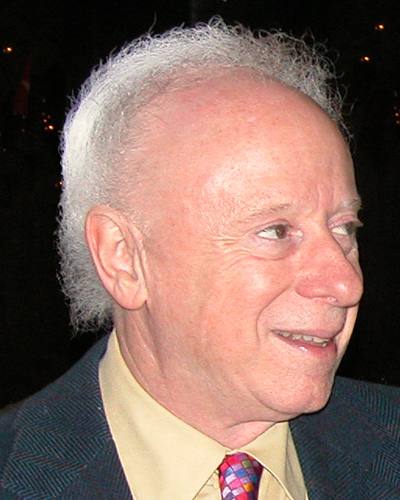
Key people
- Michael S. Brown
- Dallas geneticist; Nobel laureate 1985
- Joseph L. Goldstein
- Dallas geneticist; Nobel laureate 1985
Source
Familial hypercholesterolemia is inherited as a dominant trait. About 1 in 500 people carry one mutant gene; their LDL is doubled from birth and heart attacks begin at 30 to 40. About 5 percent of people who have a heart attack before age 60 have this form. Roughly 1 in a million inherit two copies. Their LDL is six to ten times normal, and they often have heart attacks in childhood.
Michael Brown and Joseph Goldstein began studying the disease in 1972 at the University of Texas Southwestern Medical School in Dallas. Cholesterol handling was thought to happen mainly in the liver and gut, and the livers of patients could not be studied, so they grew skin fibroblasts in culture and built a micro-assay for HMG CoA reductase, the enzyme that limits the rate of cholesterol synthesis. In normal cells, taking lipoproteins out of the medium raised its activity at least 50-fold in 24 hours, and adding them back shut it down. LDL did this; HDL did not. That specificity was their first hint of a receptor.
In 1973 they reported that fibroblasts from three unrelated patients with the severe, two-copy form had 40 to 60 times normal reductase activity, because LDL could not switch the enzyme off, and that the cells overproduced cholesterol. The enzyme itself behaved normally. Cells from two parents who carried one copy fell in between. They went on to show that normal cells bind LDL to a receptor in coated pits on the cell surface and pull it inside, a process now called receptor-mediated endocytosis. Cells from the severe form lacked working receptors, and cells from the milder form had about half the normal number. When cells take in cholesterol they make fewer receptors, leaving more LDL in the blood.
The receptor pointed to treatment. In patients with the milder form, the drugs cholestyramine and mevinolin raised the number of receptors and lowered blood cholesterol. Patients with the severe form have no functional receptors to raise, and liver transplantation was tried instead: a 6-year-old girl who had already had several heart attacks received a new heart and liver together, and her total plasma cholesterol fell from 1,100 mg/dl to between 200 and 300 mg/dl. Brown and Goldstein shared the 1985 Nobel Prize in Physiology or Medicine.
Keep exploring
 Read next · led to
FDA approval of lovastatin, the first statin (HMG-CoA reductase inhibitor) (1987)
Brown and Goldstein showed that blocking cholesterol synthesis raises LDL receptors and clears LDL from the blood, the mechanism behind lovastatin. The lovastatin entry shows how a mold compound became the first statin approved in 1987.
Read this moment
Read next · led to
FDA approval of lovastatin, the first statin (HMG-CoA reductase inhibitor) (1987)
Brown and Goldstein showed that blocking cholesterol synthesis raises LDL receptors and clears LDL from the blood, the mechanism behind lovastatin. The lovastatin entry shows how a mold compound became the first statin approved in 1987.
Read this moment
 Today on The Clinical Times
Love to Dream recalls portable baby sound machine over fire and burn risk
Love to Dream has recalled its portable Sleep Machine because its lithium-ion battery can overheat while charging with an incompatible charger, creating a risk of fire and burns.
Read today’s top stories
Today on The Clinical Times
Love to Dream recalls portable baby sound machine over fire and burn risk
Love to Dream has recalled its portable Sleep Machine because its lithium-ion battery can overheat while charging with an incompatible charger, creating a risk of fire and burns.
Read today’s top stories
All 526 moments in the history of medicine. This one is in chapter 6, Trials, scanners and rights
Connected moments
How this moment links to others in the history of medicine, and what you will find in each.
-
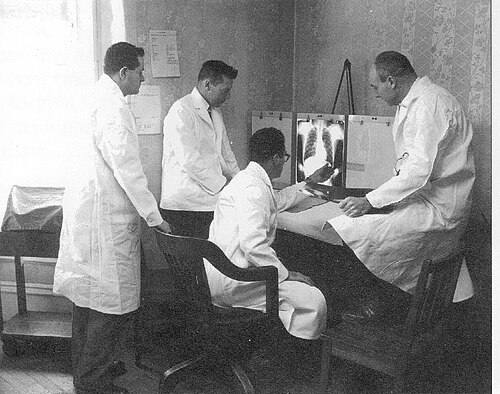 Same disease or problem1961Factors of Risk in the Development of Coronary Heart Disease (Framingham Heart Study)Framingham tied high cholesterol to coronary disease, and Brown and Goldstein found why some families have it from birth. The Framingham entry shows how the term risk factor entered medicine.Read this moment
-
 Same disease or problem19944S (Scandinavian Simvastatin Survival Study)Both concern LDL cholesterol and coronary disease, one explaining its control inside cells and one proving that lowering it saves lives. The 4S trial shows simvastatin cutting deaths by 30 percent.Read this moment