Epidemiology
1975
The discovery of Lyme disease
A cluster of arthritis in three Connecticut towns, reported by local mothers in 1975, led Yale investigators to a new tick-borne illness. Its cause, a spirochete found in ticks in 1981, was named Borrelia burgdorferi, and early antibiotic treatment proved effective.
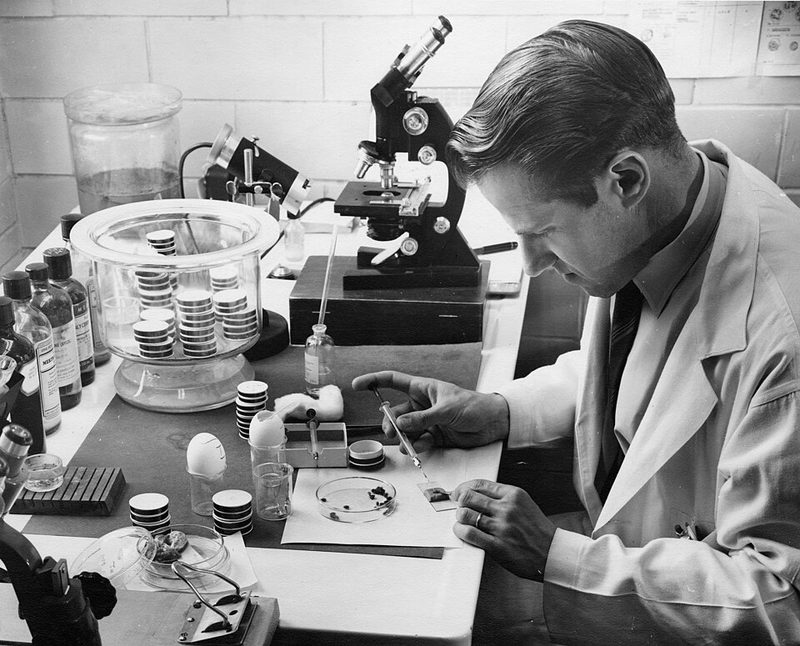
Key people
- Allen C. Steere
- Yale rheumatology fellow who led the 1975 Lyme survey
- Stephen E. Malawista
- Head of rheumatology at Yale; co-led the Lyme investigation
- Willy Burgdorfer
- Rocky Mountain Laboratories scientist who found the spirochete in ticks
- Jorge L. Benach
- Stony Brook scientist who supplied the Shelter Island ticks
Source
In the early fall of 1975 two mothers in Old Lyme, Connecticut, told the state health department and Yale School of Medicine that arthritis, including juvenile arthritis, was striking their families and town. Allen Steere, a first-year rheumatology fellow, and Stephen Malawista, head of rheumatology at Yale, began a survey that December with David Snydman and Francis Steele of the state health department.
They found 51 residents of Old Lyme, Lyme and East Haddam, 39 children and 12 adults, with recurrent attacks of swelling and pain in a few large joints, most often the knee. The overall prevalence was 4.3 per 1,000 residents, but among children living on four roads it was 1 in 10. Cases came from wooded areas, not town centers, and began mostly between June and September. Thirteen patients, a quarter of the group, remembered an expanding red ring on the skin a median of four weeks before the arthritis. It matched erythema chronicum migrans, a lesion described in Europe and linked there to tick bites, though never to arthritis. Cultures and tests for known causes of arthritis were negative. The 1977 report called the illness Lyme arthritis and suggested an arthropod carried it.
Thirty more patients turned up in the summer of 1976, and the rash became the recognized first sign. In 1978 the Yale group found the disease 30 times more common on the east bank of the Connecticut River than the west, in line with the deer tick's range. A 1980 study of 113 patients with the rash showed that antibiotics shortened it from a median of 10 days to 4 and meant fewer patients went on to arthritis.
The cause came from tick work on Long Island. Jorge Benach's laboratory at Stony Brook had been studying tick-borne babesiosis and spotted fever there, and in October 1981 he sent adult Ixodes dammini ticks from Shelter Island to Willy Burgdorfer at the Rocky Mountain Laboratories in Montana, who saw spirochetes in their midguts. Alan Barbour grew them in culture, and sera from Lyme disease patients reacted with them. Science published the finding on 18 June 1982 with a question mark in its title. In 1983 the spirochete was recovered from patients, and a vote at the first international Lyme disease conference in New Haven chose the species name burgdorferi.
Keep exploring
 Read next · same disease or problem
Legionnaires' disease in Philadelphia (1976)
Both began as a puzzling cluster of illness that investigators traced to a previously unknown bacterium. The Legionnaires entry shows pneumonia in 182 people linked to a convention, traced to bacteria spread in mist from building water systems.
Read this moment
Read next · same disease or problem
Legionnaires' disease in Philadelphia (1976)
Both began as a puzzling cluster of illness that investigators traced to a previously unknown bacterium. The Legionnaires entry shows pneumonia in 182 people linked to a convention, traced to bacteria spread in mist from building water systems.
Read this moment
 Today on The Clinical Times
Love to Dream recalls portable baby sound machine over fire and burn risk
Love to Dream has recalled its portable Sleep Machine because its lithium-ion battery can overheat while charging with an incompatible charger, creating a risk of fire and burns.
Read today’s top stories
Today on The Clinical Times
Love to Dream recalls portable baby sound machine over fire and burn risk
Love to Dream has recalled its portable Sleep Machine because its lithium-ion battery can overheat while charging with an incompatible charger, creating a risk of fire and burns.
Read today’s top stories
All 526 moments in the history of medicine. This one is in chapter 6, Trials, scanners and rights
Connected moments
How this moment links to others in the history of medicine, and what you will find in each.
-
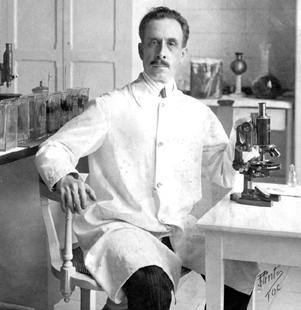 Same disease or problem1909Chagas and American trypanosomiasisBoth uncovered a new disease carried by a blood-sucking arthropod, a tick in Lyme and a bug in Brazil. Chagas's entry shows him finding the parasite, its insect carrier and the human disease together.Read this moment
-
 Same disease or problem1981First report of AIDS (Pneumocystis pneumonia cluster)Both started when an unusual cluster of illness was noticed and reported before its cause was known. The AIDS entry shows five young men with a rare pneumonia, two years before HIV was identified.Read this moment