Public Health
1978
Declaration of Alma-Ata
Meeting at Alma-Ata in the Soviet Union in September 1978, a conference sponsored by WHO and UNICEF declared health a fundamental human right and named primary health care as the route to health for all by the year 2000.
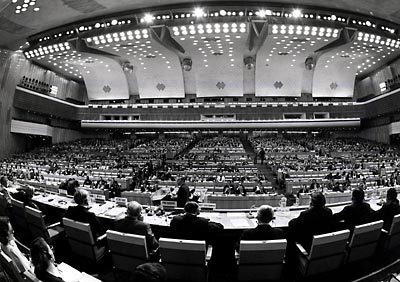
The International Conference on Primary Health Care met at Alma-Ata, in the Soviet Union, from 6 to 12 September 1978, sponsored jointly by the World Health Organization and UNICEF. On the final day it adopted a short declaration. Health, it said, was a state of complete physical, mental and social well-being and not merely the absence of disease or infirmity, and it was a fundamental human right. The gross inequality in health between developed and developing countries, and within countries, was declared unacceptable on political, social and economic grounds and a concern of every country.
The declaration defined primary health care as essential care based on practical, scientifically sound and socially acceptable methods, made universally accessible to individuals and families in the community through their full participation. It was to be the first level of contact with the health system, bringing care as close as possible to where people live and work. People, it stated, had a right and a duty to take part in planning and carrying out their own health care.
Section VII listed what primary health care should include at a minimum: education about prevailing health problems and how to prevent and control them; food supply and proper nutrition; safe water and basic sanitation; maternal and child health care, including family planning; immunization against the major infectious diseases; prevention and control of locally endemic diseases; appropriate treatment of common diseases and injuries; and essential drugs. It also had to involve agriculture and the other sectors of national and community development, beyond the health services.
The conference set a target for governments, international organizations and the world community: by the year 2000, all peoples should reach a level of health that would let them lead socially and economically productive lives, with primary health care as the key. The declaration argued that this could be done through fuller and better use of the world's resources, a considerable part of which was then spent on armaments and military conflicts.
Keep exploring
 Read next · built on
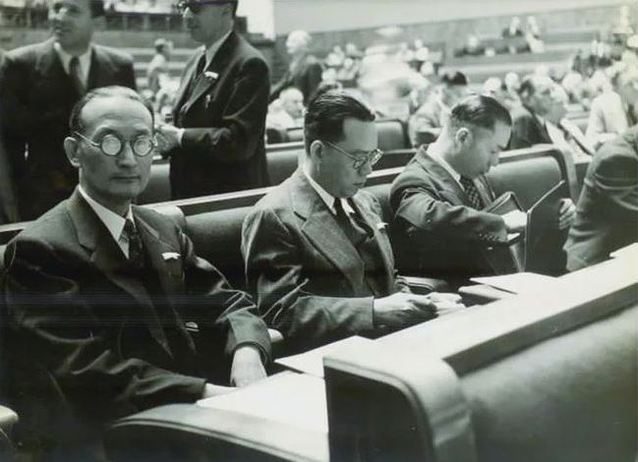
Founding of the World Health Organization (1948)
Alma-Ata repeated WHO's founding definition of health as complete physical, mental and social well-being. The WHO entry shows how the agency's constitution came into force in 1948.
Read this moment
Read next · built on
Founding of the World Health Organization (1948)
Alma-Ata repeated WHO's founding definition of health as complete physical, mental and social well-being. The WHO entry shows how the agency's constitution came into force in 1948.
Read this moment
 Today on The Clinical Times
Love to Dream recalls portable baby sound machine over fire and burn risk
Love to Dream has recalled its portable Sleep Machine because its lithium-ion battery can overheat while charging with an incompatible charger, creating a risk of fire and burns.
Read today’s top stories
Today on The Clinical Times
Love to Dream recalls portable baby sound machine over fire and burn risk
Love to Dream has recalled its portable Sleep Machine because its lithium-ion battery can overheat while charging with an incompatible charger, creating a risk of fire and burns.
Read today’s top stories
All 526 moments in the history of medicine. This one is in chapter 6, Trials, scanners and rights
Connected moments
How this moment links to others in the history of medicine, and what you will find in each.
-
 Same disease or problem1974WHO Expanded Programme on Immunization (EPI) launchedImmunization against the major infectious diseases was one of the basics Alma-Ata listed for primary health care. The EPI entry shows how child vaccination averted about 154 million deaths in 50 years.Read this moment
- Same disease or problem1851The first International Sanitary ConferenceBoth brought nations together to agree on health, Paris in 1851 on quarantine and Alma-Ata on health for all. The 1851 entry shows the first such meeting, which achieved little but began a long series.Read this moment