Oncology
1987
The PSA test and prostate cancer screening
A blood test for prostate-specific antigen, shown in 1987 to track prostate cancer, spread into screening healthy men. Randomized trials later found at best a small drop in prostate cancer deaths at the price of much overdiagnosis, and US guidance changed in 2012 and 2018.
Key people
- Thomas A. Stamey
- Led the 1987 study of PSA as a prostate cancer marker
- William J. Catalona
- Led the 1991 study of PSA screening in healthy men
Source
Prostate-specific antigen is a protein made by normal and cancerous cells of the prostate gland. In 1986 the US Food and Drug Administration approved a PSA blood test for monitoring men already diagnosed with prostate cancer. The next year Thomas Stamey and colleagues reported on 2,200 serum samples from 699 patients. PSA was raised in 122 of 127 men with newly diagnosed, untreated prostate cancer, rose with stage and tumor volume, and fell to undetectable levels after radical prostatectomy. It was also raised in 86 percent of men with benign prostatic enlargement, so it was not specific for cancer.
In 1991 William Catalona and colleagues measured PSA in 1,653 healthy men aged 50 or older. Of 85 biopsied men with levels of 4.0 to 9.9 micrograms per liter, 19 had cancer; of 27 biopsied men with levels of 10 or higher, 18 did. In 1994 the FDA approved the PSA test, used with a digital rectal examination, to help detect prostate cancer in men without symptoms.
Two large randomized trials reported in March 2009. In the American PLCO trial, 76,693 men were assigned to annual screening or usual care; after 7 to 10 years, deaths from prostate cancer did not differ significantly between the groups. In the European ERSPC trial of 162,243 men aged 55 to 69, screening cut the prostate cancer death rate by 20 percent after a median of 9 years, but 1,410 men had to be screened and 48 extra cancers treated to prevent one death.
The harms were concrete. About 6 to 7 percent of men have a false-positive PSA test in any round of screening, biopsies can cause serious infection, pain and bleeding, and some cancers found would never have caused symptoms. In 2012 the US Preventive Services Task Force recommended against PSA screening for men of any age. In 2018 it changed course: men aged 55 to 69 should decide individually with their clinicians, and men 70 and older should not be screened. It estimated that screening 1,000 men aged 55 to 69 for 13 years would avoid about 1.3 prostate cancer deaths.
Keep exploring
 Read next · same disease or problem
Huggins and hormonal treatment of prostate cancer (1941)
Both concern prostate cancer, Huggins treating advanced disease with hormones and PSA hunting for it early. The Huggins entry shows castration or estrogen suppressing prostate cancer spread to bone.
Read this moment
Read next · same disease or problem
Huggins and hormonal treatment of prostate cancer (1941)
Both concern prostate cancer, Huggins treating advanced disease with hormones and PSA hunting for it early. The Huggins entry shows castration or estrogen suppressing prostate cancer spread to bone.
Read this moment
 Today on The Clinical Times
Love to Dream recalls portable baby sound machine over fire and burn risk
Love to Dream has recalled its portable Sleep Machine because its lithium-ion battery can overheat while charging with an incompatible charger, creating a risk of fire and burns.
Read today’s top stories
Today on The Clinical Times
Love to Dream recalls portable baby sound machine over fire and burn risk
Love to Dream has recalled its portable Sleep Machine because its lithium-ion battery can overheat while charging with an incompatible charger, creating a risk of fire and burns.
Read today’s top stories
All 526 moments in the history of medicine. This one is in chapter 6, Trials, scanners and rights
Connected moments
How this moment links to others in the history of medicine, and what you will find in each.
-
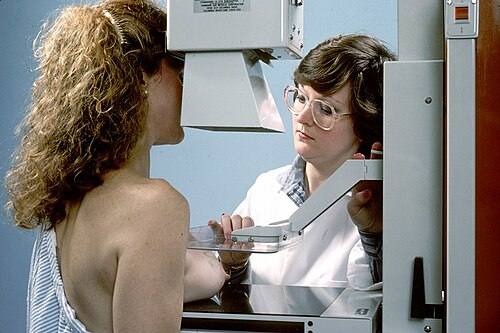 Same disease or problem1971Health Insurance Plan (HIP) of Greater New York mammography trialBoth asked whether screening healthy people for cancer saves lives, with more encouraging results for breast screening. The HIP entry shows about 30 percent fewer breast cancer deaths in screened women.Read this moment
-
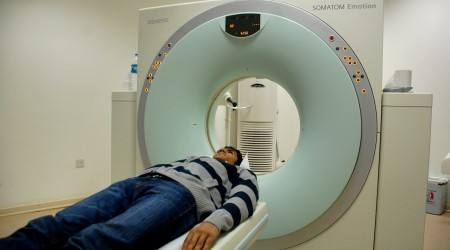 Same disease or problem2011National Lung Screening Trial (NLST)Both were judged by randomized trials of screening, which gave PSA at best a small benefit and lung CT a clear one. The NLST entry shows low-dose CT cutting lung cancer deaths by 20 percent.Read this moment