Cardiology
1768
Heberden's account of angina pectoris
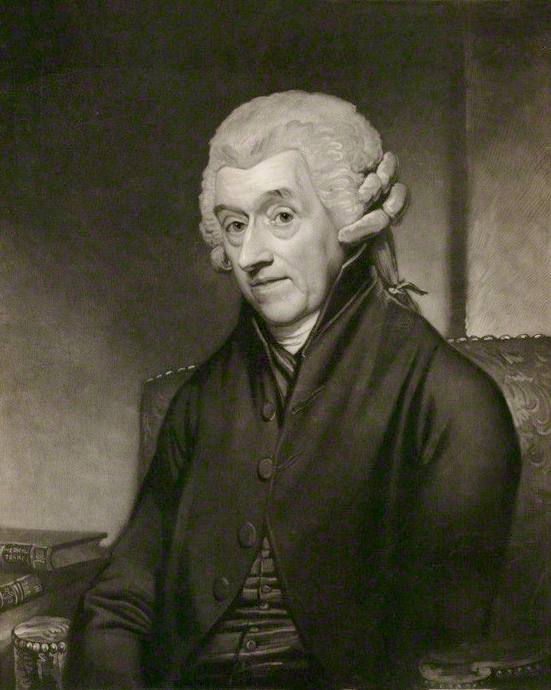
In a paper read to the College of Physicians in London on 21 July 1768, William Heberden described chest pain brought on by walking and relieved by standing still, and named it angina pectoris. The College printed it in 1772.
Key people
- William Heberden
- Physician who described and named angina pectoris in 1768
Source
The pain came on during a walk, especially soon after a meal. It sat under the breastbone, always leaning to the left, sometimes with a pain about the middle of the left arm, and felt as if it would take the patient's life if it grew or lasted. The moment the patient stood still, it was gone. William Heberden described these attacks in a paper read at the College of Physicians in London on 21 July 1768. He called the disorder angina pectoris, for its seat in the chest and the sense of strangling and anxiety that came with it, and wrote that he could recall no mention of it by medical authors.
At first the patients were otherwise well, with no shortness of breath. After some months the attacks came at night as well, forcing people out of bed every night for months, and in one or two long-standing cases the motion of a horse or carriage, swallowing, coughing or an upset of mind could set them off. Heberden had seen something similar in one paralysed woman and heard mild complaints from one or two young men. The rest, at least twenty, were men, nearly all past fifty, most short-necked and inclined to be fat.
An experienced physician he consulted had known several such patients, and all had died suddenly; six of Heberden's own had died the same way. He suspected a strong cramp, perhaps with an ulcer. Because the pulse, when he felt it during an attack, was at least sometimes undisturbed, he concluded that the heart was not affected. He had never seen a patient opened after death, since most were buried before he heard they had died. Bleeding and other evacuations did no good. Wine at bedtime weakened the night attacks, and 10 to 20 drops of tincture of opium let patients stay in bed until morning.
The College printed the paper in the second volume of its Medical Transactions in 1772. Heberden went on collecting cases. In his Commentaries, published in London in 1802, the year after his death, he counted nearly a hundred patients, among them three women and a boy of twelve. He also reported a post-mortem: a skilled anatomist opened a patient who had died suddenly of it and found no fault in the heart, the valves, the arteries or the neighbouring veins, apart from small beginnings of bone in the aorta. One patient who set himself to saw wood for half an hour every day was, Heberden wrote, nearly cured.
Keep exploring
 Read next · same disease or problem
Propranolol and the beta blockers (1964)
Heberden named angina and could offer little but opium, and propranolol was developed to cut the heart's oxygen demand in angina. Its story explains the cause Heberden missed, narrowed coronary arteries starving working heart muscle.
Read this moment
Read next · same disease or problem
Propranolol and the beta blockers (1964)
Heberden named angina and could offer little but opium, and propranolol was developed to cut the heart's oxygen demand in angina. Its story explains the cause Heberden missed, narrowed coronary arteries starving working heart muscle.
Read this moment
 Today on The Clinical Times
Love to Dream recalls portable baby sound machine over fire and burn risk
Love to Dream has recalled its portable Sleep Machine because its lithium-ion battery can overheat while charging with an incompatible charger, creating a risk of fire and burns.
Read today’s top stories
Today on The Clinical Times
Love to Dream recalls portable baby sound machine over fire and burn risk
Love to Dream has recalled its portable Sleep Machine because its lithium-ion battery can overheat while charging with an incompatible charger, creating a risk of fire and burns.
Read today’s top stories
All 526 moments in the history of medicine. This one is in chapter 3, Anatomy and observation
Connected moments
How this moment links to others in the history of medicine, and what you will find in each.
-
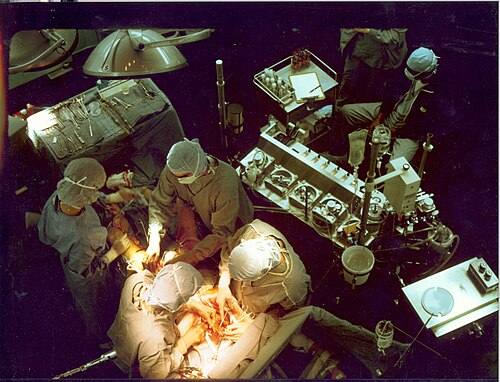 Same disease or problem1968Coronary Artery Bypass Grafting (CABG)Heberden described the pain of angina, and two centuries later bypass surgery relieved it in advanced coronary disease. Favaloro's story shows the operation made reproducible, with deaths under five percent by 1970.Read this moment
-
 Same disease or problem19944S (Scandinavian Simvastatin Survival Study)Heberden's patients with angina often died suddenly, and the 4S trial enrolled patients with angina or a past heart attack to test a statin. Its story shows cholesterol lowering cutting deaths in such patients.Read this moment