Critical & Organ Care
1818
Blundell's first transfusion of human blood
In September 1818 James Blundell of Guy's Hospital injected 12 to 14 ounces of human blood by syringe into a dying man. The patient rallied and then died, and Blundell went on to transfuse women bleeding after childbirth.
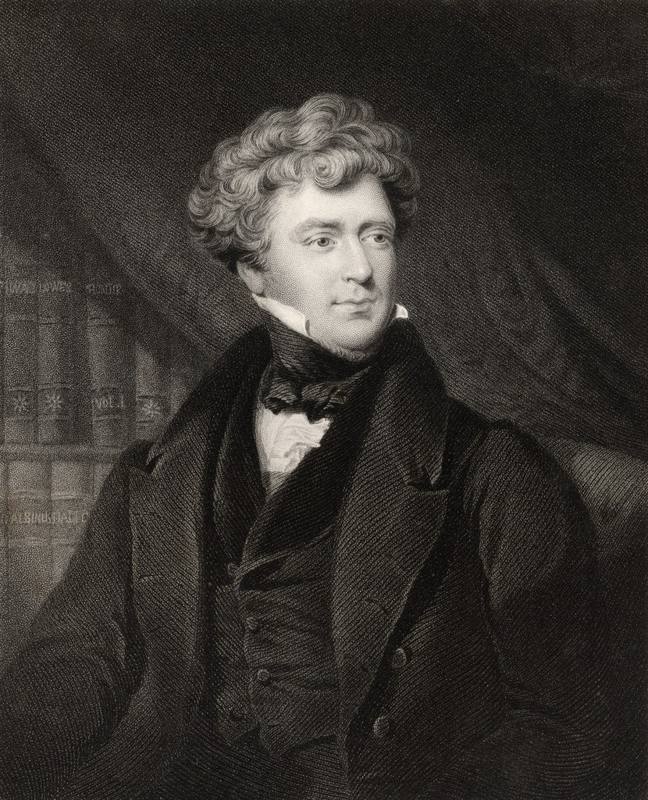
Key people
- James Blundell
- Guy's Hospital lecturer who performed the 1818 transfusion
- John Henry Leacock
- Barbadian whose 1816 animal transfusion experiments Blundell credited
- Henry Cline
- Surgeon who communicated Blundell's first transfusion paper in 1818
Source
Some months before February 1818, James Blundell was called to a woman sinking from uterine hemorrhage. She died within two hours of his arrival. Blundell, a lecturer in physiology and midwifery at Guy's Hospital, thought she might have been saved by refilling her vessels with a syringe. Transfusion had been set aside for about 150 years, since failed attempts in the 1660s to put animal blood into people.
He tested the idea on dogs. Dogs bled into collapse revived on another dog's blood, even after it had passed through a cup and syringe. Given human or sheep blood, they rallied but generally died within days, so Blundell held that people should receive only human blood. He credited his first notions to John Henry Leacock, a Barbadian who had reported similar animal experiments at Edinburgh in 1816. Henry Cline communicated the paper to the Medical and Chirurgical Society of London on 3 February 1818.
The first human patient, a man named Brazier aged between 30 and 40, had vomited most of his food for three or four months and lay emaciated at Guy's. His physician, Dr. Cholmely, proposed transfusion as a last resort, and Brazier was willing. On 26 September 1818 Blundell opened the right cephalic vein above the elbow. Gentlemen present gave blood, which he injected an ounce and a half at a time, ten times over: between 12 and 14 ounces in 30 or 40 minutes.
That evening Brazier's pulse was fuller and his lips reddened, and he said he felt much better and less faint. Next morning he asked for food and drank some porter. By the evening of 27 September he was failing, and he died about 56 hours after the transfusion. The autopsy showed a scirrhous pylorus. Blundell reckoned the man had lost at least a gallon and a half of blood during his illness, so the amount given had been far too small.
Most of Blundell's later transfusions were in women bleeding around childbirth, and by 1828 he could report two who recovered. He designed new instruments (the Impellor in 1824, the Gravitator in 1828) and advised taking blood from men, who fainted less. An American note later claimed the method had been used in Philadelphia about 30 years earlier, but no contemporary record survives.
Keep exploring
 Read next · built on
Transfusion of animal blood into humans (1667)
Transfusion had been set aside for about 150 years after the failed animal blood transfusions of the 1660s. That story shows lambs' and sheep's blood given to patients in Paris and London, and the death that led to bans.
Read this moment
Read next · built on
Transfusion of animal blood into humans (1667)
Transfusion had been set aside for about 150 years after the failed animal blood transfusions of the 1660s. That story shows lambs' and sheep's blood given to patients in Paris and London, and the death that led to bans.
Read this moment
 Today on The Clinical Times
Love to Dream recalls portable baby sound machine over fire and burn risk
Love to Dream has recalled its portable Sleep Machine because its lithium-ion battery can overheat while charging with an incompatible charger, creating a risk of fire and burns.
Read today’s top stories
Today on The Clinical Times
Love to Dream recalls portable baby sound machine over fire and burn risk
Love to Dream has recalled its portable Sleep Machine because its lithium-ion battery can overheat while charging with an incompatible charger, creating a risk of fire and burns.
Read today’s top stories
All 526 moments in the history of medicine. This one is in chapter 4, Germs, numbers and clean water
Connected moments
How this moment links to others in the history of medicine, and what you will find in each.
-
 Same disease or problem1901Discovery of the ABO Blood GroupsBlundell insisted on human blood, but before 1901 no one could predict whether a transfusion would save or kill. Landsteiner's story shows the blood groups that made donor matching possible.Read this moment
-
 Same disease or problem2017WOMAN Trial: Tranexamic Acid for Postpartum HemorrhageBlundell began transfusing after watching a woman bleed to death after childbirth, and the WOMAN trial attacked the same danger with a drug. Its story shows tranexamic acid cutting deaths from postpartum bleeding in 20,060 women.Read this moment
-
 Same person1843Holmes on the contagiousness of puerperal feverJames Blundell, who also lectured on midwifery, was among the British writers Holmes credited on puerperal fever. Holmes's story shows the argument that birth attendants carried the fever from woman to woman.Read this moment