Patients & Rights
1864
The Contagious Diseases Acts and their repeal
To cut venereal disease among soldiers and sailors, Britain let police and magistrates in garrison towns force women identified as prostitutes into examination and detention in lock hospitals. A campaign led by women ended compulsory examination in 1883, and the Acts were repealed in 1886.

Key people
- Josephine Butler
- Co-founder of the Ladies' National Association against the Acts
- James Stansfeld
- MP who moved the 1883 resolution against compulsory examination
- Elizabeth Garrett
- Medical practitioner who defended the Acts in print in 1870
Source
Parliament passed the first Contagious Diseases Act in 1864 because of the damage venereal disease was doing to soldiers and sailors in certain ports and garrison towns. A magistrate could act on the sworn word of a doctor or police constable that a woman was a prostitute with venereal disease, and order her examined and, if infected, held in hospital. Most women entered hospital too late or left too soon, and in 1866 Parliament judged the Act ineffective.
The Act of 1866 put a standing system in its place. In each district a police superintendent told women he knew to be prostitutes that they must attend for periodic medical inspection, and could get a magistrate's warrant if they refused. A woman found diseased went to a certified lock hospital for up to three months, which could be extended by two further periods of three months if she was not cured. One found free of disease stayed under inspection as long as she remained in the trade. An amending Act followed in 1869.
Josephine Butler and Elizabeth Wolstenholme founded the Ladies' National Association for the Repeal of the Contagious Diseases Acts in 1869. Its manifesto said the Acts stripped poor women of their constitutional rights, forced a degrading internal examination on them and gave official sanction to a double standard of sexual morality. The Acts also had defenders. In January 1870 the medical practitioner Elizabeth Garrett defended the system in the Pall Mall Gazette, and a society that wanted it extended to civilians reprinted her article. A Royal Commission reported in 1871 that compulsory periodic examination should end and the 1864 provisions be restored.
A Commons select committee sat from 1879 to 1882 and split, with James Stansfeld among the minority who condemned the Acts. On 20 April 1883 Stansfeld told the House that in the districts under the Acts, army hospital admissions for primary syphilis had fallen from 146 per 1,000 men in 1860 to 91 in 1867 and to 35 by 1877, so that the decline was nearly as steep before the Acts as after. The House divided 182 to 110 in his favour and resolved that it disapproved of the compulsory examination of women under the Acts, and examinations were suspended that year. In January 1886 James Stuart, Stansfeld and Sir Robert Fowler brought in a bill to repeal the Acts of 1866 and 1869, and it passed that year.
Keep exploring
 Read next · same disease or problem
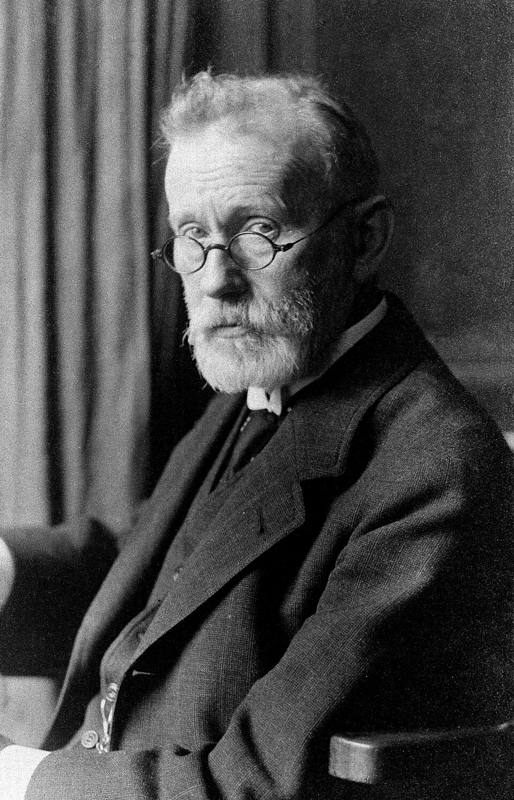
Ehrlich's Salvarsan for Syphilis (1910)
The Acts tried to control syphilis by detaining women, and Salvarsan attacked the disease itself. Ehrlich's story shows the first synthetic drug made to hit one microbe, the spirochete of syphilis.
Read this moment
Read next · same disease or problem
Ehrlich's Salvarsan for Syphilis (1910)
The Acts tried to control syphilis by detaining women, and Salvarsan attacked the disease itself. Ehrlich's story shows the first synthetic drug made to hit one microbe, the spirochete of syphilis.
Read this moment
 Today on The Clinical Times
Love to Dream recalls portable baby sound machine over fire and burn risk
Love to Dream has recalled its portable Sleep Machine because its lithium-ion battery can overheat while charging with an incompatible charger, creating a risk of fire and burns.
Read today’s top stories
Today on The Clinical Times
Love to Dream recalls portable baby sound machine over fire and burn risk
Love to Dream has recalled its portable Sleep Machine because its lithium-ion battery can overheat while charging with an incompatible charger, creating a risk of fire and burns.
Read today’s top stories
All 526 moments in the history of medicine. This one is in chapter 4, Germs, numbers and clean water
Connected moments
How this moment links to others in the history of medicine, and what you will find in each.
-
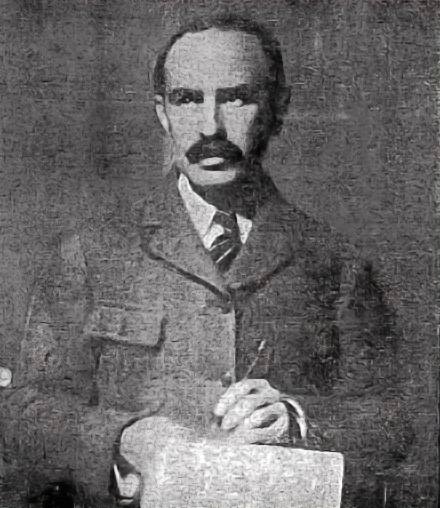 Same disease or problem1907Typhoid Mary and the healthy carrierBoth detained people to protect others from infection, women in lock hospitals and a typhoid carrier on an island. Mary Mallon's story shows about 26 years of confinement, though hundreds of later carriers were not held.Read this moment
-
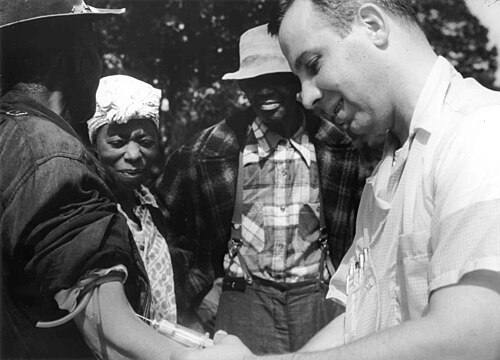 Same disease or problem1972Tuskegee Syphilis Study ExposedBoth concern syphilis and the rights of people with little power over what was done to them. The Tuskegee story shows treatment withheld from Black men for forty years until a 1972 news report ended the study.Read this moment