Research Methods & Ethics
1865
Bernard's Introduction to Experimental Medicine
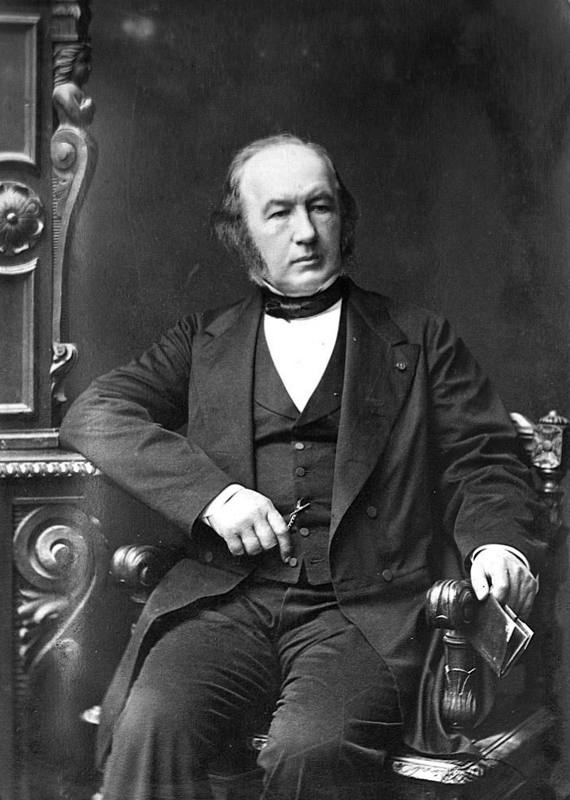
Claude Bernard's 1865 book set out how physiology and medicine should test ideas: a hypothesis put to experiment, a comparative control, and a counter-proof before any cause is accepted. It also described the internal environment that surrounds the body's tissues.
Key people
- Claude Bernard
- French physiologist who wrote the book
- François Magendie
- Physiologist who employed Bernard as his assistant
Source
Claude Bernard (1813 to 1878), born in the village of Saint-Julien near Villefranche-sur-Saône, learned experimental physiology as assistant to François Magendie in Paris. Magendie distrusted hypotheses and used to say that when he experimented he used only his eyes and ears, not his brain. Bernard's own experiments, many of them on living animals and mostly done at the Collège de France, dealt with digestion, the liver and the nerves, including the sympathetic nerves and the action of curare.
In 1865 the Paris publisher J.-B. Baillière et Fils brought out his Introduction à l'étude de la médecine expérimentale. Its three parts covered experimental reasoning, experimenting on living beings, and examples of the method applied to the phenomena of life. Bernard held that an idea should direct an experiment and the experiment should then judge the idea. A hypothesis that no experiment could test, he wrote, led back to the errors of the scholastics and system-builders.
He insisted on two safeguards. One was the comparative experiment, which he called the true basis of experimental medicine; nearly all experimental errors, he argued, came from failing to compare, or from treating unlike cases as comparable. The other was the counter-proof. A researcher whose idea seemed confirmed had to go on doubting, because showing that a condition always precedes a phenomenon does not prove it the cause, the trap of post hoc, ergo propter hoc. Statistical tables of presence or absence, he added, never amount to an experimental demonstration.
The book also described two environments in higher animals: the outer world, and a milieu intérieur formed by the blood and the fluids around the tissues, which more complex animals keep increasingly apart from outside conditions. The idea was later known as homeostasis. His reliance on experiments on living animals divided his own family. His wife and daughters supported the anti-vivisection movement, and he eventually fell out with them.
Keep exploring
 Read next · same disease or problem
Bradford Hill criteria for causation (1965)
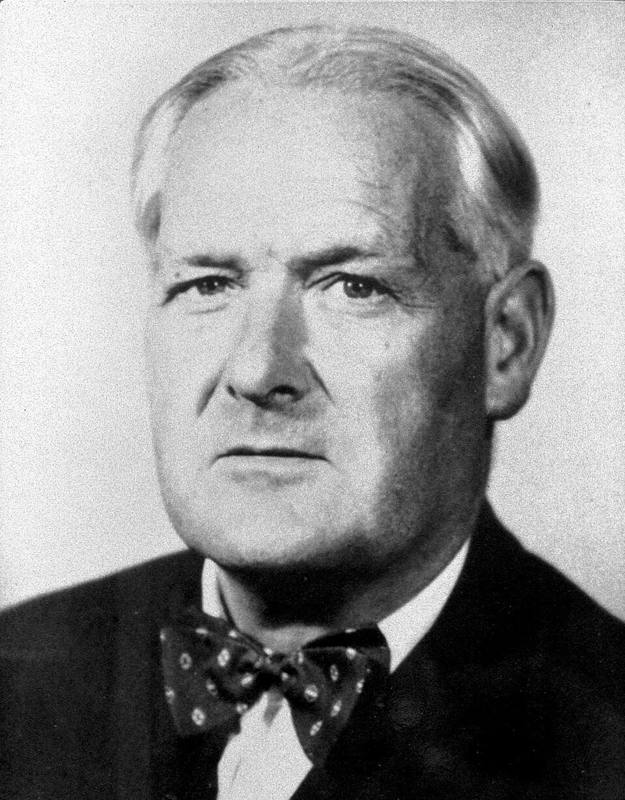
Bernard warned that showing a condition always comes first does not prove it a cause, and Bradford Hill set out how to judge causation when experiment is impossible. His story shows the nine viewpoints still used in epidemiology.
Read this moment
Read next · same disease or problem
Bradford Hill criteria for causation (1965)
Bernard warned that showing a condition always comes first does not prove it a cause, and Bradford Hill set out how to judge causation when experiment is impossible. His story shows the nine viewpoints still used in epidemiology.
Read this moment
 Today on The Clinical Times
Love to Dream recalls portable baby sound machine over fire and burn risk
Love to Dream has recalled its portable Sleep Machine because its lithium-ion battery can overheat while charging with an incompatible charger, creating a risk of fire and burns.
Read today’s top stories
Today on The Clinical Times
Love to Dream recalls portable baby sound machine over fire and burn risk
Love to Dream has recalled its portable Sleep Machine because its lithium-ion battery can overheat while charging with an incompatible charger, creating a risk of fire and burns.
Read today’s top stories
All 526 moments in the history of medicine. This one is in chapter 4, Germs, numbers and clean water
Connected moments
How this moment links to others in the history of medicine, and what you will find in each.
-
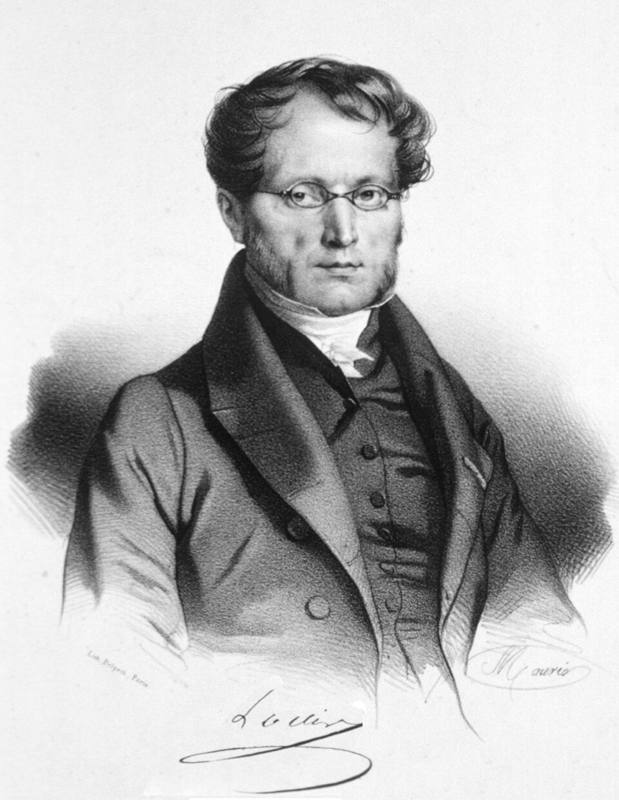 Same disease or problem1835Louis's numerical study of bloodlettingBernard held that statistical tables never amount to an experimental demonstration, while Louis had judged bloodletting by counting outcomes. Louis's story shows the numbers that cast doubt on early bleeding for pneumonia.Read this moment
- Same disease or problem1942Griffith and curare in anesthesiaBernard studied the action of curare on the nerves, and Griffith later gave curare to relax patients' muscles under anesthesia. His story shows muscle relaxants entering surgery from 1942.Read this moment