Genetics & Molecular
1866
Mendel's experiments on plant hybrids
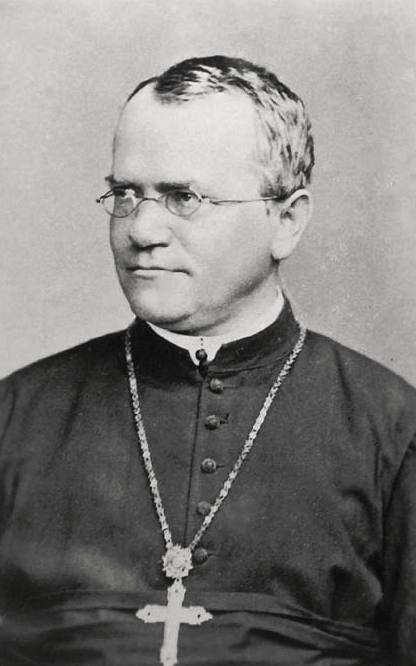
Gregor Mendel crossed pea varieties for eight years and found that contrasting traits returned in the second generation in a steady ratio of about three to one. He presented the work in 1865 and published it in 1866; it drew little notice until about 1900.
Key people
- Gregor Mendel
- Augustinian priest who bred and counted pea hybrids for eight years
Source
Gregor Mendel, born in the farming village of Hynčice, entered the Augustinian Abbey of St Thomas in Brno in 1843 and was ordained a priest in 1847. In 1856 he began crossing garden peas in the monastery garden. He chose the genus Pisum because its varieties had constant traits that were easy to tell apart, their hybrids were fully fertile, and stray pollen seldom interfered: among more than 10,000 plants he examined closely, contamination turned up only a few times.
He crossed varieties that differed in single traits, such as round against wrinkled seeds or yellow against green, and recorded every generation. In the hybrids one form of a trait showed while the other stayed hidden, and in the next generation both appeared again in a regular proportion. From 253 hybrid plants he harvested 7,324 seeds, 5,474 round and 1,850 wrinkled, a ratio of 2.96 to 1. For seed color, 8,023 seeds from 258 plants divided into 6,022 yellow and 2,001 green, or 3.01 to 1.
Mendel read the work to the Natural History Society of Brünn at its meetings of 8 February and 8 March 1865, and the society printed it in its proceedings in 1866. By then, he wrote, the experiment had run for eight years and was essentially finished.
The paper went almost unnoticed while he lived. Mendel died in 1884, and other scientists rediscovered his results at the turn of the twentieth century; the traits he counted are now explained by discrete units of inheritance called genes, some dominant and some recessive.
Keep exploring
 Read next · same disease or problem
Huntington's description of hereditary chorea (1872)
Mendel found some traits dominant, and Huntington described a disease passed from parent to child without ever skipping a generation. That story shows how the gene was found in 1993 and the mutation shown to act as a dominant.
Read this moment
Read next · same disease or problem
Huntington's description of hereditary chorea (1872)
Mendel found some traits dominant, and Huntington described a disease passed from parent to child without ever skipping a generation. That story shows how the gene was found in 1993 and the mutation shown to act as a dominant.
Read this moment
 Today on The Clinical Times
Love to Dream recalls portable baby sound machine over fire and burn risk
Love to Dream has recalled its portable Sleep Machine because its lithium-ion battery can overheat while charging with an incompatible charger, creating a risk of fire and burns.
Read today’s top stories
Today on The Clinical Times
Love to Dream recalls portable baby sound machine over fire and burn risk
Love to Dream has recalled its portable Sleep Machine because its lithium-ion battery can overheat while charging with an incompatible charger, creating a risk of fire and burns.
Read today’s top stories
All 526 moments in the history of medicine. This one is in chapter 4, Germs, numbers and clean water
Connected moments
How this moment links to others in the history of medicine, and what you will find in each.
-
 Same disease or problem1941Beadle, Tatum and one gene, one enzymeMendel's units of inheritance are now called genes, and Beadle and Tatum showed what a single gene does. Their story shows bread mold mutants that each lost one chemical step.Read this moment
-
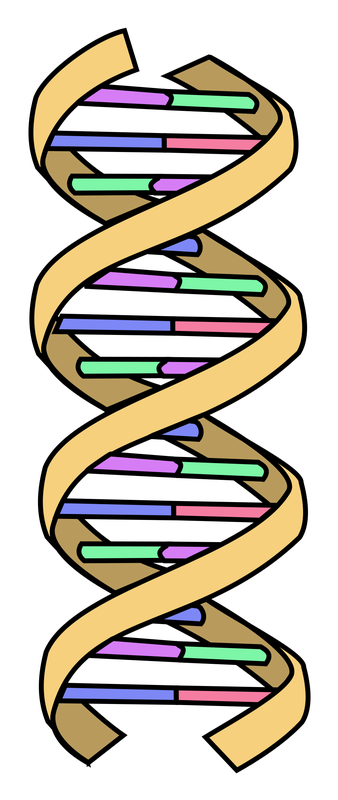 Same disease or problem1953Molecular Structure of Nucleic Acids: The DNA Double HelixMendel found discrete units of inheritance, and the double helix showed what they are made of. That story shows how the structure of DNA explained how genes copy themselves.Read this moment