Neurology & Psychiatry
1872
Huntington's description of hereditary chorea
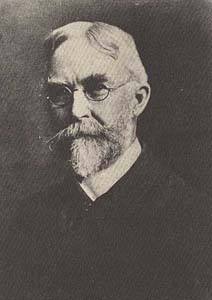
A young Ohio family doctor described an adult-onset chorea that ran in certain Long Island families, passed from parent to child without skipping a generation, and wore down the mind as well as the body. The disease now bears his name.
Key people
- George Huntington
- Family doctor in Pomeroy, Ohio; author of On Chorea
- George Lee Huntington
- His father, an East Hampton physician whose notes informed the paper
- Johan Christian Lund
- Norwegian physician who described the disease in Setesdal earlier
Source
George Huntington grew up in East Hampton, near the eastern end of Long Island, in a family of doctors. His grandfather Abel and his father, George Lee Huntington, practised there and kept notes on the families they treated. As a boy George went with his father on visits and saw patients slowly losing control of their movements and their minds. He qualified at the College of Physicians and Surgeons in New York in 1871 and set up as a family doctor in Pomeroy, Ohio.
On 15 February 1872 he read an essay, On Chorea, to the Meigs and Mason Academy of Medicine in nearby Middleport. Most of it dealt with ordinary chorea, which he called by no means dangerous or serious. At the end he turned to a form found, as far as he knew, almost only on the east end of Long Island, where the ordinary kind was rare. Families who carried it spoke of it with horror as that disorder. The Medical and Surgical Reporter of Philadelphia printed the essay on 13 April 1872.
He gave the disease three peculiarities: it was hereditary, it tended toward insanity and suicide, and it became serious only in adult life. When a parent had it, one or more children almost always developed it if they lived to adulthood. If they escaped, their descendants were free; it never skipped a generation. He knew of no case with marked signs before 30 or 40, and people who passed 40 without symptoms were seldom attacked. The jerking spread from the face and arms to every voluntary muscle, and the mind failed with it. He had never known a recovery. Of its pathology he knew nothing, and he offered it to his audience as a medical curiosity.
William Osler later called it one of the most succinct and accurate portraits of a disease ever written. Huntington most probably did not know that in 1860 the Norwegian doctor Johan Christian Lund had described an inherited, progressive chorea in Setesdal, in an official medical report for 1859 that was not translated into English at the time.
In 1983 James Gusella, Nancy Wexler and colleagues linked the disease to a DNA marker on chromosome 4. Ten years later the Huntington's Disease Collaborative Research Group found the gene: its CAG repeat was longer than normal on the affected chromosomes in all 75 families examined, and the mutation acted as a dominant.
Keep exploring
 Read next · same disease or problem
Mendel's experiments on plant hybrids (1866)
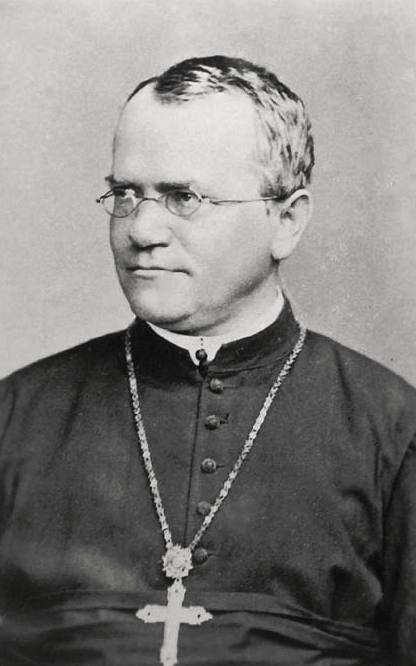
Huntington saw a disease that never skipped a generation, a pattern Mendel's dominant traits explain. Mendel's story shows eight years of crossing peas and the three to one ratio he found.
Read this moment
Read next · same disease or problem
Mendel's experiments on plant hybrids (1866)
Huntington saw a disease that never skipped a generation, a pattern Mendel's dominant traits explain. Mendel's story shows eight years of crossing peas and the three to one ratio he found.
Read this moment
 Today on The Clinical Times
Love to Dream recalls portable baby sound machine over fire and burn risk
Love to Dream has recalled its portable Sleep Machine because its lithium-ion battery can overheat while charging with an incompatible charger, creating a risk of fire and burns.
Read today’s top stories
Today on The Clinical Times
Love to Dream recalls portable baby sound machine over fire and burn risk
Love to Dream has recalled its portable Sleep Machine because its lithium-ion battery can overheat while charging with an incompatible charger, creating a risk of fire and burns.
Read today’s top stories
All 526 moments in the history of medicine. This one is in chapter 4, Germs, numbers and clean water
Connected moments
How this moment links to others in the history of medicine, and what you will find in each.
-
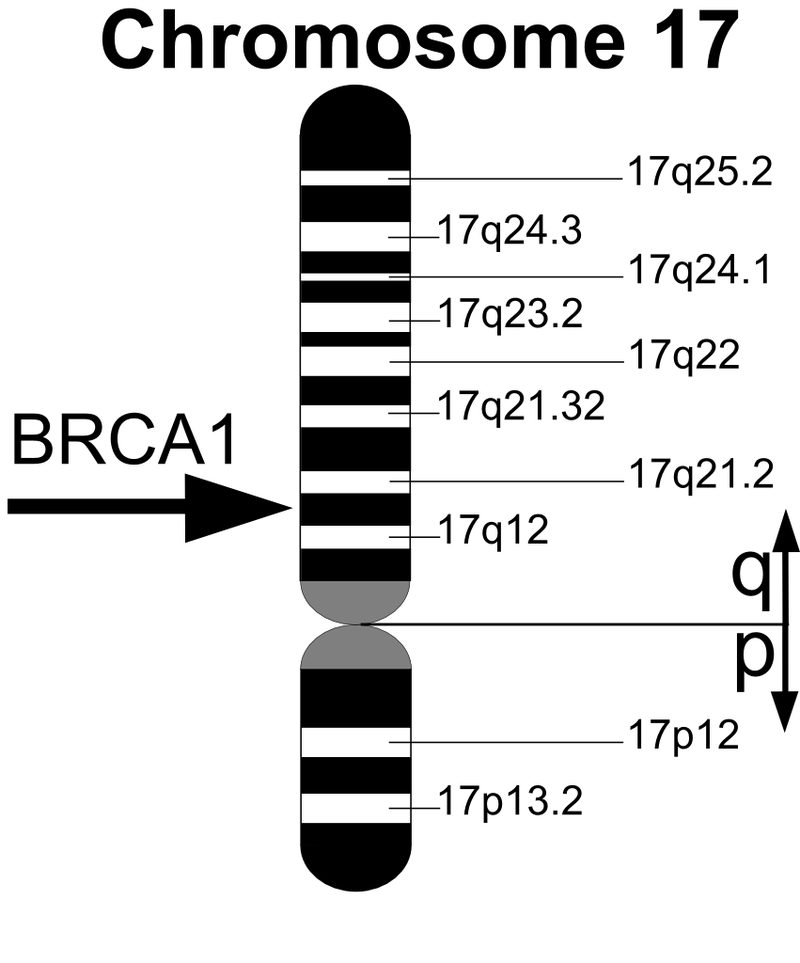 Same disease or problem1994The BRCA1 geneBoth inherited diseases were traced through families to a chromosome and then to a gene, Huntington's in 1983 and 1993 and breast cancer's in 1990 and 1994. The BRCA1 story shows mutation testing entering clinical practice.Read this moment
-
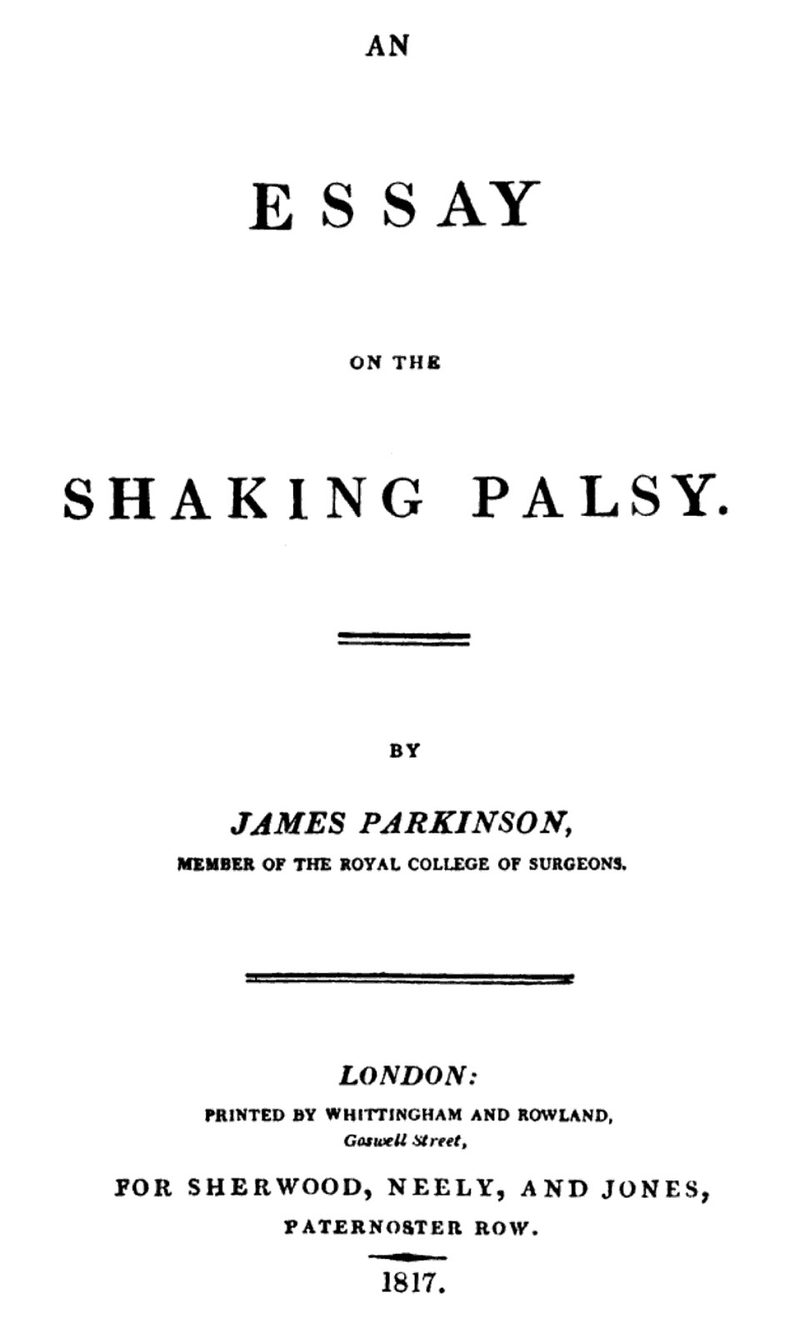 Same disease or problem1817Parkinson's Essay on the Shaking PalsyBoth are classic portraits of a disease of movement written by a doctor from a handful of patients. Parkinson's story shows six men with a tremor at rest and a shuffling run, a disease later named for him.Read this moment