Foundational Discovery
1868
Wunderlich's clinical thermometry
Carl Wunderlich's 1868 book, drawn from more than a million temperature readings in about 25,000 patients, set 37.0°C (98.6°F) as average normal body temperature and defined fever as 38.0°C (100.4°F) or higher. It helped make the thermometer a routine diagnostic tool.
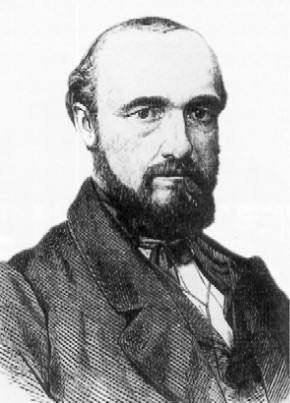
Key people
- Carl Reinhold August Wunderlich
- German physician whose 1868 book defined normal temperature and fever
- Édouard Séguin
- Wunderlich's follower who introduced clinical thermometry in America
- Philip Mackowiak
- Led the 1992 study that revised normal oral temperature
Source
Carl Reinhold August Wunderlich (1815 to 1877), a German physician, began taking his patients' temperatures every day early in his career. Over the years he built up a record of how different diseases changed body heat from one day to the next.
In 1868 he published the results as Das Verhalten der Eigenwärme in Krankheiten, The Course of Temperature in Diseases. The book rested on more than a million readings taken in the armpit from some 25,000 patients. From them Wunderlich put average normal body temperature at 37.0°C (98.6°F) and gave the first numerical definition of fever, 38.0°C (100.4°F) or above. He showed that a disease, and the stage a patient had reached, could often be recognized from the shape of the temperature curve.
According to the Science Museum, thermometry was controversial at first but became an important diagnostic tool. Édouard Séguin, a follower of Wunderlich, introduced clinical thermometry in the United States in the mid-1860s, and an American volume combining Wunderlich's work with Séguin's own suggestions on thermometry was published in New York in 1871.
Attempts to check Wunderlich's figures date from 1935. The most careful came in 1992, when Philip Mackowiak and colleagues took 700 readings with electronic oral thermometers from 148 healthy volunteers. They found a mean of 36.8°C (98.2°F), an upper limit of normal of 37.7°C (99.9°F), and a daily swing of about 0.5°C, lowest at 6 a.m. and highest in the late afternoon. They put part of the gap down to differences in instruments and in where and how temperature was measured.
Keep exploring
 Read next · same disease or problem
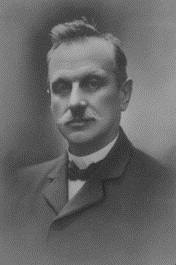
Riva-Rocci's cuff sphygmomanometer (1896)
Wunderlich made body temperature a routine number, and Riva-Rocci did the same for blood pressure with an arm cuff. His story shows the quick, painless design that became the standard.
Read this moment
Read next · same disease or problem
Riva-Rocci's cuff sphygmomanometer (1896)
Wunderlich made body temperature a routine number, and Riva-Rocci did the same for blood pressure with an arm cuff. His story shows the quick, painless design that became the standard.
Read this moment
 Today on The Clinical Times
Love to Dream recalls portable baby sound machine over fire and burn risk
Love to Dream has recalled its portable Sleep Machine because its lithium-ion battery can overheat while charging with an incompatible charger, creating a risk of fire and burns.
Read today’s top stories
Today on The Clinical Times
Love to Dream recalls portable baby sound machine over fire and burn risk
Love to Dream has recalled its portable Sleep Machine because its lithium-ion battery can overheat while charging with an incompatible charger, creating a risk of fire and burns.
Read today’s top stories
All 526 moments in the history of medicine. This one is in chapter 4, Germs, numbers and clean water
Connected moments
How this moment links to others in the history of medicine, and what you will find in each.
-
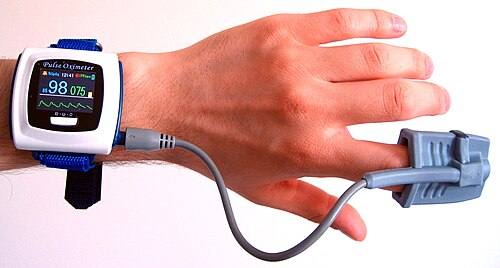 Same disease or problem1983Pulse oximetry enters routine clinical monitoringBoth turned a vital sign into a routine measurement, temperature by thermometer and blood oxygen by a finger sensor. The oximetry story shows the device reaching operating rooms, and trials that found no change in outcomes.Read this moment
-
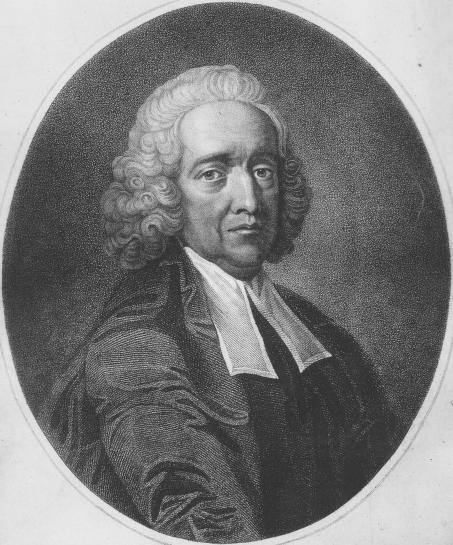 Same disease or problem1733Hales's measurement of blood pressureWunderlich measured body heat in 25,000 patients, and Hales took the first measurements of blood pressure. Hales's story shows a glass tube tied into a horse's artery, the blood rising more than eight feet.Read this moment