Cardiology
1896
Riva-Rocci's cuff sphygmomanometer
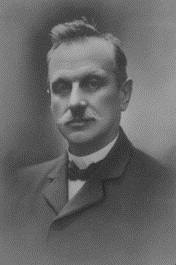
In 1896 the Turin physician Scipione Riva-Rocci described a mercury sphygmomanometer that measured blood pressure by squeezing the upper arm with an inflatable cuff. Quick and painless, it became the standard pattern for blood pressure measurement.
Key people
- Scipione Riva-Rocci
- Turin-trained physician who designed the cuff sphygmomanometer in 1896
- Carlo Forlanini
- Clinician in whose Turin and Pavia clinics Riva-Rocci worked
- Harvey Cushing
- Neurosurgeon who brought the instrument into use in the United States
Source
Scipione Riva-Rocci, the son of a village doctor, was born in Almese near Turin in 1863, graduated in medicine at Turin in 1888 and became an assistant in Carlo Forlanini's clinic. There he studied breathing in support of Forlanini's artificial pneumothorax for tuberculosis and wrote on fever, diabetes and stomach disorders.
Instruments for measuring blood pressure already existed. Italy's national heritage catalogue credits Angelo Mosso with a sphygmomanometer in 1876 and notes that Samuel von Basch patented one in 1881. In 1896 Riva-Rocci described a new model in the Gazzetta medica di Torino: a column of mercury connected to an inflatable cuff that went around the upper arm and compressed the brachial artery. It was easier to use than its predecessors, and according to Treccani's Dizionario Biografico it gave a precise reading without causing the patient pain.
The design was quickly taken as the base model for later instruments. In 1901 Harvey Cushing, a pioneer of neurosurgery, saw it at the San Matteo hospital in Pavia, where Riva-Rocci had moved with Forlanini in 1898. Cushing saw that it could help reduce deaths from anesthesia, especially in operations inside the skull, and he helped bring it into use in the United States.
Nikolai Korotkov later refined the method by listening for sounds over the brachial artery as the cuff was let down. Riva-Rocci taught at Pavia until 1924 and from 1906 also taught pediatrics, setting up a new children's clinic at the San Matteo in 1912 and 1913. The Science Museum in London holds a Riva-Rocci instrument made about 1905 and modified by Charles Martin, and it describes the cuff and small rubber pump as the standard way of measuring blood pressure.
Keep exploring
 Read next · same disease or problem
Hales's measurement of blood pressure (1733)
Riva-Rocci measured blood pressure painlessly with an arm cuff, and Hales first measured it with a tube tied into a horse's artery. Hales's story shows the blood rising more than eight feet up the glass.
Read this moment
Read next · same disease or problem
Hales's measurement of blood pressure (1733)
Riva-Rocci measured blood pressure painlessly with an arm cuff, and Hales first measured it with a tube tied into a horse's artery. Hales's story shows the blood rising more than eight feet up the glass.
Read this moment
 Today on The Clinical Times
Love to Dream recalls portable baby sound machine over fire and burn risk
Love to Dream has recalled its portable Sleep Machine because its lithium-ion battery can overheat while charging with an incompatible charger, creating a risk of fire and burns.
Read today’s top stories
Today on The Clinical Times
Love to Dream recalls portable baby sound machine over fire and burn risk
Love to Dream has recalled its portable Sleep Machine because its lithium-ion battery can overheat while charging with an incompatible charger, creating a risk of fire and burns.
Read today’s top stories
All 526 moments in the history of medicine. This one is in chapter 4, Germs, numbers and clean water
Connected moments
How this moment links to others in the history of medicine, and what you will find in each.
-
 Same disease or problem1961Factors of Risk in the Development of Coronary Heart Disease (Framingham Heart Study)Riva-Rocci made blood pressure easy to measure, and Framingham showed that high blood pressure predicts coronary disease. That study brought the term risk factor into medicine.Read this moment
-
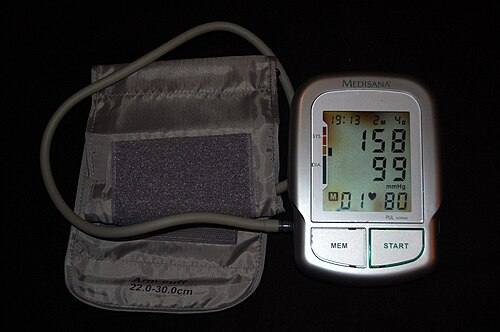 Same disease or problem2015SPRINT (Systolic Blood Pressure Intervention Trial)Riva-Rocci's cuff became the standard way to measure blood pressure, and SPRINT asked how low it should be pushed. Its story shows a target below 120 cutting cardiovascular events and deaths.Read this moment