Cardiology
1733
Hales's measurement of blood pressure
In Haemastaticks, published in 1733, the clergyman Stephen Hales reported the first measurements of blood pressure in living animals, made by connecting a horse's artery to a tall glass tube and measuring how high the blood rose.
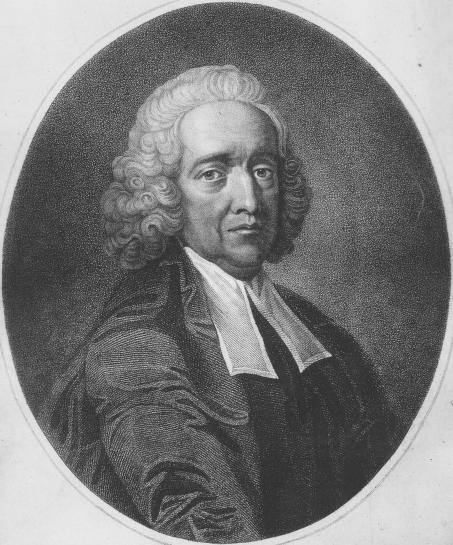
Key people
- Stephen Hales
- Curate of Teddington who first measured blood pressure in living animals
Source
One December, Stephen Hales had a mare tied down alive on her back. She was fourteen hands high, about fourteen years old, with a fistula on her withers. He opened the left crural artery about three inches from her belly, tied in a brass pipe and joined it to a glass tube nine feet long. When he untied the ligature the blood rushed half way up at once, then climbed with each beat until it stood 8 feet 3 inches above the level of the heart, rising and falling a few inches with every pulse.
Hales (1677 to 1761) was perpetual curate of Teddington in Middlesex from 1709 until his death and fitted his experiments around his parish duties. The horses he used were due to be killed as unfit for service. On a white mare he measured the pressure in the jugular vein and then in the carotid artery, joining the brass pipe to the tube with the windpipe of a goose so that the joint would give when the mare struggled. The blood rose to 9 feet 6 inches. He then let out blood 60 cubic inches at a time, measuring the height after each loss, until the mare died.
The Royal Society published his papers in 1733 as Statical Essays: containing Haemastaticks, 22 years after his first measurement of blood pressure. He estimated that blood entered the aorta of a mare during each contraction at 86.7 feet a minute, and he compared the elastic arteries to the air chamber of a fire engine, which turned the jerks of the pump into a more even spout. The analogy is now known by the German word Windkessel, meaning air chamber.
Hales also designed ventilators, which were fitted in the House of Commons and in ships, prisons and hospitals. He died on 4 January 1761 and was buried with his wife at St Mary's church, Teddington. In 1762 Princess Augusta, mother of George III, put up a monument to him by Joseph Wilton in the south transept of Westminster Abbey.
Keep exploring
 Read next · same disease or problem
Riva-Rocci's cuff sphygmomanometer (1896)
Hales measured blood pressure by tying a glass tube into a horse's artery, and Riva-Rocci found a painless way with an arm cuff. His story shows the design that became the standard for measuring blood pressure.
Read this moment
Read next · same disease or problem
Riva-Rocci's cuff sphygmomanometer (1896)
Hales measured blood pressure by tying a glass tube into a horse's artery, and Riva-Rocci found a painless way with an arm cuff. His story shows the design that became the standard for measuring blood pressure.
Read this moment
 Today on The Clinical Times
Love to Dream recalls portable baby sound machine over fire and burn risk
Love to Dream has recalled its portable Sleep Machine because its lithium-ion battery can overheat while charging with an incompatible charger, creating a risk of fire and burns.
Read today’s top stories
Today on The Clinical Times
Love to Dream recalls portable baby sound machine over fire and burn risk
Love to Dream has recalled its portable Sleep Machine because its lithium-ion battery can overheat while charging with an incompatible charger, creating a risk of fire and burns.
Read today’s top stories
All 526 moments in the history of medicine. This one is in chapter 3, Anatomy and observation
Connected moments
How this moment links to others in the history of medicine, and what you will find in each.
- Same disease or problem1967VA Cooperative Study of antihypertensive treatmentHales first measured blood pressure in 1733, and a 1967 trial showed that lowering high pressure saves lives. The VA story shows veterans on three drugs suffering far fewer strokes and deaths than those on placebo.Read this moment
-
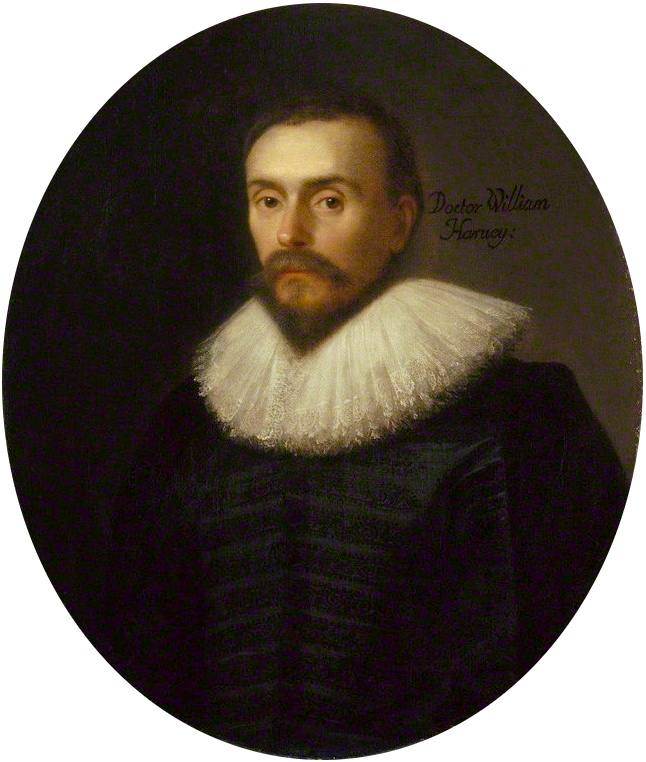 Same disease or problem1628Harvey's De Motu CordisHarvey showed the heart drives the blood around the body, and Hales measured the force and speed of that flow. Harvey's story shows the calculation of blood passing through the heart that began modern physiology of the circulation.Read this moment