Genetics & Molecular
1941
Beadle, Tatum and one gene, one enzyme
In 1941 George Beadle and Edward Tatum at Stanford made mutants of the bread mold Neurospora that had each lost one chemical step, evidence that single genes control single enzyme-driven reactions. The work won them a share of the 1958 Nobel Prize.
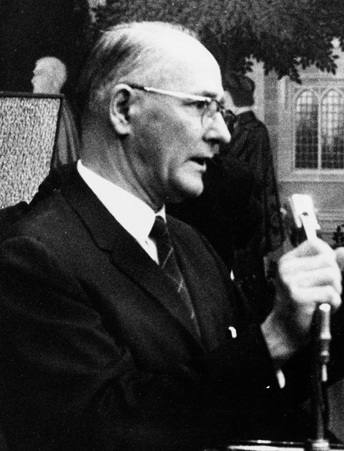
Key people
- George W. Beadle
- Stanford geneticist; Nobel laureate 1958
- Edward L. Tatum
- Stanford biochemist; Nobel laureate 1958
- Archibald Garrod
- Oxford physician who described inborn errors of metabolism
Source
The idea had a medical ancestor. Early in the century the Oxford physician Archibald Garrod argued that alcaptonuria, in which urine blackens on standing, was inherited like a single recessive gene and came from the lack of the enzyme that splits homogentisic acid. Geneticists took little notice. George Beadle later wrote that no widely used genetics textbook he examined, up to the 1940s, even mentioned alcaptonuria.
Beadle reached the same place through fruit flies. In Paris in 1935 he and Boris Ephrussi transplanted embryonic eye buds from one Drosophila larva into another, and one day produced a fly with three eyes. From such transplants of eye-color mutants they concluded that two genes each governed one step in making the pigment. In the fall of 1937 he moved to Stanford, where the chemist Edward Tatum joined him to identify the eye-color substances. The chemistry went slowly.
In 1940 they reversed the approach. Instead of hunting for the chemistry behind known genes, they would break known chemical reactions and find the genes. The bread mold Neurospora crassa suited them: Carl Lindegren had worked out much of its genetics at Caltech, and Tatum found that it needed only salts, sugar and the newly available vitamin biotin. They irradiated asexual spores, crossed them with a strain of the opposite mating type, grew single sexual spores on a medium enriched with extra nutrients, and then tested each strain on the plain medium. A strain that failed there had lost the ability to make something.
Worried that a long run of failures would discourage them, they prepared more than a thousand single-spore cultures before testing any. The 299th needed vitamin B6 and the 1,085th vitamin B1. Crosses gave four mutant and four normal spores in each spore sac, the pattern of a single gene. They could now produce inborn errors of metabolism almost at will. The name one gene, one enzyme came later.
Acceptance was slow. Beadle recalled that at the 1951 Cold Spring Harbor Symposium the believers could be counted on one hand with fingers to spare. Advances in the 1950s recast the idea as colinearity between a gene and the protein it encodes. Beadle and Tatum shared the 1958 Nobel Prize in Physiology or Medicine with Joshua Lederberg, cited for discovering that genes act by regulating definite chemical events.
Keep exploring
 Read next · same disease or problem
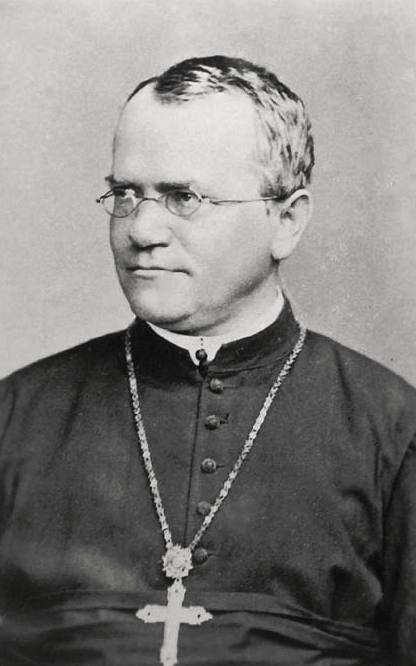
Mendel's experiments on plant hybrids (1866)
Mendel found discrete units of inheritance, and Beadle and Tatum showed that each can control one chemical step. Mendel's story shows eight years of counting peas.
Read this moment
Read next · same disease or problem
Mendel's experiments on plant hybrids (1866)
Mendel found discrete units of inheritance, and Beadle and Tatum showed that each can control one chemical step. Mendel's story shows eight years of counting peas.
Read this moment
 Today on The Clinical Times
Love to Dream recalls portable baby sound machine over fire and burn risk
Love to Dream has recalled its portable Sleep Machine because its lithium-ion battery can overheat while charging with an incompatible charger, creating a risk of fire and burns.
Read today’s top stories
Today on The Clinical Times
Love to Dream recalls portable baby sound machine over fire and burn risk
Love to Dream has recalled its portable Sleep Machine because its lithium-ion battery can overheat while charging with an incompatible charger, creating a risk of fire and burns.
Read today’s top stories
All 526 moments in the history of medicine. This one is in chapter 5, Cures and codes
Connected moments
How this moment links to others in the history of medicine, and what you will find in each.
-
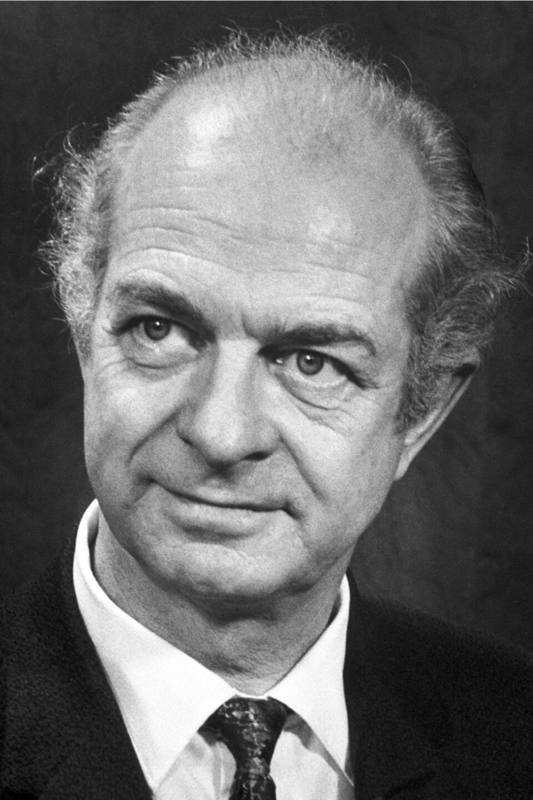 Same disease or problem1949Sickle cell anemia as a molecular diseaseBeadle and Tatum tied genes to enzymes, and Pauling's group tied a disease to one abnormal protein. The sickle cell story shows hemoglobin with a different electric charge.Read this moment
- Same disease or problem1963Guthrie's blood-spot test for phenylketonuriaBeadle and Tatum could make inborn errors of metabolism almost at will, and Guthrie's test screened newborns for one of them. That story shows a drop of blood on paper used to find phenylketonuria.Read this moment