Foundational Discovery
1940
Landsteiner and Wiener's Rh blood group
In 1940 Karl Landsteiner and Alexander Wiener found that rabbit serum raised against rhesus monkey blood clumped the red cells in 39 of 45 human blood samples. The Rh factor they named explained hemolytic disease of the newborn and became standard in blood typing.
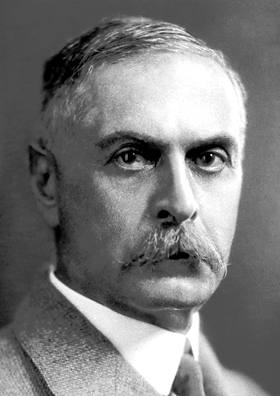
Key people
- Karl Landsteiner
- Discoverer of the ABO groups; co-discoverer of the Rh factor
- Alexander S. Wiener
- New York serologist who co-discovered the Rh factor
Source
Karl Landsteiner's discovery of the ABO blood groups in 1901 had made transfusion far safer, yet a noticeable share of patients still had hemolytic reactions after transfusion. At the Rockefeller Institute for Medical Research in New York, Landsteiner kept looking for other antigens on red cells. In 1927 he and Philip Levine described the M, N and P antigens.
In the new work Landsteiner and Wiener injected red cells from rhesus monkeys (Macaca mulatta) into rabbits, which made antibodies against them. Even after it was absorbed with selected human blood, the rabbit serum still clumped the red cells in 39 of 45 other human samples, whatever their ABO group or MN type. Some people carried the antigen it detected and others lacked it. They called it the Rh factor, after the monkey, and people became Rh-positive or Rh-negative. The first report appeared in 1940 in the Proceedings of the Society for Experimental Biology and Medicine. A fuller paper in the Journal of Experimental Medicine in 1941 described an agglutinogen that reacted both with the anti-rhesus sera and with antibodies found in human blood.
The factor explained hemolytic disease of the fetus and newborn. When an Rh-negative mother carries an Rh-positive fetus, fetal red cells can enter her bloodstream during pregnancy or birth and lead her to make anti-Rh antibodies. In a later pregnancy with an Rh-positive fetus, those antibodies cross the placenta and destroy the baby's red cells. Rh-positive and Rh-negative labels also became standard in blood typing to prevent transfusion reactions.
Later research showed that Rh is a system of several antigens, including D, C, c, E and e. D provokes the strongest immune response, so Rh status usually means the presence or absence of D. Rho(D) immune globulin, developed in the 1960s, stops Rh-negative mothers from forming the antibodies and has greatly reduced the disease.
Keep exploring
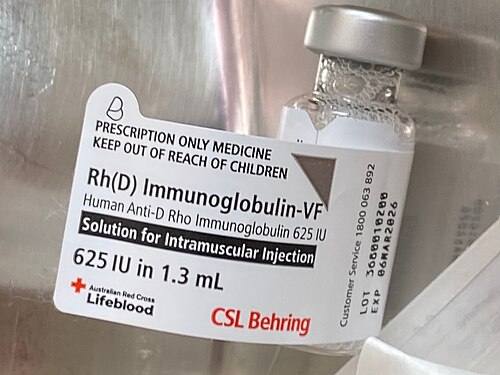 Read next · led to
Rh Immune Globulin (Anti-D / RhoGAM) for Prevention of Rh Hemolytic Disease (1968)
The Rh factor explained hemolytic disease of the newborn, and Rh immune globulin was developed to prevent it. The RhoGAM story shows a common cause of newborn death made preventable.
Read this moment
Read next · led to
Rh Immune Globulin (Anti-D / RhoGAM) for Prevention of Rh Hemolytic Disease (1968)
The Rh factor explained hemolytic disease of the newborn, and Rh immune globulin was developed to prevent it. The RhoGAM story shows a common cause of newborn death made preventable.
Read this moment
 Today on The Clinical Times
Love to Dream recalls portable baby sound machine over fire and burn risk
Love to Dream has recalled its portable Sleep Machine because its lithium-ion battery can overheat while charging with an incompatible charger, creating a risk of fire and burns.
Read today’s top stories
Today on The Clinical Times
Love to Dream recalls portable baby sound machine over fire and burn risk
Love to Dream has recalled its portable Sleep Machine because its lithium-ion battery can overheat while charging with an incompatible charger, creating a risk of fire and burns.
Read today’s top stories
All 526 moments in the history of medicine. This one is in chapter 5, Cures and codes
Connected moments
How this moment links to others in the history of medicine, and what you will find in each.
-
 Built on1901Discovery of the ABO Blood GroupsLandsteiner found the ABO groups in 1901 and kept looking for other antigens, finding Rh in 1940. The ABO story shows the experiment with the blood of himself and five colleagues.Read this moment
-
 Same disease or problem1958HLA antigens and tissue typingRh was found by hunting for antigens on red cells, and HLA was found the same way on white cells. The HLA story shows the antigens that made matching transplant donors possible.Read this moment