Public Health
1893
Nathan Straus's pasteurized milk stations
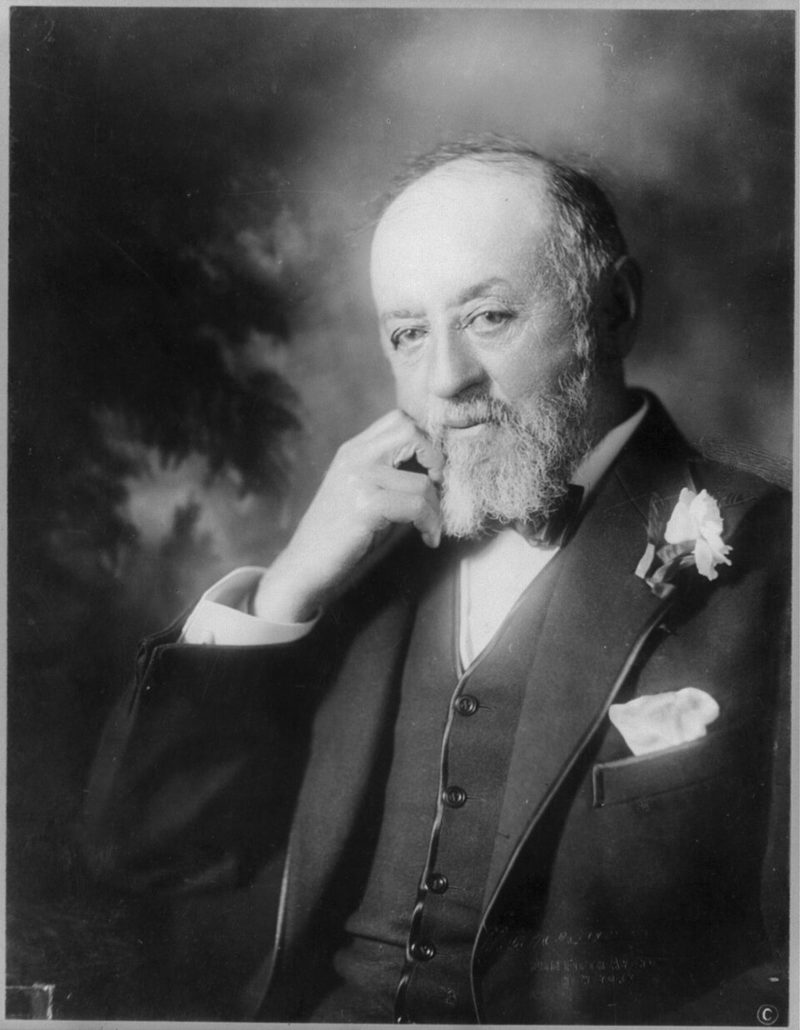
In 1893 the New York merchant Nathan Straus opened a station on an East River pier selling pasteurized milk for babies at low cost or free. His depots aimed to show city officials that pasteurization could save young children's lives affordably.
Key people
- Nathan Straus
- Merchant who funded pasteurized milk depots in New York from 1893
- Lina Gutherz Straus
- His wife and partner in the work, who compiled its history
- Abraham Jacobi
- Pediatrician whose guidance the Strauses credited for the milk work
Source
In the early 1890s about a quarter of the babies born in New York City died before their first birthday. The two largest causes, diarrheal disease and cholera infantum, were commonly linked to infected raw cow's milk, which spoiled easily on its way from farm to table. Heating milk was known to make it safer, but some doctors and officials worried that it destroyed nutrients.
Nathan Straus (1848 to 1931), a German-born co-owner of the Macy's and Abraham & Straus department stores, and his wife Lina had lost their young daughter Sara to milk that was probably infected. With guidance from the pediatrician Abraham Jacobi, he opened a milk station on the East Third Street pier near the Lower East Side tenements in 1893, backed by a pasteurizing laboratory he paid for himself. Lina Straus's later book on his work calls the pier station the first infant milk depot in America.
The depots sold heated, bottled and chilled milk at wholesale prices or below, and gave it free to families who could not pay. Mothers fed their babies on shaded benches at the pier, advertisements ran in several languages, doctors and nurses advised parents, and staff kept records to measure the health effects. Straus eventually funded seventeen depots in Manhattan, intending to prove to the city's health officials that pasteurization could save infants and young children at modest cost.
He met strong opposition from the dairy industry and a mix of support and resistance from pediatricians. Nathan and Lina Straus spoke and wrote widely for pasteurization, and an August 2026 article in The Conversation credits them with 297 milk stations in 36 cities; he also carried the campaign to Britain and German-speaking Europe. New York City later required pasteurization of its milk supply.
Health department tables reprinted in Lina Straus's book show the death rate of children under five in Manhattan and the Bronx falling from 96 per 1,000 in 1892 to 43 per 1,000 in 1912. The city's health commissioner estimated that infant deaths fell by two thirds over the first two decades of the twentieth century, a decline that the same article attributes to the milk campaign together with other reforms of the period.
Keep exploring
 Read next · same disease or problem
The US Children's Bureau (1912)
Straus fought infant deaths from infected milk, and the Children's Bureau was created in 1912 to investigate infant mortality first of all. Its story shows whole towns of babies traced through their first year of life.
Read this moment
Read next · same disease or problem
The US Children's Bureau (1912)
Straus fought infant deaths from infected milk, and the Children's Bureau was created in 1912 to investigate infant mortality first of all. Its story shows whole towns of babies traced through their first year of life.
Read this moment
 Today on The Clinical Times
Love to Dream recalls portable baby sound machine over fire and burn risk
Love to Dream has recalled its portable Sleep Machine because its lithium-ion battery can overheat while charging with an incompatible charger, creating a risk of fire and burns.
Read today’s top stories
Today on The Clinical Times
Love to Dream recalls portable baby sound machine over fire and burn risk
Love to Dream has recalled its portable Sleep Machine because its lithium-ion battery can overheat while charging with an incompatible charger, creating a risk of fire and burns.
Read today’s top stories
All 526 moments in the history of medicine. This one is in chapter 4, Germs, numbers and clean water
Connected moments
How this moment links to others in the history of medicine, and what you will find in each.
-
 Same disease or problem1968Oral Rehydration Therapy for cholera and diarrheal diseaseStraus's milk stations attacked diarrheal disease, the leading killer of New York babies, and oral rehydration later treated such diarrhea cheaply. That story shows a glucose and salt drink now used against dehydration worldwide.Read this moment
-
 Same disease or problem1908Chlorination of Jersey City's water supplyBoth made a city's everyday supply safe, Straus by heating milk and Jersey City by chlorinating water. The chlorination story shows a cheap method that thousands of towns copied within a decade.Read this moment