Public Health
1912
The US Children's Bureau
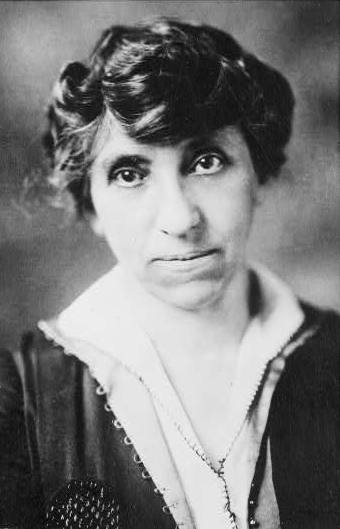
Congress created a federal bureau to investigate the welfare of children, naming infant mortality first. Under Julia Lathrop it traced every baby born in whole towns through the first year of life and showed that infant deaths rose sharply as fathers' earnings fell.
Key people
- Julia Lathrop
- First chief of the Children's Bureau, 1912 to 1921
- Lillian Wald
- Reformer who proposed a federal children's agency in 1903
- Florence Kelley
- Reformer who campaigned with Wald for the bureau
- Emma Duke
- Bureau agent who wrote the Johnstown infant mortality report
Source
Florence Kelley later recalled that the idea came up over breakfast with Lillian Wald in 1903: the federal government spent money on crops and farm animals but ignored children. The National Child Labor Committee endorsed a federal children's bureau in 1905, and in January 1909 the White House Conference on the Care of Dependent Children, called by Theodore Roosevelt, resolved in its favour. In 1912 the Senate passed the bill by 54 votes to 20 and the House by 177 to 17, and President Taft approved it on 9 April.
The act placed the bureau in the Department of Commerce and Labor under a chief paid $5,000 a year. It was to investigate and report on the welfare of children of every class, and especially on infant mortality, the birth rate, orphanage, juvenile courts, desertion, dangerous occupations, accidents and diseases of children, and employment. Taft named Julia Lathrop, formerly of Hull House in Chicago, as chief. With a staff of 15 and a budget of $25,640, she began with infant mortality, the first subject the law named.
The first field study began in January 1913 at Johnstown, Pennsylvania, chosen partly for its good birth registration. Instead of starting from death records, women agents took every baby born in the town in 1911 and followed each through its first year, visiting 1,553 mothers; only two refused to answer. The law gave the bureau no medical officer, so the inquiry kept to family, social and industrial questions. It also left out alcoholism and venereal disease, because asking about them in the home was thought humiliating. Emma Duke's report, published in 1915, gave an infant mortality rate of 130.7 per 1,000 for babies born in wedlock. It was 255.7 where the father earned under $521 a year and 84 where he earned $1,200 or more. Later annual reports combined eight such studies covering more than 13,000 babies.
In 1921 Congress passed the Sheppard-Towner Maternity and Infancy Act and gave the bureau its administration. The American Medical Association attacked the programme as socialized medicine, and its funding ended in 1929. Grace Abbott, Katharine Lenroot and Martha May Eliot of the bureau later wrote the child welfare sections of the Social Security Act of 1935, whose Title V funds maternal and infant care for low-income families.
Keep exploring
 Read next · same disease or problem
Nathan Straus's pasteurized milk stations (1893)
Both fought infant deaths in American cities, Straus with safe milk and the bureau with studies of every baby born in whole towns. The milk station story shows child deaths in Manhattan falling by more than half in twenty years.
Read this moment
Read next · same disease or problem
Nathan Straus's pasteurized milk stations (1893)
Both fought infant deaths in American cities, Straus with safe milk and the bureau with studies of every baby born in whole towns. The milk station story shows child deaths in Manhattan falling by more than half in twenty years.
Read this moment
 Today on The Clinical Times
Love to Dream recalls portable baby sound machine over fire and burn risk
Love to Dream has recalled its portable Sleep Machine because its lithium-ion battery can overheat while charging with an incompatible charger, creating a risk of fire and burns.
Read today’s top stories
Today on The Clinical Times
Love to Dream recalls portable baby sound machine over fire and burn risk
Love to Dream has recalled its portable Sleep Machine because its lithium-ion battery can overheat while charging with an incompatible charger, creating a risk of fire and burns.
Read today’s top stories
All 526 moments in the history of medicine. This one is in chapter 5, Cures and codes
Connected moments
How this moment links to others in the history of medicine, and what you will find in each.
-
 Same disease or problem1978The Whitehall study of civil servantsThe bureau found infant deaths rose sharply as fathers' earnings fell, and Whitehall found heart deaths rose down the civil service grades. That study shows the lowest grade dying at 3.6 times the rate of the highest.Read this moment
- Same disease or problem1994Back to Sleep campaignThe bureau was created to study infant mortality, and Back to Sleep cut one of its leading causes. That story shows sudden infant deaths falling by about half when babies were put to sleep on their backs.Read this moment