Patients & Rights
1893
Daniel Hale Williams and Provident Hospital
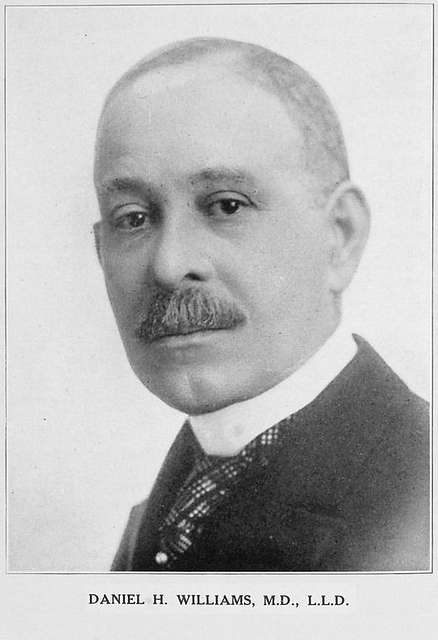
In 1891 the Black surgeon Daniel Hale Williams founded Chicago's Provident Hospital, where Black doctors and nurses could train. There in July 1893 he opened the chest of a stabbed man, James Cornish, and sewed up the sac around his heart; Cornish survived.
Key people
- Daniel Hale Williams
- Surgeon who founded Provident Hospital and repaired a stabbed pericardium in 1893
- James Cornish
- Expressman with a stab wound near the heart; survived about 20 years
- Emma Reynolds
- Refused entry to nursing school, which prompted the founding of Provident
- H. C. Dalton
- St. Louis surgeon who performed a similar operation in 1891
Source
Daniel Hale Williams, born in Hollidaysburg, Pennsylvania, finished his course at the Chicago Medical College, an affiliate of Northwestern University, in March 1883. He opened a practice in Chicago, operated at the South Side Dispensary, taught anatomy at the college and served on the Illinois State Board of Health.
Hospitals under white control usually turned away Black interns, nurses and physicians. After a Black woman, Emma Reynolds, was refused entry to nursing school, Williams began a campaign in 1890, and the Provident Hospital and Training School Association was incorporated on 23 January 1891. The National Park Service nomination for Williams's house calls it the first hospital in America founded and fully controlled by Black Americans. Its staff and patients were integrated, and its nursing school, with an 18-month course, was the first in the United States for Black nurses. In its first year Provident treated 189 patients, of whom 141 recovered entirely and 22 died.
In July 1893 James Cornish, a Black expressman, was brought in with a stab wound near the heart. Medical opinion then held that heart wounds should be left alone. Williams opened the chest without X-rays or blood transfusion and found that the knife had cut the pericardium, the sac around the heart, and nicked the heart muscle, which did not need stitches. He sewed up the pericardium and closed the chest. Cornish left the hospital 51 days later and lived about 20 more years.
The operation is often called the first successful heart surgery. Williams repaired the pericardium, not the heart itself, and H. C. Dalton of St. Louis had performed a similar operation in 1891, which Williams did not know about. Britannica describes Williams's case as the first recorded repair of the pericardium while noting Dalton's claim.
From 1894 to 1898 Williams was surgeon in chief of Freedmen's Hospital in Washington, D.C., where he reorganized the wards into departments, created internships and set up another school for Black nurses. He returned to Provident, and in 1913 he became the only African American charter member of the American College of Surgeons. He died in Idlewild, Michigan, on 4 August 1931.
Keep exploring
 Read next · same disease or problem
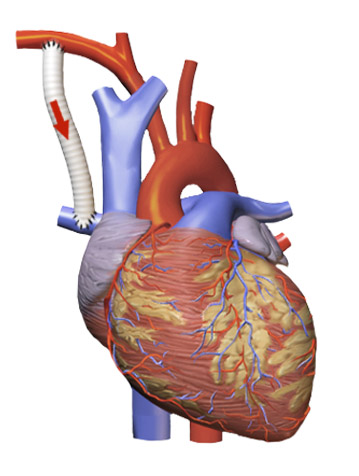
The Blalock-Taussig Shunt (first "blue baby" operation) (1944)
Williams operated on the sac around the heart in 1893, and the blue baby operation of 1944 was worked out largely by Vivien Thomas, a Black surgical technician. That story shows an artery rerouted to the lungs to help blue babies breathe.
Read this moment
Read next · same disease or problem
The Blalock-Taussig Shunt (first "blue baby" operation) (1944)
Williams operated on the sac around the heart in 1893, and the blue baby operation of 1944 was worked out largely by Vivien Thomas, a Black surgical technician. That story shows an artery rerouted to the lungs to help blue babies breathe.
Read this moment
 Today on The Clinical Times
Love to Dream recalls portable baby sound machine over fire and burn risk
Love to Dream has recalled its portable Sleep Machine because its lithium-ion battery can overheat while charging with an incompatible charger, creating a risk of fire and burns.
Read today’s top stories
Today on The Clinical Times
Love to Dream recalls portable baby sound machine over fire and burn risk
Love to Dream has recalled its portable Sleep Machine because its lithium-ion battery can overheat while charging with an incompatible charger, creating a risk of fire and burns.
Read today’s top stories
All 526 moments in the history of medicine. This one is in chapter 4, Germs, numbers and clean water
Connected moments
How this moment links to others in the history of medicine, and what you will find in each.
-
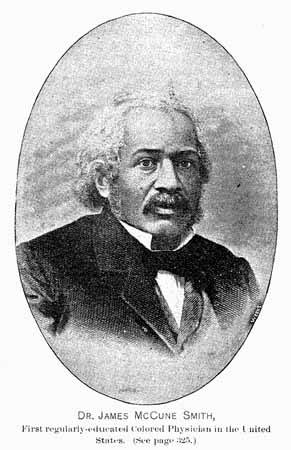 Same disease or problem1837James McCune Smith's medical degreeWilliams founded a hospital because white hospitals turned away Black doctors and nurses, and McCune Smith had been refused by American colleges. His story shows the first African American medical degree, earned in Glasgow.Read this moment
- Same disease or problem1966Medicare and hospital desegregationProvident was founded because hospitals under white control shut out Black staff, and in 1966 Medicare forced hospitals to integrate. That story shows more than 1,000 hospitals desegregating in under four months.Read this moment