Patients & Rights
1837
James McCune Smith's medical degree
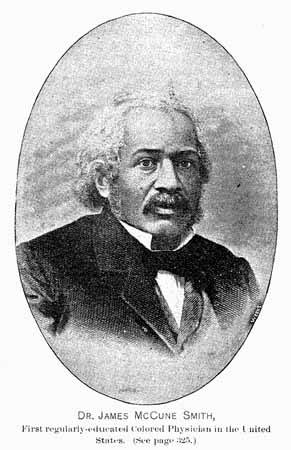
Turned away by American colleges because of his race, James McCune Smith took his medical degree at the University of Glasgow in 1837, the first African American to earn one. Back in New York he used statistics against claims of Black inferiority.
Key people
- James McCune Smith
- First African American to earn a medical degree (Glasgow, 1837)
Source
James McCune Smith was born into slavery in New York City in 1813; his mother had been enslaved in South Carolina. He was freed on 4 July 1827, when New York freed all the enslaved people in the state. By then he was a star pupil at the African Free School in Manhattan, where at 11 he had delivered an address to the visiting Lafayette. He applied to Columbia and other American colleges to study medicine, and all of them rejected him because of his race.
The University of Glasgow accepted him, and he took up his place in 1832. He earned a bachelor's degree in 1835, a master's in 1836 and his medical degree on 27 April 1837, the first African American to receive one.
Back in New York in 1837, he opened a practice open to patients of every race and later a pharmacy on West Broadway. He was the first Black physician to publish articles in American medical journals. When the white superintendent of the Colored Orphan Asylum claimed in 1839 that people of African descent were more prone to disease, McCune Smith answered with the City Inspector's own figures. In 1846 the asylum made him its first salaried attending physician. In his first year, among 144 children, there were 24 deaths and 60 cases of measles, and he pressed for an isolation wing, which opened in 1850.
His writing ranged widely. He refuted phrenology and homeopathy, answered the racial theories in Thomas Jefferson's Notes on the State of Virginia, and wrote a statistical critique of the racially biased 1840 US census. He edited abolitionist newspapers and worked with Frederick Douglass, Gerrit Smith and John Brown. In July 1863 rioters opposing the draft burned the orphan asylum and its records. McCune Smith, already ill, helped raise money for its reopening in Harlem and died in 1865.
Keep exploring
 Read next · same disease or problem
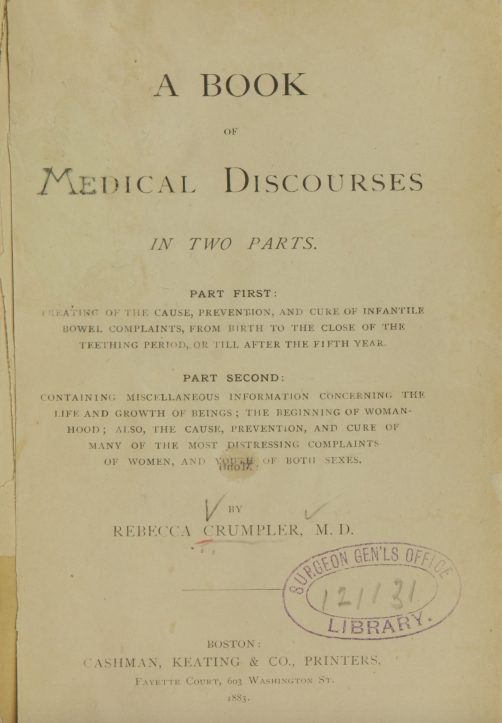
Rebecca Lee Crumpler's medical degree (1864)
McCune Smith became the first African American with a medical degree, and Crumpler the first African American woman MD in the United States. Her story shows her treating freed people in Richmond and writing a book of medical advice.
Read this moment
Read next · same disease or problem
Rebecca Lee Crumpler's medical degree (1864)
McCune Smith became the first African American with a medical degree, and Crumpler the first African American woman MD in the United States. Her story shows her treating freed people in Richmond and writing a book of medical advice.
Read this moment
 Today on The Clinical Times
Love to Dream recalls portable baby sound machine over fire and burn risk
Love to Dream has recalled its portable Sleep Machine because its lithium-ion battery can overheat while charging with an incompatible charger, creating a risk of fire and burns.
Read today’s top stories
Today on The Clinical Times
Love to Dream recalls portable baby sound machine over fire and burn risk
Love to Dream has recalled its portable Sleep Machine because its lithium-ion battery can overheat while charging with an incompatible charger, creating a risk of fire and burns.
Read today’s top stories
All 526 moments in the history of medicine. This one is in chapter 4, Germs, numbers and clean water
Connected moments
How this moment links to others in the history of medicine, and what you will find in each.
-
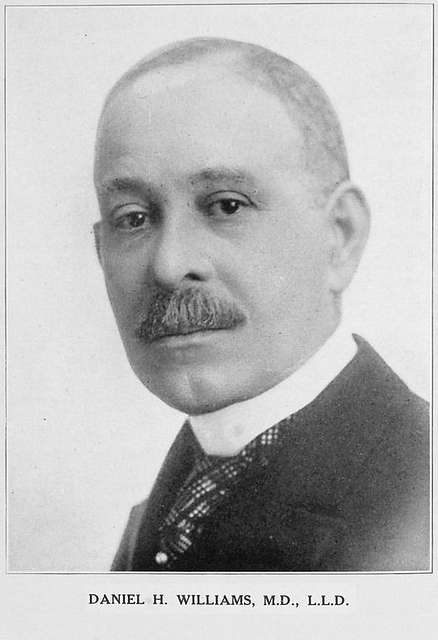 Same disease or problem1893Daniel Hale Williams and Provident HospitalMcCune Smith was turned away by American colleges because of his race, and Williams founded a hospital where Black doctors and nurses could train. His story shows the 1893 operation in which he sewed up the sac around a stabbed man's heart.Read this moment
- Same disease or problem1966Medicare and hospital desegregationMcCune Smith opened a practice for patients of every race when American medicine was segregated. The Medicare story shows more than 1,000 hospitals integrating staffs and wards in under four months to qualify for payment.Read this moment