Oncology
1911
Rous and the chicken sarcoma virus
Peyton Rous showed in 1911 that a sarcoma of a hen passed to healthy chickens in a cell-free filtrate. It was the first solid tumor shown to be caused by a filterable agent, the virus later named after him.
Key people
- Peyton Rous
- Rockefeller Institute pathologist who transmitted a chicken sarcoma by filtrate
- Richard Shope
- Rockefeller colleague who transmitted rabbit papillomas by cell-free extracts
Source
In 1909 Peyton Rous, a Johns Hopkins graduate with two years of research behind him, joined the Rockefeller Institute in New York to run its cancer laboratory. Soon afterward he was given a barred Plymouth Rock hen with a large spindle-cell sarcoma on its breast. Birds were known to get fibromas, carcinomas and sarcomas, but none had been passed from bird to bird.
Rous grafted pieces of the tumor into hens from the closely related stock in which it had arisen, and they grew the same sarcoma; market-bought fowl of the same breed, mixed-breed birds, pigeons and guinea pigs did not. He reported this in 1910. Some months later the tumor had become much easier to transmit, and he tried a cell-free extract, passed through a Berkefeld filter to hold back cells and bacteria. Chickens injected with the filtrate developed the same tumor. His 1911 paper in the Journal of Experimental Medicine concluded that the cause was a filterable agent, as viruses were then known.
Rous was not the first to pass a chicken malignancy this way. In 1908 Ellerman and Bang in Denmark had transmitted a chicken leukemia by filtrate, but leukemia was not recognized as neoplastic until after 1930 and their work was largely ignored. Rous’s tumor was solid, and he soon found others. Attempts to pass mouse and rat tumors by filtrate failed, and most researchers took the chicken tumors for curiosities with no bearing on mammals.
When the First World War began Rous turned to blood transfusion, helping to set up the first American blood banks, and never went back to the chicken tumors. In the 1930s he encouraged his Rockefeller colleague Richard Shope to study rabbit skin papillomas, which Shope found could be transmitted by cell-free extracts. Rous then showed that these benign growths could turn malignant, especially after small doses of chemical carcinogens, a stepwise change he called tumor progression.
Later work showed the agent to be an RNA virus (1961), and after the discovery of reverse transcription in 1970 it was classed as a retrovirus. Its src gene became the prototype oncogene, and in 1980 the src protein was the first shown to be a tyrosine kinase. Rous was 87 when he shared the 1966 Nobel Prize in Physiology or Medicine with Charles Huggins, 55 years after his filtrate paper. He died in 1970.
Keep exploring
 Read next · led to
Bishop, Varmus and cellular oncogenes (1976)
Bishop and Varmus showed that the cancer gene of Rous's virus was a normal cellular gene the virus had picked up. Their story shows how normal growth genes can turn into cancer genes.
Read this moment
Read next · led to
Bishop, Varmus and cellular oncogenes (1976)
Bishop and Varmus showed that the cancer gene of Rous's virus was a normal cellular gene the virus had picked up. Their story shows how normal growth genes can turn into cancer genes.
Read this moment
 Today on The Clinical Times
Love to Dream recalls portable baby sound machine over fire and burn risk
Love to Dream has recalled its portable Sleep Machine because its lithium-ion battery can overheat while charging with an incompatible charger, creating a risk of fire and burns.
Read today’s top stories
Today on The Clinical Times
Love to Dream recalls portable baby sound machine over fire and burn risk
Love to Dream has recalled its portable Sleep Machine because its lithium-ion battery can overheat while charging with an incompatible charger, creating a risk of fire and burns.
Read today’s top stories
All 526 moments in the history of medicine. This one is in chapter 5, Cures and codes
Connected moments
How this moment links to others in the history of medicine, and what you will find in each.
-
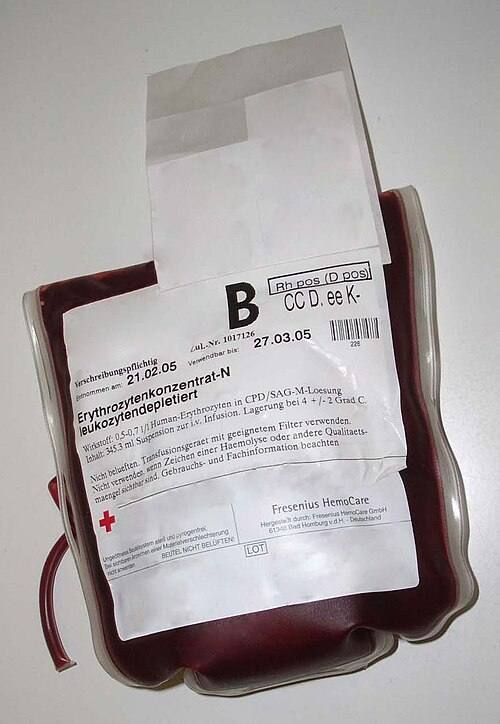 Same person1916Rous and Turner's citrate-glucose method for storing red blood cellsWhen war began, Peyton Rous turned from tumors to blood and helped find a way to store red cells for weeks. That story shows blood stored ahead of need for wounded soldiers in France.Read this moment
-
 Same disease or problem1976Harald zur Hausen hypothesis linking HPV to cervical cancerRous showed a virus could cause cancer in chickens, and zur Hausen argued that a virus drives cervical cancer in women. His story shows the work that made HPV vaccines possible.Read this moment
-
 Same disease or problem1898Beijerinck's contagium vivum fluidumRous passed a tumor through a filter that held back cells and bacteria, the test Beijerinck had used to find the first virus. Beijerinck's story shows the tobacco disease caused by a living contagious fluid.Read this moment