Infectious Disease
1898
Beijerinck's contagium vivum fluidum
In 1898 Martinus Beijerinck showed that the agent of tobacco mosaic disease passed through bacteria-proof filters and into agar, multiplied only in the dividing cells of living plants, and could not be grown outside them. He called it a virus.
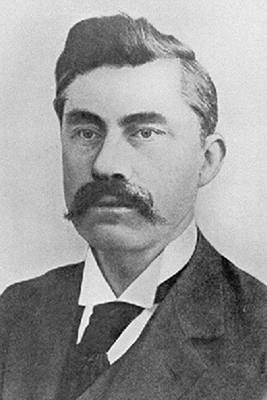
Key people
- Martinus Beijerinck
- Delft microbiologist who described the filterable, self-reproducing agent in 1898
- Adolf Mayer
- Showed at Wageningen that tobacco mosaic spread in sap
- Dmitri Ivanovsky
- Found in 1892 that the agent passed a filter
Source
At the agricultural school in Wageningen, Adolf Mayer showed in the mid-1880s that tobacco mosaic, or leaf-spot, disease was contagious: sap pressed from sick plants and pushed into healthy ones in capillary tubes gave them the disease within weeks. His colleague Martinus Beijerinck, born in Amsterdam in 1851, watched the experiments, and neither man could find a microbe to blame. Beijerinck, who later taught at Delft, took up the disease again in 1887, still without result.
In the work he published in 1898, Beijerinck passed juice from diseased leaves through porcelain filters of the Pasteur-Chamberland type, which hold back bacteria, and the clear filtrate still infected healthy plants. A small drop injected with a syringe could infect many leaves and branches, and sap from those could infect an unlimited number of new plants, so the agent reproduced itself in the living plant. Because filter experiments could still be doubted, he also laid infected juice on thick agar plates. The infectious substance diffused well into the agar, leaving bacteria and other particles on the surface.
Only growing organs whose cells were still dividing could be infected, he found, and only there did the agent multiply. No multiplication could be shown outside the plant, although a bacteria-free filtrate kept its virulence for more than three months, and heating the filtrate to 90°C destroyed it. In his report to the Royal Academy of Sciences in Amsterdam he concluded that the disease was not caused by microbes but by a contagium vivum fluidum, a living contagious fluid, which he called a virus.
Others read similar evidence differently. Dmitri Ivanovsky in Russia had found in 1892 that the tobacco mosaic agent passed a filter, but he kept looking for a microbe and in 1903 claimed to have grown it in an artificial medium. Also in 1898, Loeffler and Frosch, former students of Koch, filtered the agent of foot-and-mouth disease of cattle and took it for a very small microbe. Beijerinck died in 1931 with his idea still unverified. Tobacco mosaic virus particles were isolated in 1935 and characterized as a nucleoprotein in 1937.
Keep exploring
 Read next · same disease or problem
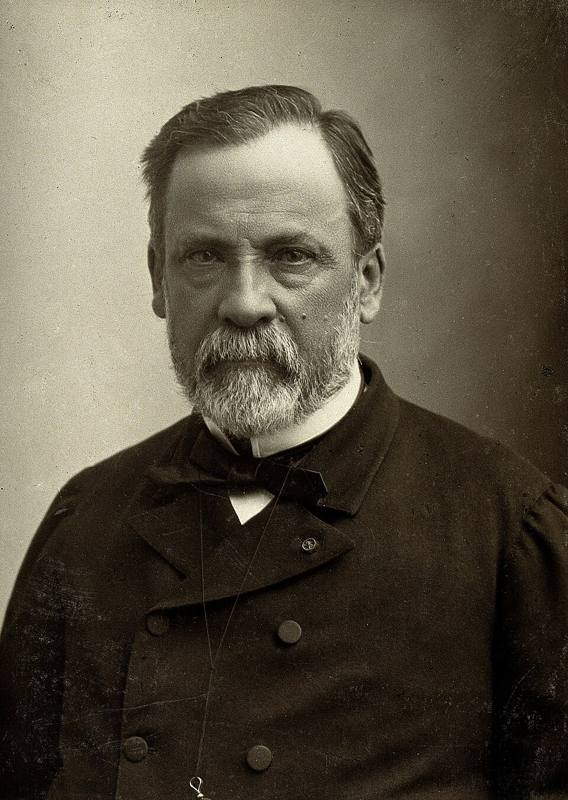
Pasteur's rabies vaccine (1885)
Pasteur could not see the rabies agent, and Beijerinck showed such agents pass through filters that stop bacteria. Pasteur's story shows a vaccine made against an agent no one could see.
Read this moment
Read next · same disease or problem
Pasteur's rabies vaccine (1885)
Pasteur could not see the rabies agent, and Beijerinck showed such agents pass through filters that stop bacteria. Pasteur's story shows a vaccine made against an agent no one could see.
Read this moment
 Today on The Clinical Times
Love to Dream recalls portable baby sound machine over fire and burn risk
Love to Dream has recalled its portable Sleep Machine because its lithium-ion battery can overheat while charging with an incompatible charger, creating a risk of fire and burns.
Read today’s top stories
Today on The Clinical Times
Love to Dream recalls portable baby sound machine over fire and burn risk
Love to Dream has recalled its portable Sleep Machine because its lithium-ion battery can overheat while charging with an incompatible charger, creating a risk of fire and burns.
Read today’s top stories
All 526 moments in the history of medicine. This one is in chapter 4, Germs, numbers and clean water
Connected moments
How this moment links to others in the history of medicine, and what you will find in each.
- Same disease or problem1911Rous and the chicken sarcoma virusBeijerinck found a disease agent that passed through bacteria proof filters, and Rous found a tumor that passed to healthy chickens the same way. His story shows the first solid tumor shown to be caused by a virus.Read this moment
-
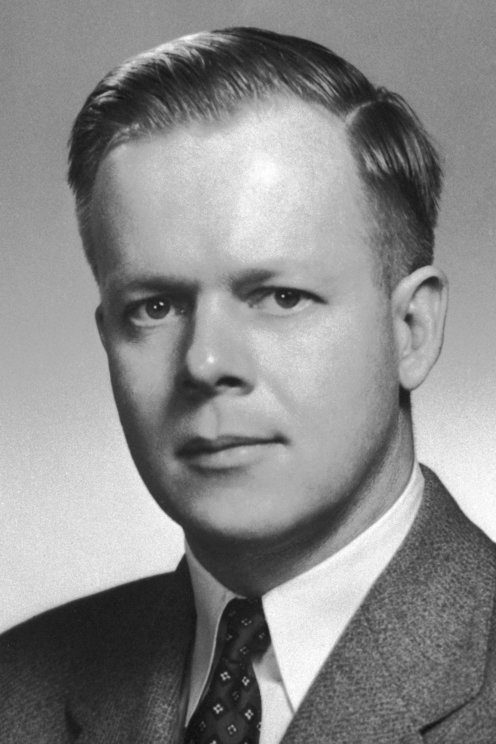 Same disease or problem1949Growing poliovirus in tissue cultureBeijerinck found that his virus multiplied only inside living cells, and Enders later grew poliovirus in cultures of human tissue. That story shows the method that made polio vaccines possible.Read this moment