Critical & Organ Care
1937
Heparin as an injectable anticoagulant
A purified, standardized heparin from Charles Best's Toronto group let the surgeon Gordon Murray treat patients with it, and his results appeared in 1937, the year Clarence Crafoord reported parallel trials in Stockholm. Heparin later made dialysis and cardiac bypass possible.

Key people
- Gordon Murray
- Toronto surgeon who led the first Toronto clinical trials of heparin
- Charles Best
- Physiologist whose lab produced the purified, standardized heparin preparation
- Jay McLean
- Johns Hopkins medical student who found anticoagulant activity in liver extracts in 1916
- L. B. Jaques
- Co-author of the 1937 Surgery paper; contributed to purification and standardization work
- Clarence Crafoord
- Stockholm surgeon who reported postoperative heparin to prevent thrombosis in 1937
Source
Norman R. CMAJ. 2011 (free history review of the 1937 first clinical use) (opens in a new tab)
In 1915 and 1916 Jay McLean, a medical student working in William Howell's laboratory at Johns Hopkins, found that some of his liver extracts slowed clotting. Howell was so skeptical at first that the finding was left out of McLean's paper, but he went on to study the anticoagulant now known as heparin. For two decades the substance resisted clinical use because the available extracts were too impure and too toxic. Howell's heparin, made in small amounts by Hynson, Westcott and Dunning of Baltimore in the 1920s, was too toxic even for animal studies and was used only in the laboratory.
The purification problem was solved in Toronto and in Stockholm. Charles Best, already known for his role in the insulin work of 1921, began heparin research in the late 1920s at Connaught Laboratories and the University of Toronto, and his team developed a standardized, purified preparation from beef liver and later from beef lung. The main steps involved removing toxic contaminants and ensuring consistent potency, expressed in standardized units. Gordon Murray, a surgeon at Toronto General Hospital, began using this preparation in patients in the mid-1930s, first for venous thrombosis and then for more complex vascular problems. Murray and colleagues from Best's group published their results in Surgery in 1937. In Sweden, Erik Jorpes worked with heparin made by the firm Kabi, and the surgeon Clarence Crafoord reported postoperative heparin to prevent thrombosis the same year.
In 1937 Erwin Chargaff and a colleague found, by accident, that protamine reverses heparin. From the outset heparin was used widely to treat deep vein thrombosis; at the Mariestad General Hospital in Sweden, patients received the same heparin protocol from 1940 for 18 years. Heparin made possible the heart-lung bypass circuit that John Gibbon and others developed for open cardiac surgery in the 1950s, and hemodialysis circuits needed it as well.
Heparin's mechanism was clarified over subsequent decades. It binds antithrombin III and accelerates its inhibition of thrombin and factor Xa by orders of magnitude, so patients with hereditary antithrombin deficiency can be resistant to it. The first clinical trial of low-molecular-weight heparin, in 1982, showed that a single daily subcutaneous dose prevented deep vein thrombosis after surgery with less bleeding. These smaller heparins act mainly on factor Xa and cause heparin-induced thrombocytopenia less often.
Unfractionated heparin is still used where rapid onset, short half-life, and reversal with protamine are required, including cardiopulmonary bypass, acute coronary syndromes, and bridging during procedures. Low-molecular-weight heparin cannot replace it in bypass circuits, and the only synthetic product, the pentasaccharide fondaparinux, copies just part of the heparin molecule.
Keep exploring
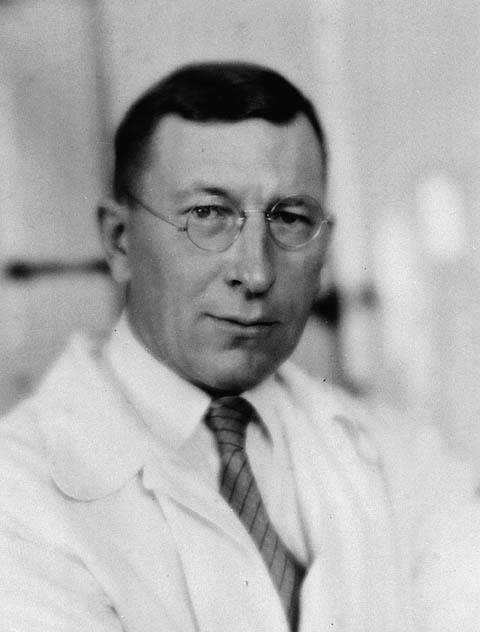 Read next · same person
Discovery of Insulin (1922)
Charles Best, already known for the insulin work, led the Toronto group that purified heparin for patients. The insulin story shows Best as a student helping Banting turn diabetes into a treatable disease.
Read this moment
Read next · same person
Discovery of Insulin (1922)
Charles Best, already known for the insulin work, led the Toronto group that purified heparin for patients. The insulin story shows Best as a student helping Banting turn diabetes into a treatable disease.
Read this moment
 Today on The Clinical Times
Love to Dream recalls portable baby sound machine over fire and burn risk
Love to Dream has recalled its portable Sleep Machine because its lithium-ion battery can overheat while charging with an incompatible charger, creating a risk of fire and burns.
Read today’s top stories
Today on The Clinical Times
Love to Dream recalls portable baby sound machine over fire and burn risk
Love to Dream has recalled its portable Sleep Machine because its lithium-ion battery can overheat while charging with an incompatible charger, creating a risk of fire and burns.
Read today’s top stories
All 526 moments in the history of medicine. This one is in chapter 5, Cures and codes
Connected moments
How this moment links to others in the history of medicine, and what you will find in each.
-
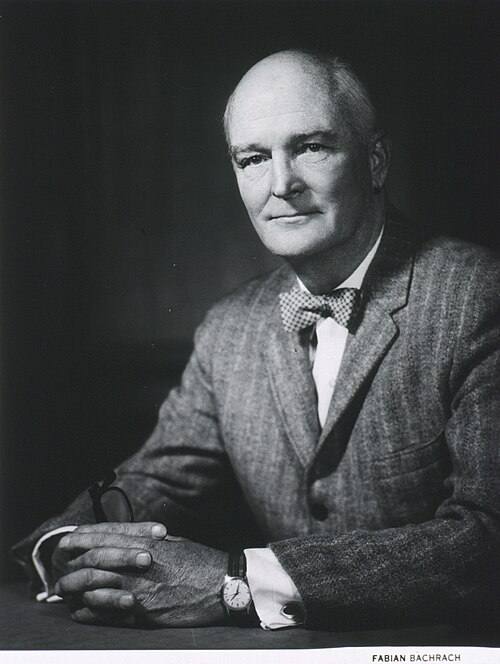 Led to1953First Successful Open-Heart Surgery Using the Heart-Lung MachineHeparin made possible the heart lung bypass circuit that John Gibbon built for open heart surgery. Gibbon's story shows the first successful operation using his machine in 1953.Read this moment
-
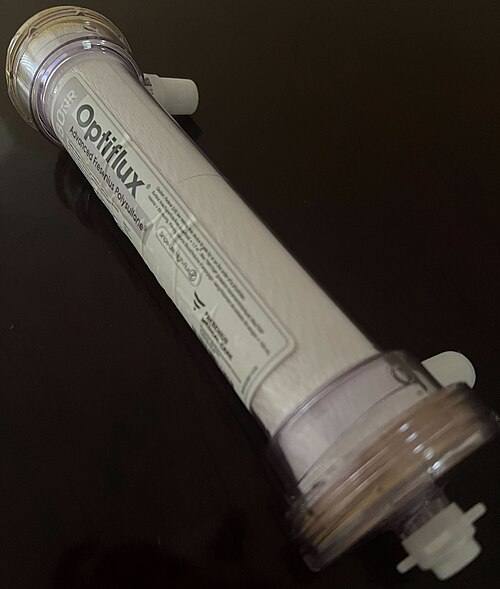 Led to1943Kolff's rotating drum artificial kidneyBlood running through a dialysis circuit clots without an anticoagulant, and hemodialysis needed heparin as well. Kolff's story shows the rotating drum artificial kidney built from wartime scraps.Read this moment
-
 Same disease or problem1954Warfarin introduced for clinical anticoagulationHeparin was given by injection, and warfarin became the standard blood thinner taken by mouth for five decades. The warfarin story shows a rat poison turned into a medicine that needed careful dosing.Read this moment