Neurology & Psychiatry
1978
The multichannel cochlear implant
Implants that stimulated the auditory nerve at several points along the cochlea, first placed in patients in 1977 and 1978, let some totally deaf adults understand speech. The FDA approved a multichannel implant for adults in 1985 and for children in 1990.
Key people
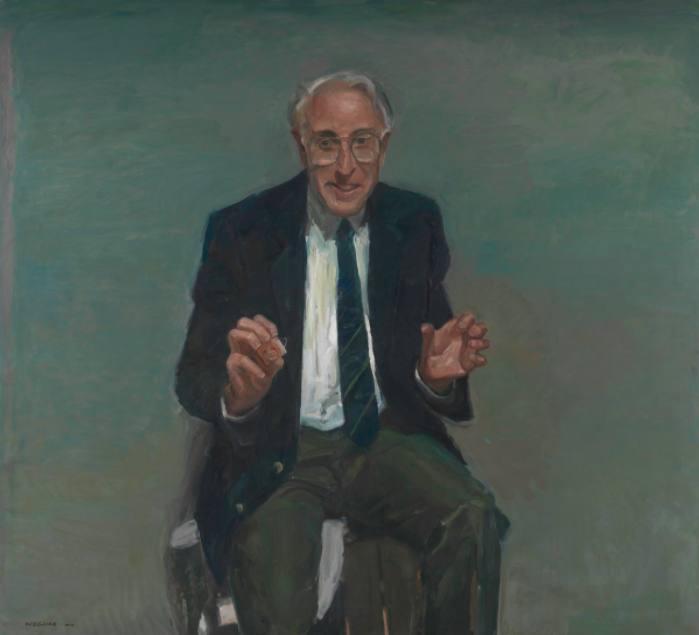
- Graeme Clark
- Melbourne otolaryngologist who led the multichannel implant program
- Ingeborg Hochmair
- Co-developer of a multichannel implant first used in a patient in 1977
- William House
- Implanted single-channel devices in two people in 1961
- Blake Wilson
- Researcher who reported continuous interleaved sampling in 1991
Source
A cochlear implant does not amplify sound as a hearing aid does. A microphone and speech processor turn sound into electrical signals, and an array of electrodes inside the cochlea passes them to different regions of the auditory nerve, bypassing the damaged ear. French doctors tried a single electrode in the late 1950s; it worked poorly and failed quickly. In 1961 William House implanted a single-channel device in two people. They could perceive environmental sounds, and later single-channel devices helped people lipread, but speech came through badly distorted.
Graeme Clark, whose father had struggled with deafness, took the first chair of otolaryngology in Australasia at the University of Melbourne in October 1969. His department built a device that could stimulate several sites along the cochlea separately, the idea being that each site would carry a different band of frequencies. Three television telethons between 1974 and 1976 helped pay for it. A multichannel design by Ingeborg Hochmair and colleagues was first implanted in a patient in December 1977.
On 1 August 1978 Clark implanted the Melbourne prototype in Rod Saunders, a totally deaf man, at the Royal Victorian Eye and Ear Hospital. When different sites were stimulated, Saunders heard different vowels, matching the frequency bands that distinguish vowels in speech. The team went on to build a speech processor that patients could wear. By 1981 two deaf adults using the implant scored 34 and 36 percent on live open-set sentence tests without lipreading, and 68 and 98 percent with it.
The Melbourne results led to the company Cochlear Limited. In 1985 its implant became the first multichannel device approved by the US Food and Drug Administration for adults, and in 1990 the first cochlear implant of any type approved for deaf children over two. In 1991 Blake Wilson, at the Research Triangle Institute in North Carolina, reported continuous interleaved sampling, a processing strategy that let many users understand words and sentences with no visual cues. By December 2019 about 736,900 devices had been implanted worldwide, including about 65,000 in children in the United States.
Keep exploring
 Read next · same disease or problem
Rubella epidemic and the rubella vaccine (1964)
Both concern deafness, which the 1964 rubella epidemic caused in 11,000 American children. The rubella entry shows how a vaccine then eliminated the disease from the United States.
Read this moment
Read next · same disease or problem
Rubella epidemic and the rubella vaccine (1964)
Both concern deafness, which the 1964 rubella epidemic caused in 11,000 American children. The rubella entry shows how a vaccine then eliminated the disease from the United States.
Read this moment
 Today on The Clinical Times
Love to Dream recalls portable baby sound machine over fire and burn risk
Love to Dream has recalled its portable Sleep Machine because its lithium-ion battery can overheat while charging with an incompatible charger, creating a risk of fire and burns.
Read today’s top stories
Today on The Clinical Times
Love to Dream recalls portable baby sound machine over fire and burn risk
Love to Dream has recalled its portable Sleep Machine because its lithium-ion battery can overheat while charging with an incompatible charger, creating a risk of fire and burns.
Read today’s top stories
All 526 moments in the history of medicine. This one is in chapter 6, Trials, scanners and rights
Connected moments
How this moment links to others in the history of medicine, and what you will find in each.
- Same disease or problem2026Gene therapy for OTOF deafnessBoth restore hearing, the implant by bypassing the damaged ear and gene therapy by repairing one inherited cause. The OTOF entry shows the first approved treatment that supplies a working gene inside the cochlea.Read this moment
-
 Same disease or problemc. 1290The invention of spectaclesSeven centuries apart, both gave back a failing sense with a device, lenses for eyesight and electrodes for hearing. The spectacles entry shows the first use of lenses to correct vision, in Italy around 1290.Read this moment